Shi Jin, Lv Shigang, Wu Miaojing, Wang Xianggan, Deng Yan, Li Yansheng, Li Kuanxun, Zhao Hongyu, Zhu Xingen, Ye Minhua
Department of Neurosurgery, The Second Affiliated Hospital of Nanchang University, Jiangxi, P.R. China.
Department of Neurology, The Second Affiliated Hospital of Nanchang University, Jiangxi, P.R. China.
Clin Transl Med. 2020 Jan;10(1):182-198. doi: 10.1002/ctm2.21.
Glioblastoma (GBM) is the most common primary tumor in the brain, and the median survival time for GBM patients is only about 14 months; therefore, there is an urgent need for new and more effective strategies. Since cell cycle disorder is a key factor in tumor progression and immortalization, there is great potential for controlling cell cycle disorders in tumor cells in GBM patients. We began to study a novel combination of AQB and palbociclib to evaluate its potential as a new therapeutic target.
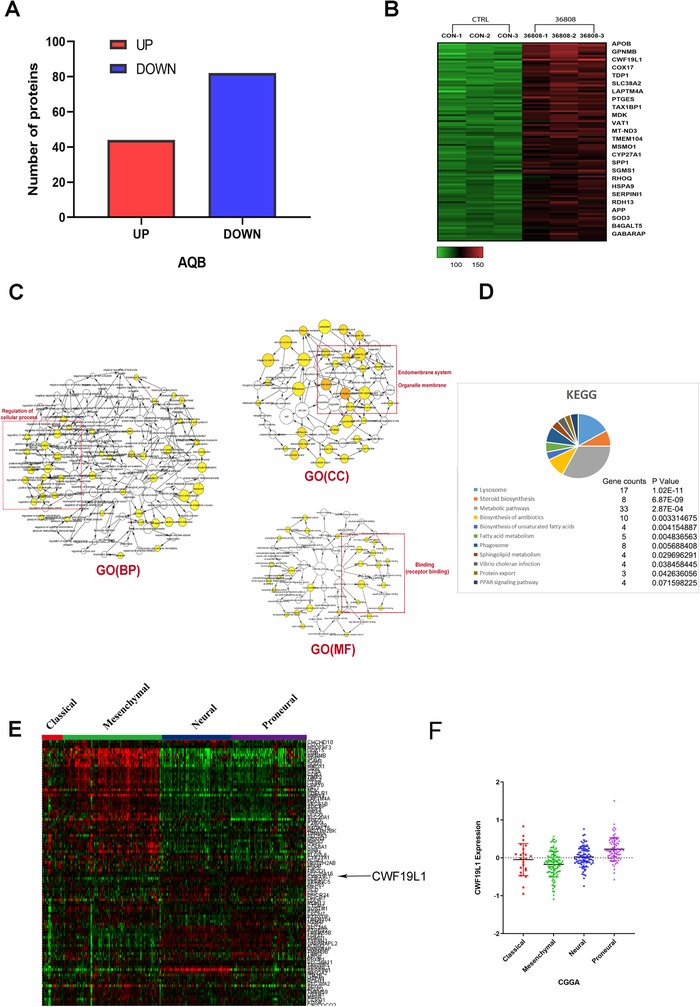
Protein mass spectrometry was used to identify the tumor suppressor genes up-regulated by AQB.The effects of HOTAIR - EZH2 inhibitor AQB and CDK4/6 inhibitor Palbociclib on glioma cells lines were examined in vitro and in vivo experiments.
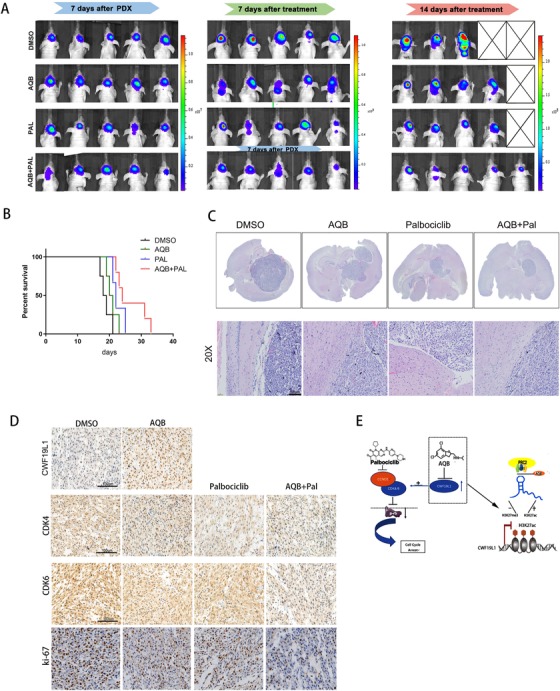
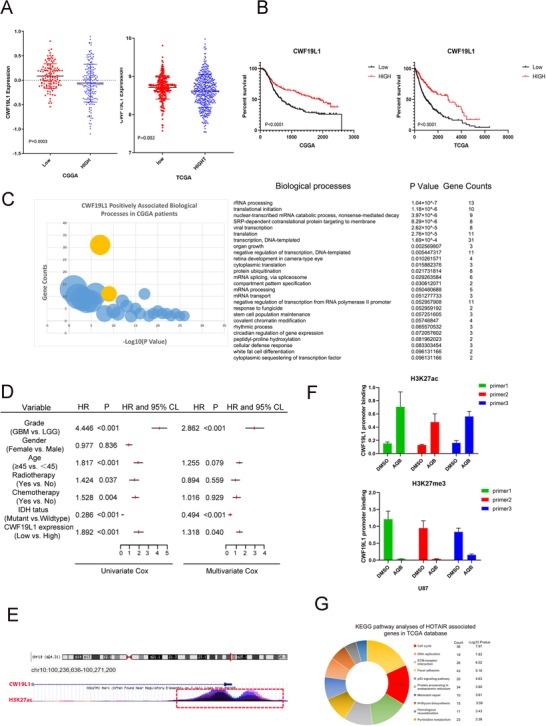
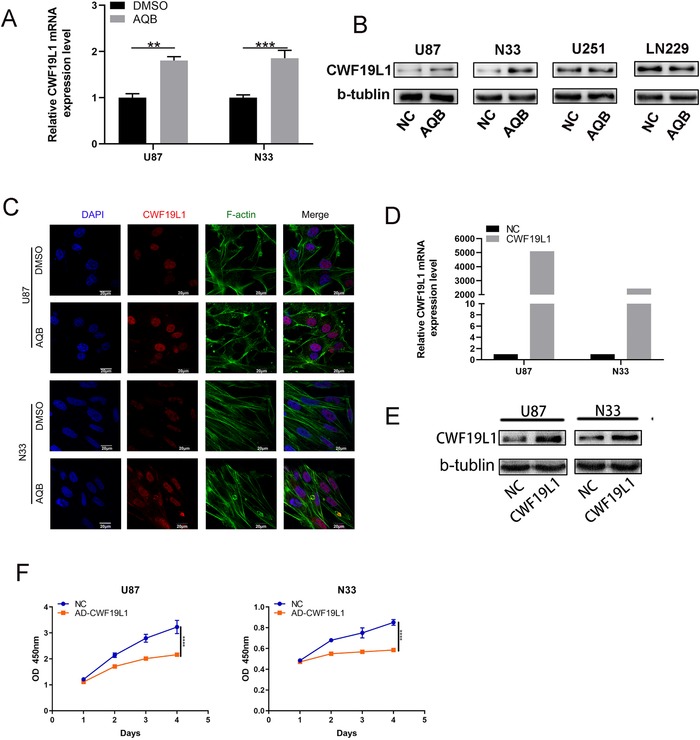
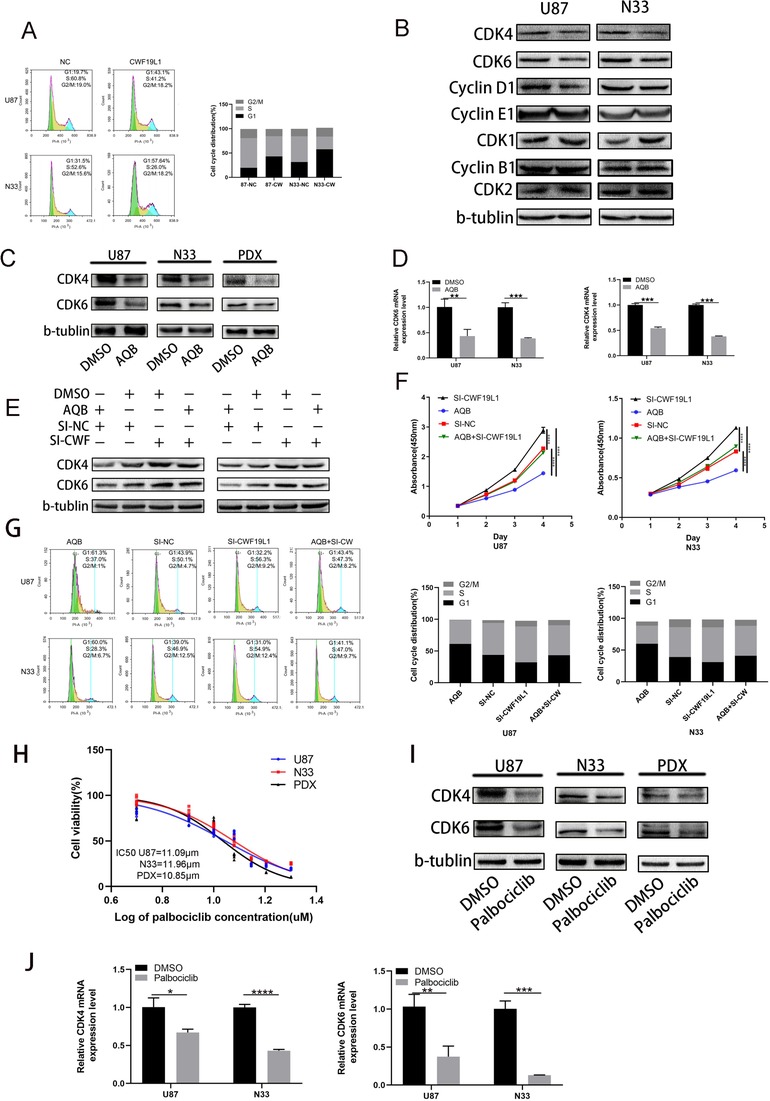
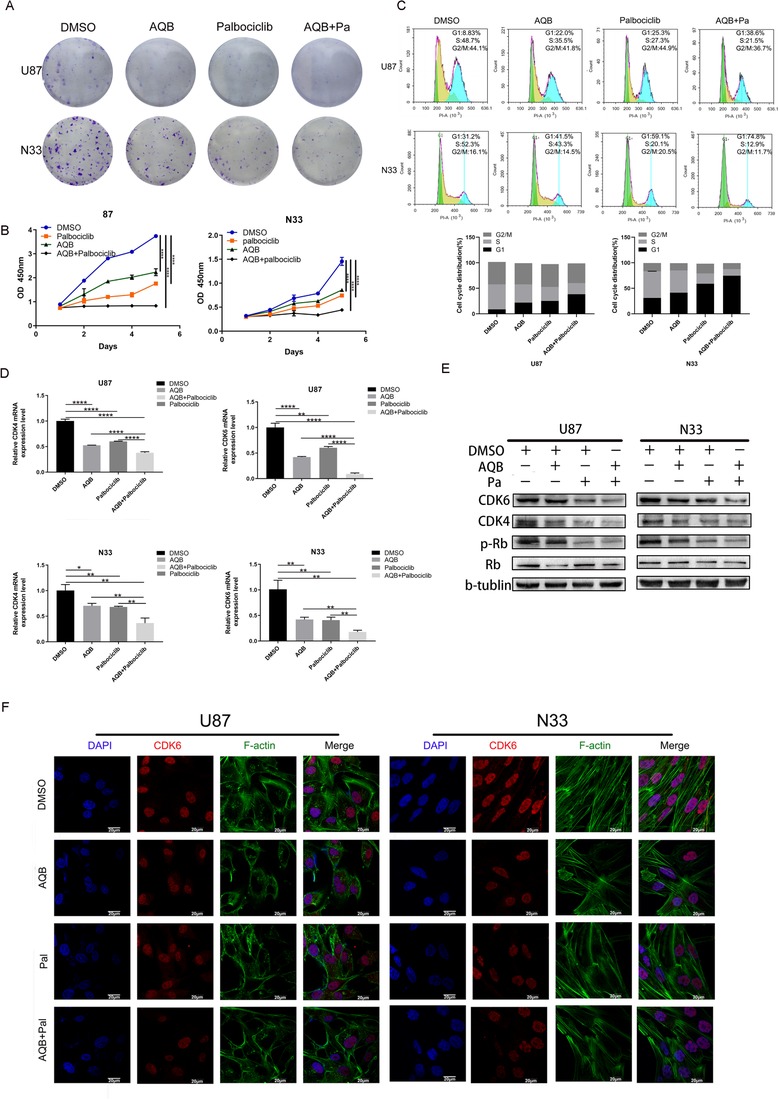
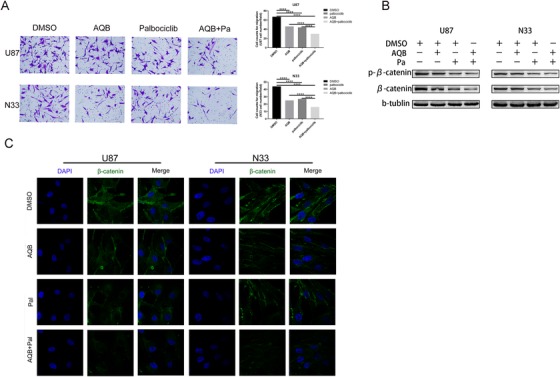
The combination of AQB and palbociclib inhibitors has a more pronounced suppression effect on the cell cycle, especially gliomas with high expression of HOTAIR and EZH2 and low expression of CWF19L1. We performed protein mass spectrometry to identify AQB upregulated tumor suppressor genes and confirmed that CWF19L1 is regulated by H3K27ac through chromatin immunoprecipitation-quantitative PCR results. Univariate and multivariate Cox regression analysis and database analysis were performed to suggest CWF19L1 is a good prognostic factor. Our experimental results suggested that CWF19L1 can be significantly upregulated by AQB and lead to degradation of CDK4/6, resulting in G1 arrest. The combination of AQB and CDK4/6 inhibitor palbociclib is more effective in inhibiting the growth of glioma than in the single drug, both in vivo and in vitro. Similarly, we found that both AQB and palbociclib can inhibit Wnt/β-catenin signaling, and the combined use of the two inhibitors has a stronger inhibitory effect on tumor metastasis.
The combination of AQB and CDK4/6 inhibitor palbociclib has been found to have significant antitumor effects, which is likely to become a new strategy for glioma treatment.
胶质母细胞瘤(GBM)是最常见的原发性脑肿瘤,GBM患者的中位生存时间仅约14个月;因此,迫切需要新的、更有效的治疗策略。由于细胞周期紊乱是肿瘤进展和永生化的关键因素,控制GBM患者肿瘤细胞中的细胞周期紊乱具有巨大潜力。我们开始研究AQB与帕博西尼的新型联合用药,以评估其作为新治疗靶点的潜力。
采用蛋白质质谱法鉴定由AQB上调的肿瘤抑制基因。在体外和体内实验中检测HOTAIR - EZH2抑制剂AQB和CDK4/6抑制剂帕博西尼对胶质瘤细胞系的影响。
AQB和帕博西尼抑制剂联合使用对细胞周期具有更显著的抑制作用,尤其是对HOTAIR和EZH2高表达且CWF19L1低表达的胶质瘤。我们进行蛋白质质谱法鉴定AQB上调的肿瘤抑制基因,并通过染色质免疫沉淀 - 定量PCR结果证实CWF19L1受H3K27ac调控。进行单因素和多因素Cox回归分析以及数据库分析表明CWF19L1是一个良好的预后因素。我们的实验结果表明,AQB可显著上调CWF19L1并导致CDK4/6降解,从而导致G1期阻滞。AQB与CDK4/6抑制剂帕博西尼联合使用在体内和体外对胶质瘤生长的抑制作用均比单一药物更有效。同样,我们发现AQB和帕博西尼均可抑制Wnt/β - 连环蛋白信号通路,两种抑制剂联合使用对肿瘤转移具有更强的抑制作用。
已发现AQB与CDK4/6抑制剂帕博西尼联合使用具有显著的抗肿瘤作用,这可能成为胶质瘤治疗的新策略。