Mamoshina Polina, Bueno-Orovio Alfonso, Rodriguez Blanca
Department of Computer Science, University of Oxford, Oxford, United Kingdom.
Insilico Medicine Hong Kong Ltd, Hong Kong, Hong Kong.
Front Pharmacol. 2020 May 21;11:639. doi: 10.3389/fphar.2020.00639. eCollection 2020.
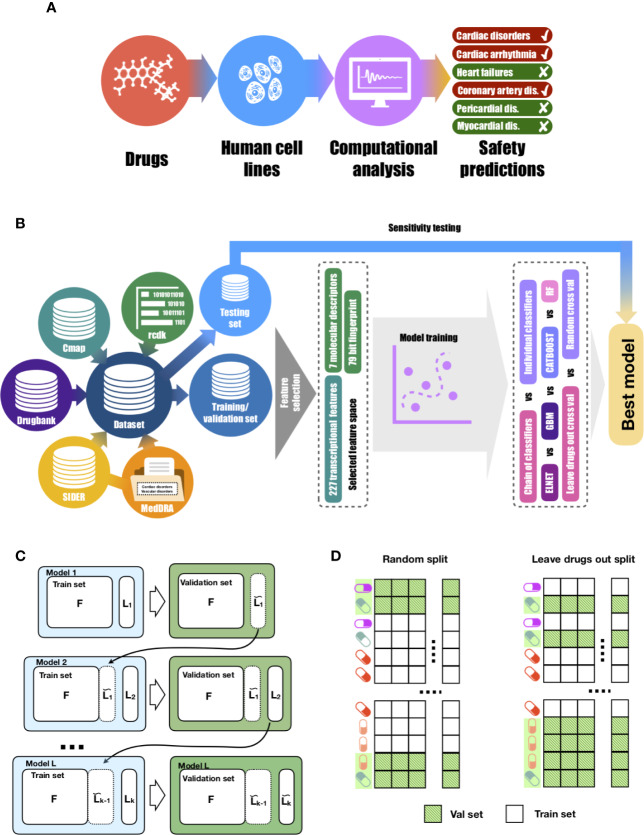
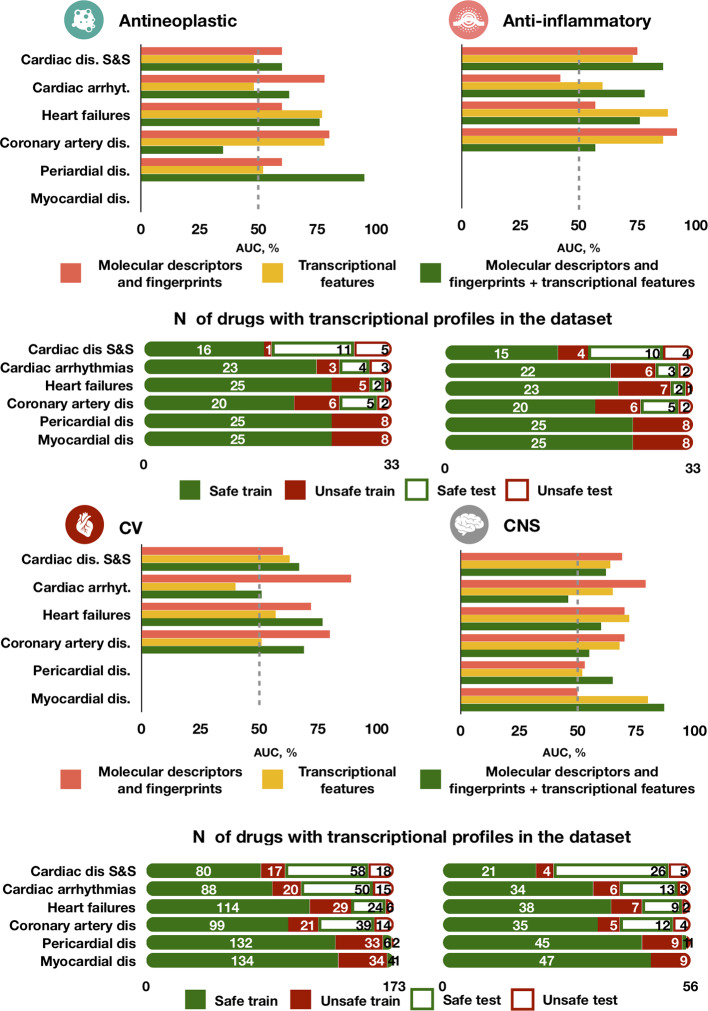
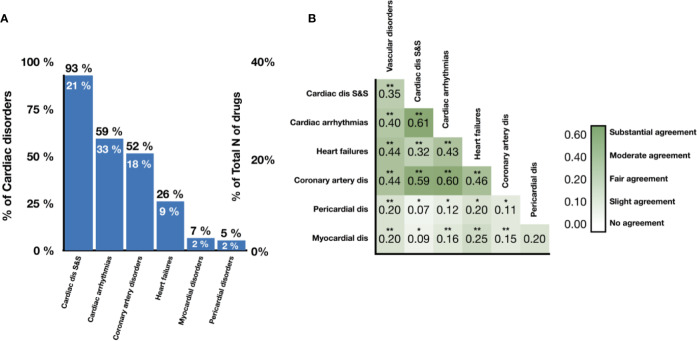
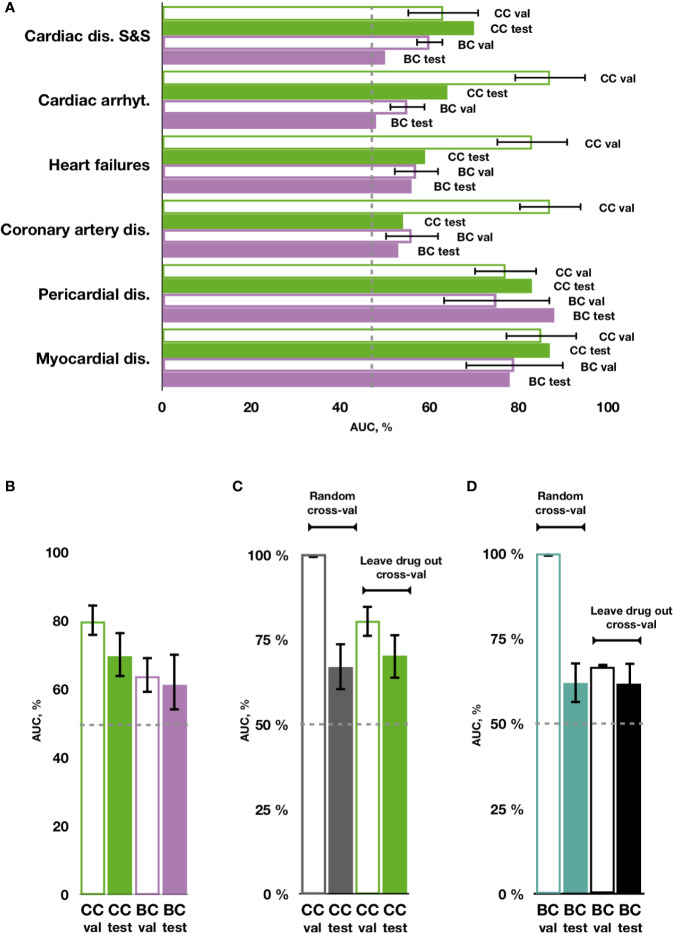
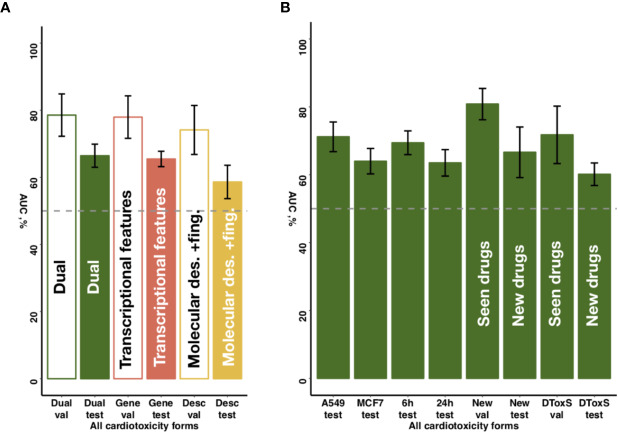
Computational methods can increase productivity of drug discovery pipelines, through overcoming challenges such as cardiotoxicity identification. We demonstrate prediction and preservation of cardiotoxic relationships for six drug-induced cardiotoxicity types using a machine learning approach on a large collected and curated dataset of transcriptional and molecular profiles (1,131 drugs, 35% with known cardiotoxicities, and 9,933 samples). The algorithm generality is demonstrated through validation in an independent drug dataset, in addition to cross-validation. The best prediction attains an average accuracy of 79% in area under the curve (AUC) for safe versus risky drugs, across all six cardiotoxicity types on validation and 66% on the unseen set of drugs. Individual cardiotoxicities for specific drug types are also predicted with high accuracy, including cardiac disorder signs and symptoms for a previously unseen set of anti-inflammatory agents (AUC = 80%) and heart failures for an unseen set of anti-neoplastic agents (AUC = 76%). Besides, independent testing on transcriptional data from the Drug Toxicity Signature Generation Center (DToxS) produces similar results in terms of accuracy and shows an average AUC of 72% for previously seen drugs and 60% for unseen respectively. Given the ubiquitous manifestation of multiple drug adverse effects in every human organ, the methodology is expected to be applicable to additional tissue-specific side effects beyond cardiotoxicity.
计算方法可以通过克服诸如心脏毒性识别等挑战,提高药物研发流程的效率。我们使用机器学习方法,在一个大型的转录和分子谱收集及整理数据集(1131种药物,35%具有已知心脏毒性,9933个样本)上,对六种药物诱导的心脏毒性类型进行了心脏毒性关系的预测和保存。除了交叉验证外,还通过在一个独立药物数据集中的验证,证明了该算法的通用性。在验证中,对于所有六种心脏毒性类型,安全药物与有风险药物的曲线下面积(AUC)平均预测准确率达到79%,在未见药物集上为66%。特定药物类型的个体心脏毒性也能得到高精度预测,包括一组先前未见的抗炎药的心脏疾病体征和症状(AUC = 80%)以及一组未见的抗肿瘤药的心力衰竭(AUC = 76%)。此外,对来自药物毒性特征生成中心(DToxS)的转录数据进行独立测试,在准确性方面产生了类似的结果,对于先前见过的药物,平均AUC为72%,对于未见药物分别为60%。鉴于多种药物不良反应在人体各个器官中普遍存在,预计该方法将适用于除心脏毒性之外的其他组织特异性副作用。