Wei Aiwu, Xiao Huidongzi, Xu Guangli, Yu Xile, Guo Jingjing, Jing Zhuqing, Shi Shaoqi, Song Yanli
Department of Reproductive Medicine, The First Affiliated Hospital of Henan University of Chinese Medicine, Zhengzhou, China.
Department of Reproductive Medicine, Henan Province Hospital of Traditional Chinese Medicine, Zhengzhou, China.
Front Pharmacol. 2020 May 21;11:762. doi: 10.3389/fphar.2020.00762. eCollection 2020.
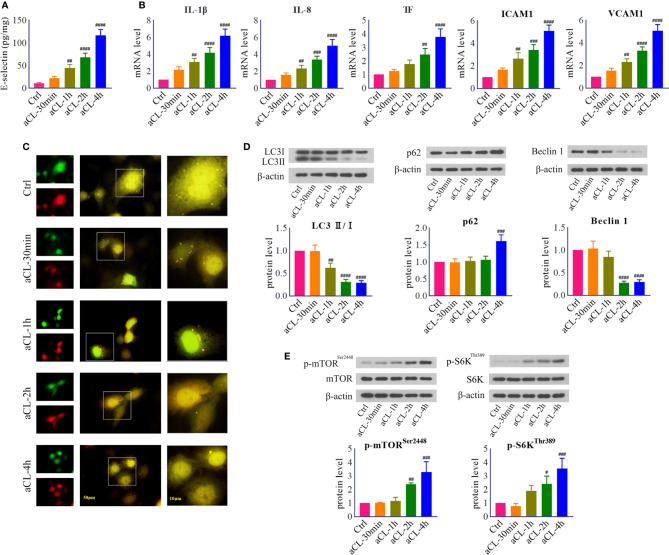
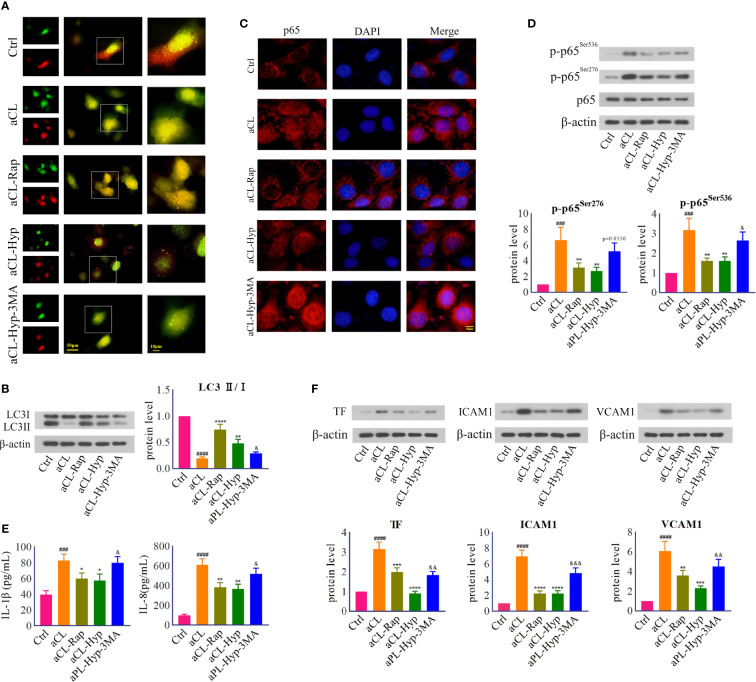
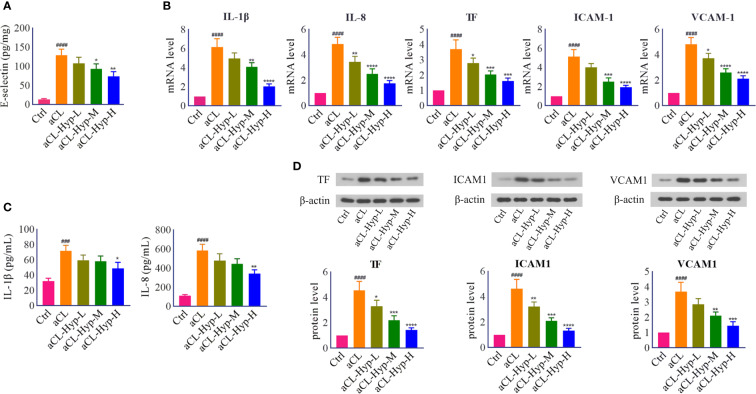
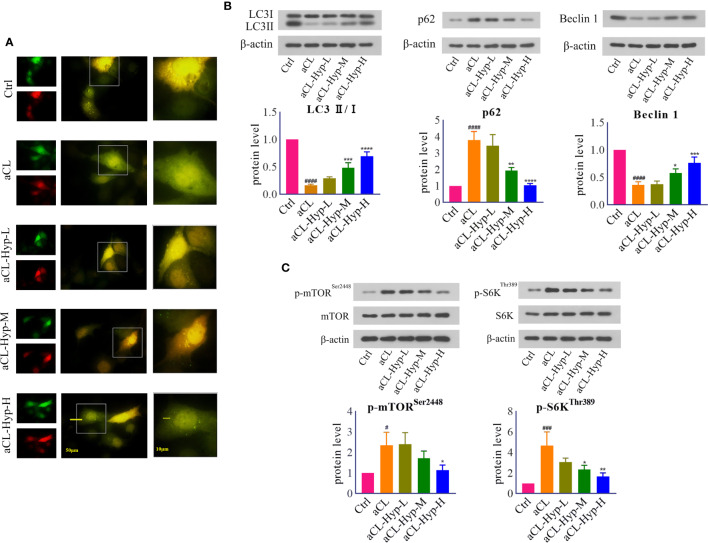
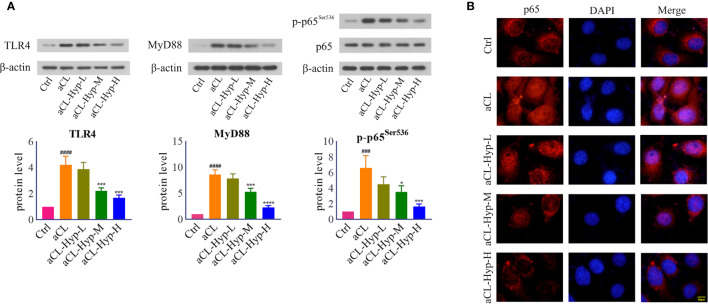
Anticardiolipin antibody (aCL), an important characterization of antiphospholipid syndrome, shows an intense association with vascular endothelial injury. Hyperoside is a flavonoid extracted from medicinal plants traditionally used in Chinese medicines, displaying anti-inflammatory, anti-cancer, and anti-oxidative properties in various diseases. Recent studies have shifted the focus on the protective effects of hyperoside on vascular endothelial injury. However, little is known about the mechanisms involved. In the present study, we investigated the effect of hyperoside on aCL-induced injury of human umbilical vein endothelial cells (HUVECs) . Our data illustrated that aCL induced HUVEC injury inhibiting autophagy. Hyperoside reduced aCL-induced secretion of proinflammatory cytokines IL-1β and IL-8 and endothelial adhesion cytokines TF, ICAM1, and VCAM1 in HUVECs. Additionally, hyperoside activated autophagy and suppressed the mTOR/S6K and TLR4/Myd88/NF-κB signaling transduction pathways in aCL-induced HUVECs. To the best of our knowledge, this is the first study to investigate the effect of hyperoside on aCL-induced injury, as well as offer insights into the involved mechanisms, which is of great significance for the treatment of antiphospholipid syndrome.
抗心磷脂抗体(aCL)是抗磷脂综合征的一个重要特征,与血管内皮损伤密切相关。金丝桃苷是从传统中药中使用的药用植物中提取的一种黄酮类化合物,在各种疾病中具有抗炎、抗癌和抗氧化特性。最近的研究将重点转向了金丝桃苷对血管内皮损伤的保护作用。然而,其涉及的机制尚不清楚。在本研究中,我们研究了金丝桃苷对aCL诱导的人脐静脉内皮细胞(HUVECs)损伤的影响。我们的数据表明,aCL通过抑制自噬诱导HUVEC损伤。金丝桃苷减少了aCL诱导的HUVECs中促炎细胞因子IL-1β和IL-8以及内皮黏附细胞因子TF、ICAM1和VCAM1的分泌。此外,金丝桃苷激活自噬并抑制aCL诱导的HUVECs中的mTOR/S6K和TLR4/Myd88/NF-κB信号转导通路。据我们所知,这是第一项研究金丝桃苷对aCL诱导损伤的影响并深入探讨其相关机制的研究,这对治疗抗磷脂综合征具有重要意义。