Arantes Vitor Nunes, Martins Bruno Costa, Seqatto Raphael, Milhomen-Cardoso Daniela Medeiros, Franzini Tomazo Prince, Zuccaro Anna Maria, Alves Jairo Silva, Maluf-Filho Fauze
Faculdade de Medicina da Universidade Federal de Minas Gerais - Alfa Institute of Gastroenterology, Minas Gerais, Brazil.
Hospital Mater Dei Contorno - Endoscopy, Minas Gerais, Brazil.
Endosc Int Open. 2020 Jun;8(6):E822-E829. doi: 10.1055/a-1183-3324. Epub 2020 Jun 10.
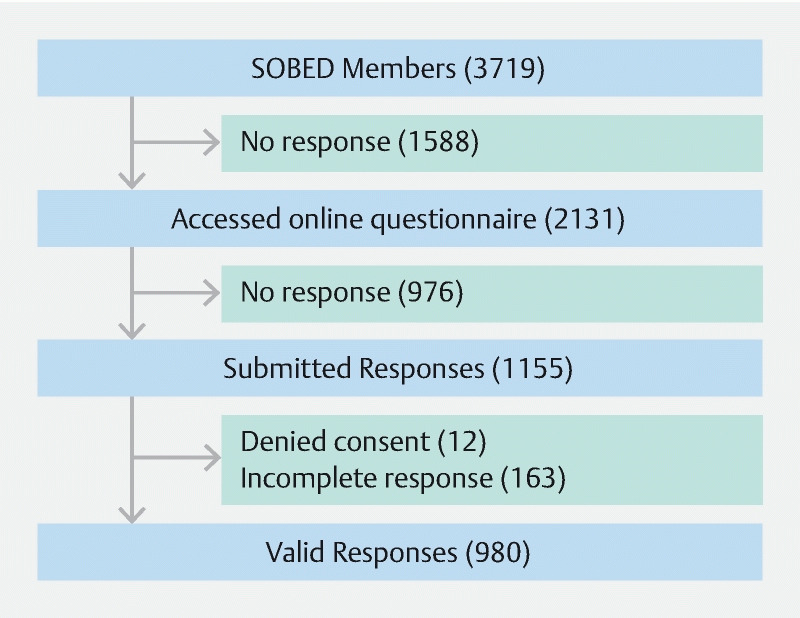
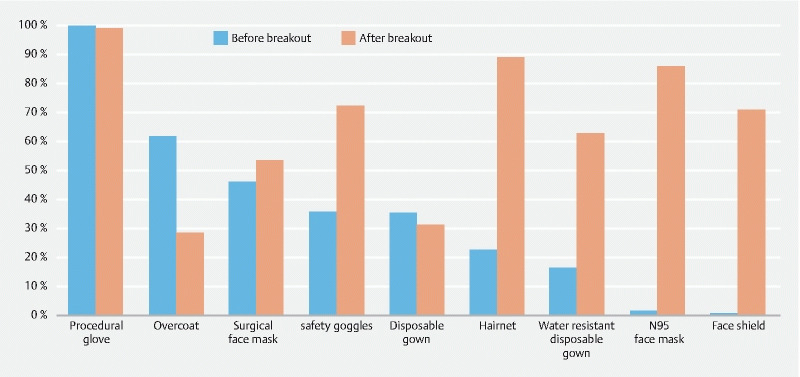
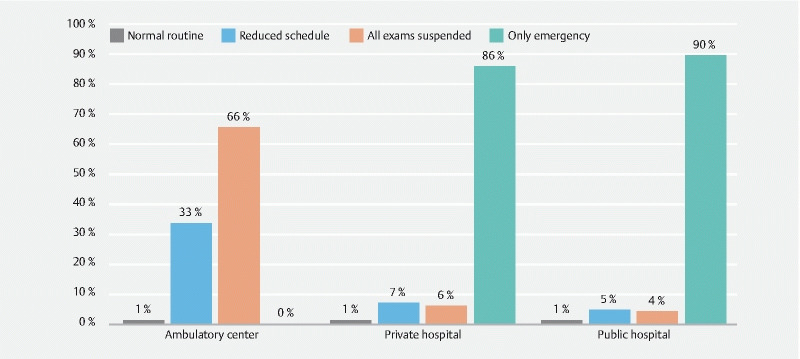
In March 2020, the World Health Organization declared coronavirus disease of 2019 (COVID-19) as a pandemic, mobilizing all countries to contain the disease spread. Activity in endoscopy centers globally was severely affected. We conducted a national survey aiming to assess the impact of the COVID-19 outbreak on endoscopic clinical practice in Brazil. In April 2020, 3,719 associate members of SOBED (Brazilian Society of Digestive Endoscopy) were invited to respond to an electronic survey. An Internet link was established to provide access to the online questionnaire with 40 questions regarding personal profile, endoscopy unit logistics and schedule, availability and use of personal protective equipment (PPE), financial impact, and exposure to COVID-19. A total of 2,131 individuals (67 %) accessed the questionnaire and 1155 responses were received. After review, 980 responses were considered valid. According to almost 90 % of respondents, endoscopy activity was restricted to urgent procedures, in both public and private hospitals. All respondents increased PPE use after the outbreak, however, institutions provided adequate PPE to only 278 responders (28.7 %). Significant income loss was universally reported. A total of 10 practitioners (1 %) reported COVID-19 infection and attributed the contamination to endoscopic procedures. Based on this nationwide survey with almost 1,000 respondents, the COVID-19 pandemic substantially reduced the activity of endoscopy units in private and public settings. The pandemic increased awareness of PPE use, but its availability was not universal and 1 % of the respondents became infected with COVID-19, allegedly due to exposure during endoscopic procedures.
2020年3月,世界卫生组织宣布2019冠状病毒病(COVID-19)为大流行病,动员所有国家控制该疾病的传播。全球内镜中心的活动受到严重影响。我们开展了一项全国性调查,旨在评估COVID-19疫情对巴西内镜临床实践的影响。2020年4月,邀请了3719名巴西消化内镜学会(SOBED)的准会员参与电子调查。建立了一个互联网链接,以提供在线问卷的访问权限,该问卷包含40个问题,涉及个人资料、内镜科室后勤和日程安排、个人防护装备(PPE)的可用性和使用情况、财务影响以及接触COVID-19的情况。共有2131人(67%)访问了问卷,收到了1155份回复。经过审核,980份回复被认为有效。据近90%的受访者称,公立和私立医院的内镜活动都仅限于紧急手术。疫情爆发后,所有受访者都增加了PPE的使用,然而,只有278名受访者(28.7%)的机构提供了足够的PPE。普遍报告称收入大幅损失。共有10名从业者(1%)报告感染了COVID-19,并将感染归因于内镜手术。基于这项有近1000名受访者的全国性调查,COVID-19大流行大幅减少了私立和公立机构内镜科室的活动。大流行提高了对PPE使用的认识,但其供应并不普遍,1%的受访者感染了COVID-19,据称是由于在内镜手术期间接触所致。