Department of Medical Imaging Center, The Affiliated Hospital of Qingdao University, 16 Jiang-Su Road, Qingdao, PR China.
Department of Radiology, Qilu Hospital of Shandong University, Qingdao Branch, 758 He-Fei Road, Qingdao, PR China.
BMC Nephrol. 2020 Jun 15;21(1):225. doi: 10.1186/s12882-020-01863-0.
To investigate the metabolite changes in the frontal lobe of the end-stage renal disease (ESRD) patients with depression using proton magnetic resonance spectroscopy (H-MRS).
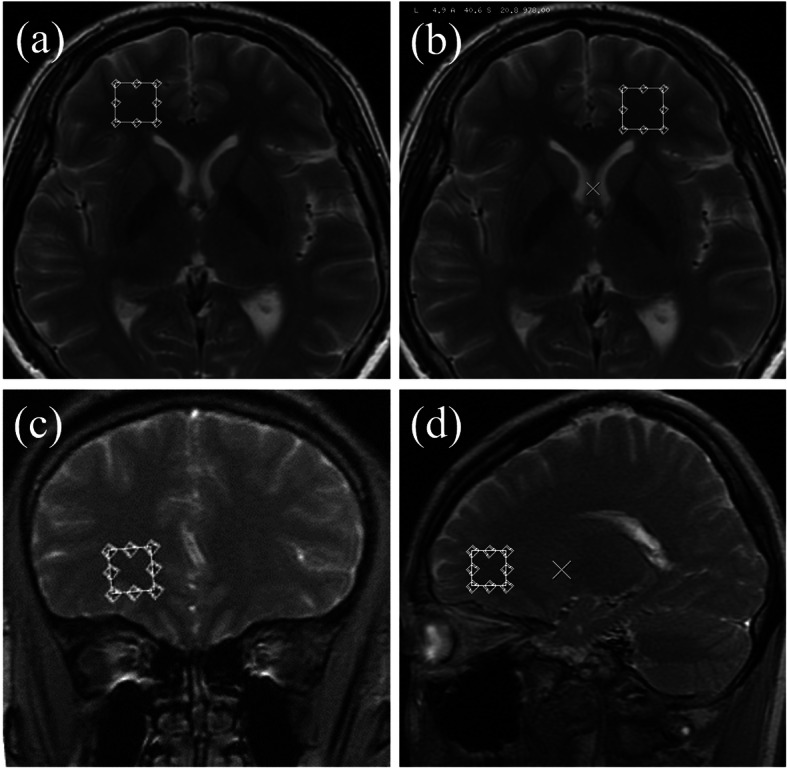
All subjects were divided into three groups: ESRD patients with depression (30 cases), ESRD patients without depression (27 cases) and 32 normal subjects. ESRD with depression patients were further divided into two groups according to the severity of depression: 14 cases of ESRD with severe depression group (Hamilton Depression Rating Scale (HAMD) score ≥ 35) and 16 cases of ESRD with mild to moderate depression group (20 ≤ HAMD score<35). H-MRS was used in brain regions of all subjects to measure N-acetylaspartate/creatine (NAA/Cr), choline-containing compounds/creatine (Cho/Cr) and myo-inositol/creatine (MI/Cr) ratios of the frontal lobe. Correlations between the metabolite ratio and HAMD score as well as clinical finding were confirmed, respectively.
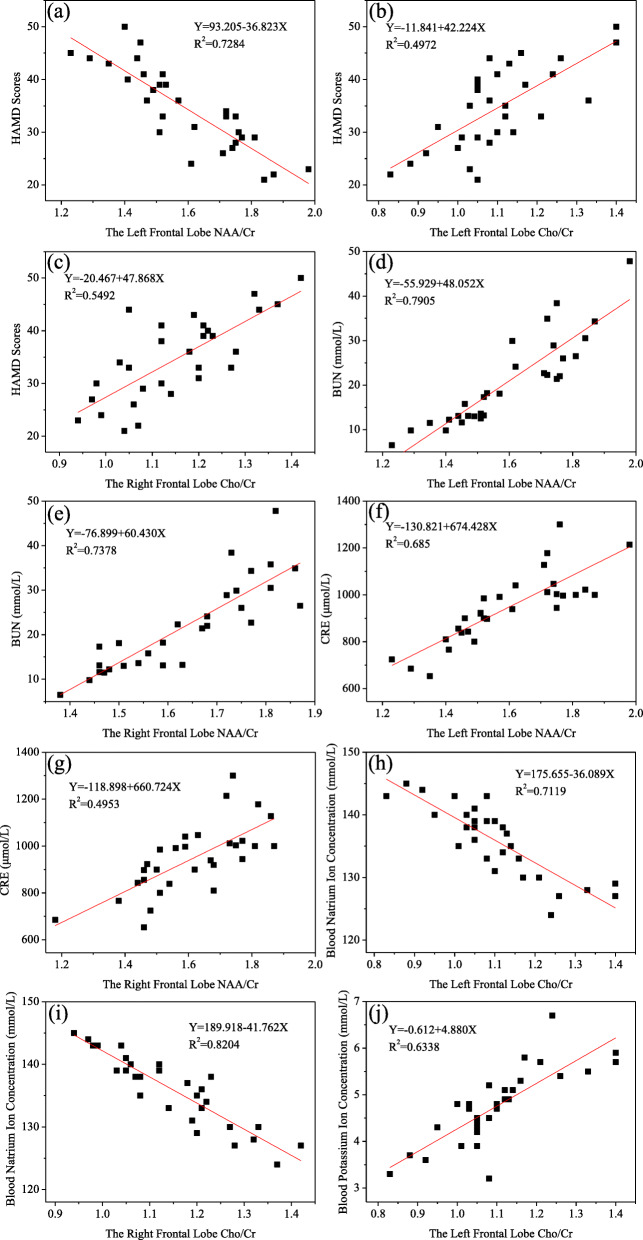
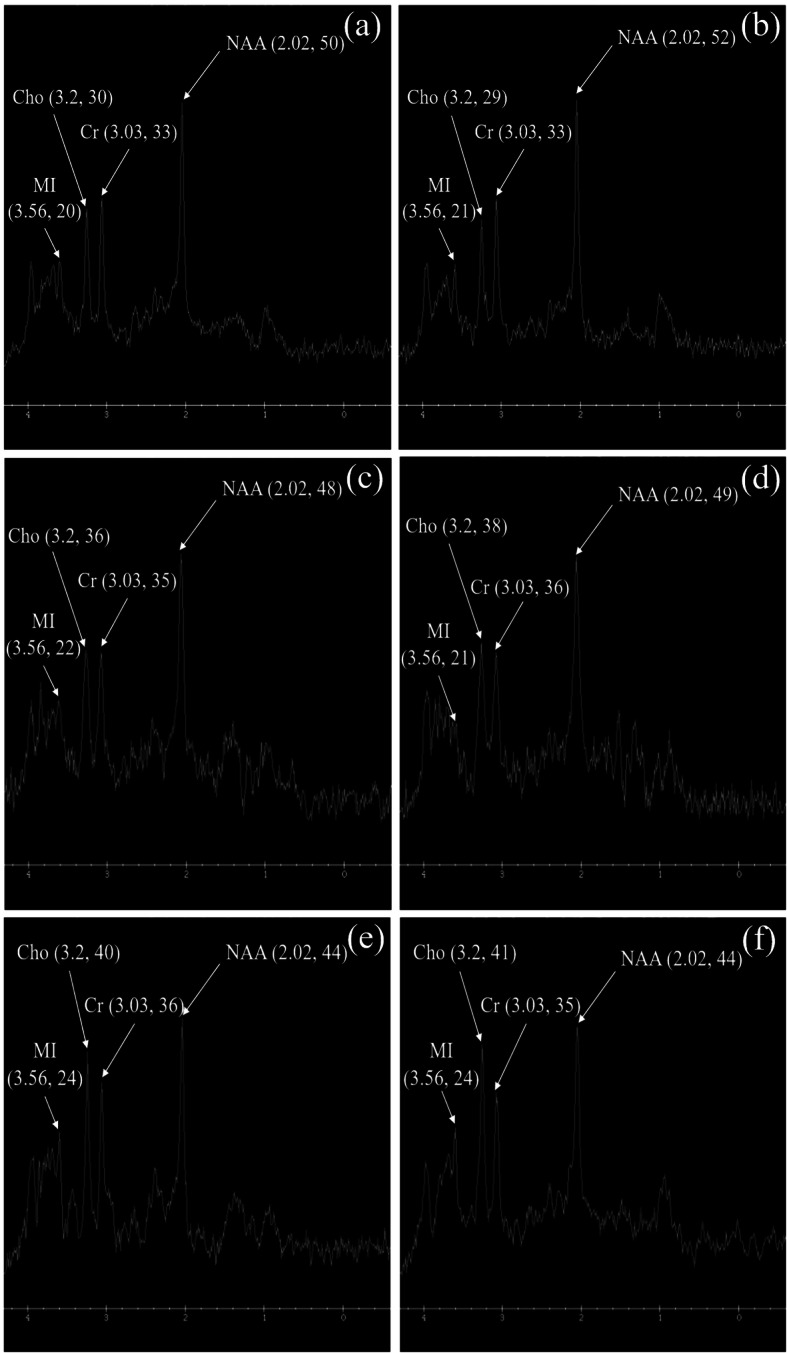
ESRD patients with depression showed lower NAA/Cr ratio and higher Cho/Cr ratio compared with ESRD patients without depression and normal subjects. NAA/Cr ratio was negatively correlated with the HAMD score. Cho/Cr ratio was positively correlated with the HAMD score. There were positive correlations between NAA/Cr ratio and blood urea notrogen (BUN) as well as creatinine (CRE) concentration, respectively. There was a negative correlation between Cho/Cr ratio and sodium concentration. The Cho/Cr ratio was positively correlated with the potassium concentration.
MR spectroscopy identified some metabolite changes in ESRD patients with depression.
采用质子磁共振波谱(H-MRS)研究终末期肾病(ESRD)伴抑郁患者额叶的代谢物变化。
所有受试者分为三组:ESRD 伴抑郁患者(30 例)、ESRD 无抑郁患者(27 例)和 32 例正常受试者。ESRD 伴抑郁患者根据抑郁严重程度进一步分为两组:重度抑郁组(汉密尔顿抑郁评定量表(HAMD)评分≥35,14 例)和轻度至中度抑郁组(20≤HAMD 评分<35,16 例)。对所有受试者的脑区进行 H-MRS 测量,以测量额叶的 N-乙酰天冬氨酸/肌酐(NAA/Cr)、含胆碱化合物/肌酐(Cho/Cr)和肌醇/肌酐(MI/Cr)比值。分别确认代谢物比值与 HAMD 评分和临床发现之间的相关性。
与 ESRD 无抑郁患者和正常受试者相比,ESRD 伴抑郁患者的 NAA/Cr 比值降低,Cho/Cr 比值升高。NAA/Cr 比值与 HAMD 评分呈负相关。Cho/Cr 比值与 HAMD 评分呈正相关。NAA/Cr 比值与血尿素氮(BUN)和肌酐(CRE)浓度呈正相关,Cho/Cr 比值与钠浓度呈负相关。Cho/Cr 比值与钾浓度呈正相关。
磁共振波谱技术可识别 ESRD 伴抑郁患者的一些代谢物变化。