Max Planck Institute of Molecular Cell Biology and Genetics, Pfotenhauerstrasse 108, 01307 Dresden, Germany.
Department of Cellular Biochemistry Biotechnology Center (BIOTEC), Center for Molecular and Cellular Bioengineering (CMCB), Technische Universität Dresden, Tatzberg 47/49, 01307 Dresden, Germany.
Biol Open. 2020 Jul 8;9(7):bio046391. doi: 10.1242/bio.046391.
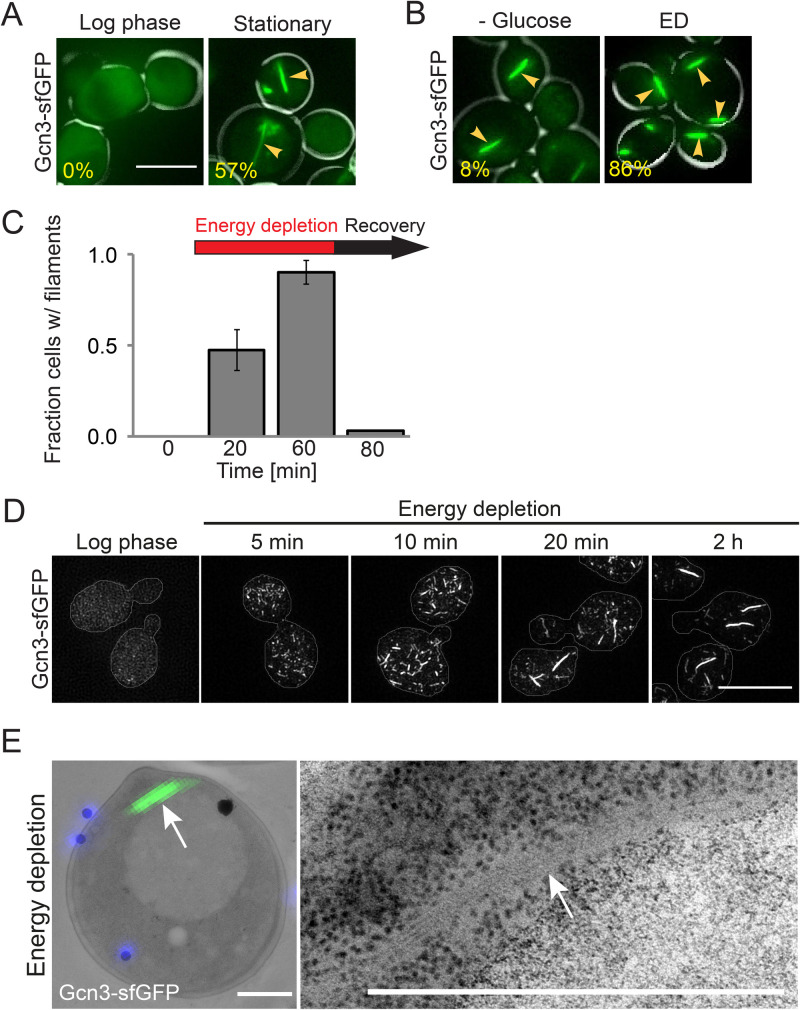
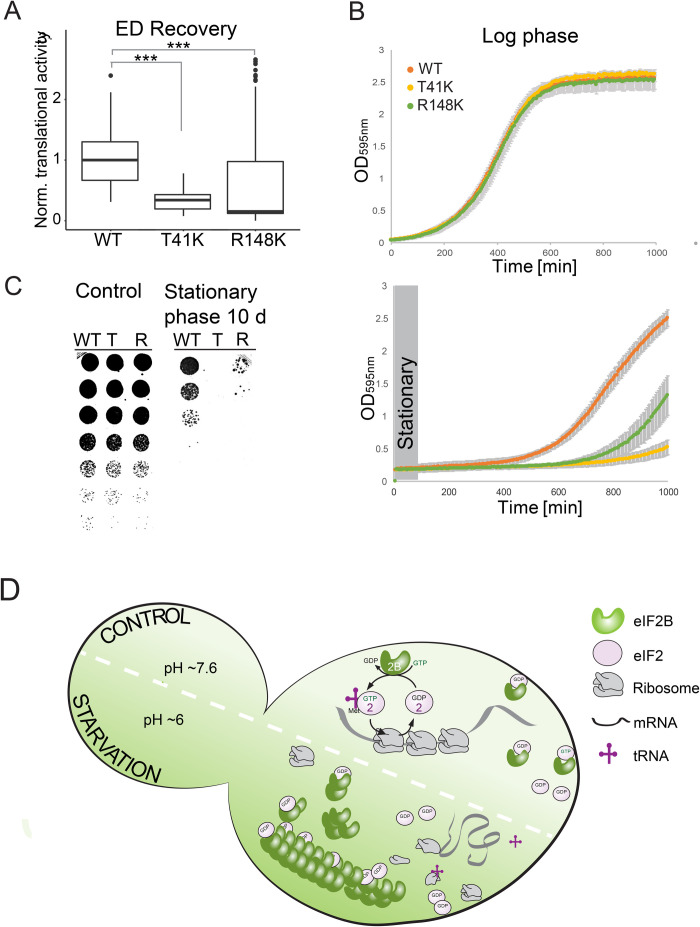
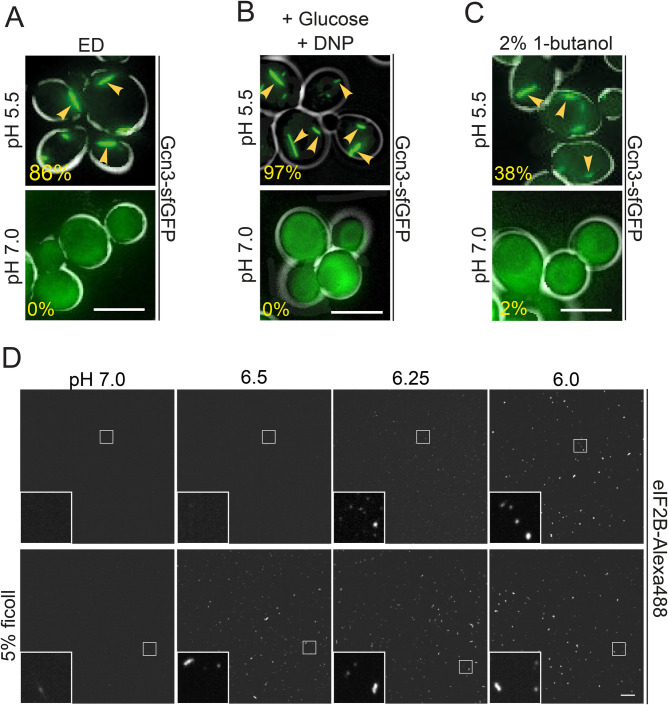
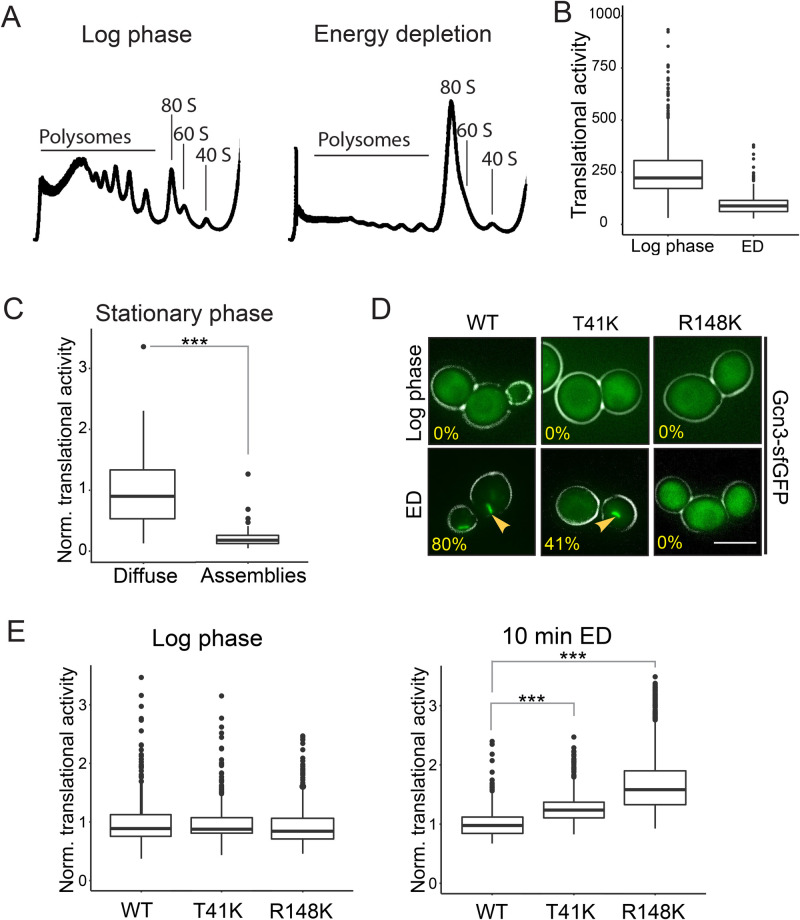
Cells exposed to starvation have to adjust their metabolism to conserve energy and protect themselves. Protein synthesis is one of the major energy-consuming processes and as such has to be tightly controlled. Many mechanistic details about how starved cells regulate the process of protein synthesis are still unknown. Here, we report that the essential translation initiation factor eIF2B forms filaments in starved budding yeast cells. We demonstrate that filamentation is triggered by starvation-induced acidification of the cytosol, which is caused by an influx of protons from the extracellular environment. We show that filament assembly by eIF2B is necessary for rapid and efficient downregulation of translation. Importantly, this mechanism does not require the kinase Gcn2. Furthermore, analysis of site-specific variants suggests that eIF2B assembly results in enzymatically inactive filaments that promote stress survival and fast recovery of cells from starvation. We propose that translation regulation through filament assembly is an efficient mechanism that allows yeast cells to adapt to fluctuating environments.
处于饥饿状态的细胞必须调整其新陈代谢以保存能量和保护自身。蛋白质合成是主要的耗能过程之一,因此必须进行严格的控制。关于饥饿细胞如何调节蛋白质合成过程的许多机制细节仍不清楚。在这里,我们报告说,必需的翻译起始因子 eIF2B 在饥饿的出芽酵母细胞中形成纤维。我们证明,纤维的形成是由细胞质的酸化引发的,这是由来自细胞外环境的质子流入引起的。我们表明,eIF2B 的纤维组装对于快速有效地下调翻译是必要的。重要的是,这种机制不需要激酶 Gcn2。此外,对特异性位点变体的分析表明,eIF2B 组装导致酶活性丧失的纤维,从而促进应激生存和细胞从饥饿中快速恢复。我们提出,通过纤维组装进行的翻译调控是一种有效的机制,使酵母细胞能够适应波动的环境。