Mosquito Control Laboratory, QIMR Berghofer Medical Research Institute, Herston, QLD 4006, Australia.
School of Chemistry and Molecular Biosciences, The University of Queensland, St. Lucia, QLD 4072, Australia.
Viruses. 2024 Sep 23;16(9):1499. doi: 10.3390/v16091499.
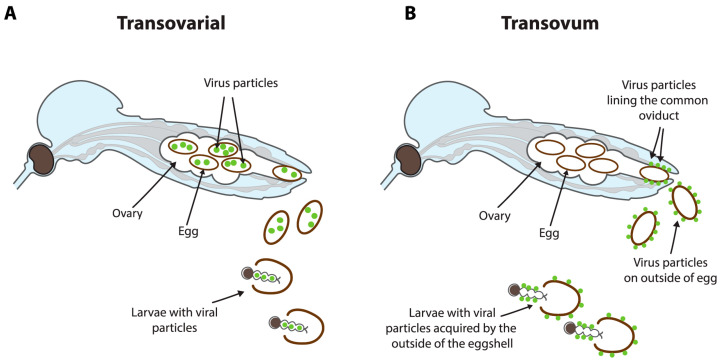
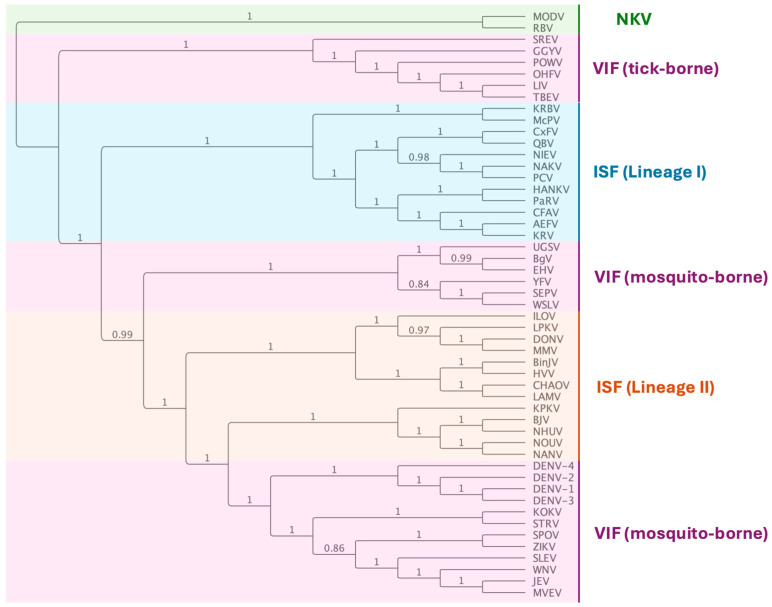
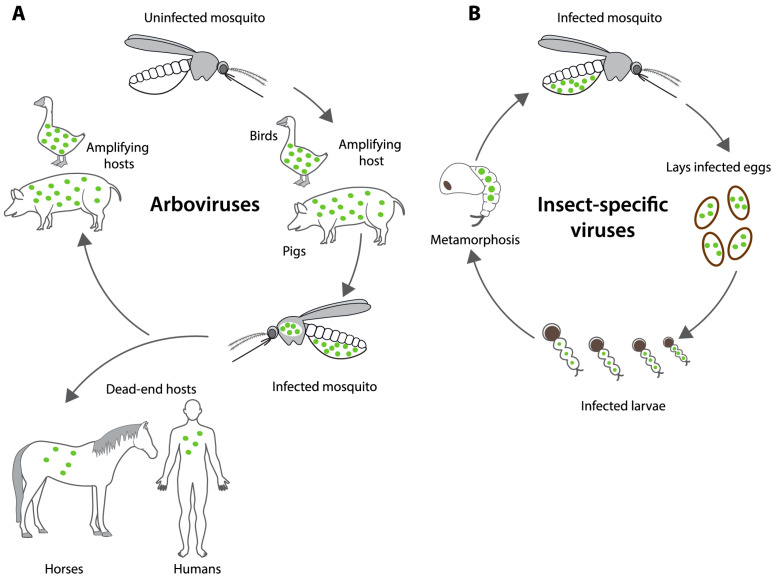
Insect-specific viruses (ISVs) include viruses that are restricted to the infection of mosquitoes and are spread mostly through transovarial transmission. Despite using a distinct mode of transmission, ISVs are often phylogenetically related to arthropod-borne viruses (arboviruses) that are responsible for human diseases and able to infect both mosquitoes and vertebrates. ISVs can also induce a phenomenon called "superinfection exclusion", whereby a primary ISV infection in an insect inhibits subsequent viral infections of the insect. This has sparked interest in the use of ISVs for the control of pathogenic arboviruses transmitted by mosquitoes. In particular, insect-specific flaviviruses (ISFs) have been shown to inhibit infection of vertebrate-infecting flaviviruses (VIFs) both in vitro and in vivo. This has shown potential as a new and ecologically friendly biological approach to the control of arboviral disease. For this intervention to have lasting impacts for biological control, it is imperative that ISFs are maintained in mosquito populations with high rates of vertical transmission. Therefore, these strategies will need to optimise vertical transmission of ISFs in order to establish persistently infected mosquito lines for sustainable arbovirus control. This review compares recent observations of vertical transmission of arboviral and insect-specific flaviviruses and potential determinants of transovarial transmission rates to understand how the vertical transmission of ISFs may be optimised for effective arboviral control.
昆虫特异性病毒(ISVs)包括仅限于感染蚊子并主要通过经卵传递传播的病毒。尽管使用了不同的传播方式,但 ISVs 通常与节肢动物传播的病毒(arboviruses)在系统发育上相关,这些病毒可引起人类疾病,并能够感染蚊子和脊椎动物。ISVs 还可以诱导一种称为“超感染排斥”的现象,即在昆虫中发生的原发性 ISV 感染抑制了昆虫随后的病毒感染。这引发了人们对利用 ISVs 控制由蚊子传播的致病性 arboviruses 的兴趣。特别是,昆虫特异性黄病毒(ISFs)已被证明可以在体外和体内抑制感染脊椎动物的黄病毒(VIFs)的感染。这为 arboviral 疾病的控制提供了一种新的、生态友好的生物方法,具有很大的潜力。为了使这种干预措施对生物控制具有持久的影响,必须在具有高垂直传播率的蚊子种群中维持 ISFs。因此,这些策略需要优化 ISFs 的垂直传播,以建立持续感染的蚊子系,从而实现可持续的 arbovirus 控制。本文综述了最近关于 arboviral 和昆虫特异性黄病毒垂直传播的观察结果以及跨卵传递率的潜在决定因素,以了解如何优化 ISFs 的垂直传播以实现有效的 arboviral 控制。