Emerg Infect Dis. 2020 Jul;26(7):1374-1381. doi: 10.3201/eid2607.191352.
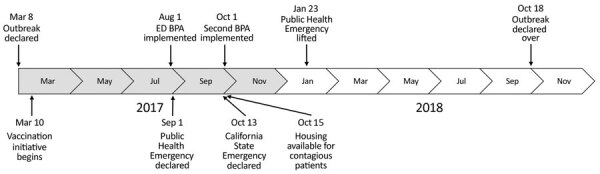
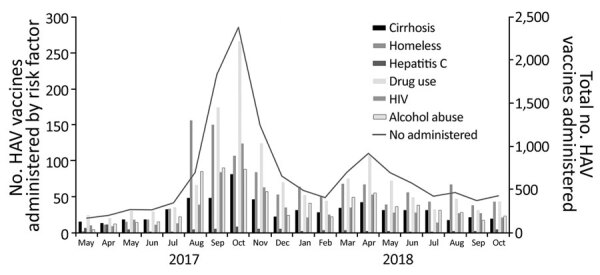
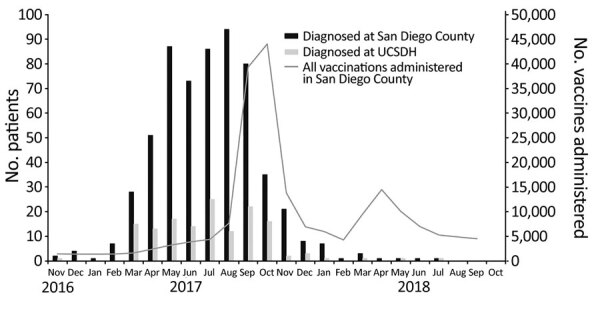
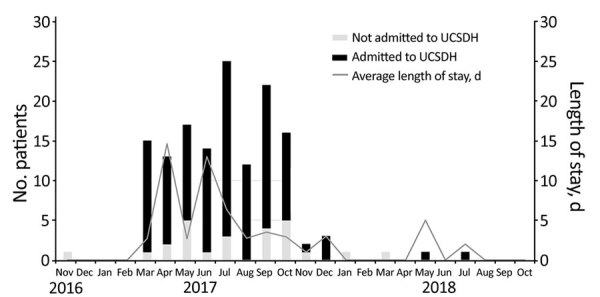
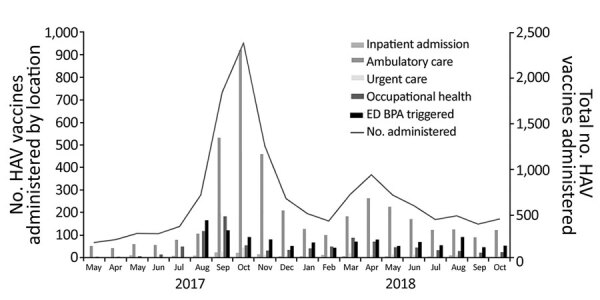
During 2016-2018, San Diego County, California, USA, experienced one of the largest hepatitis A outbreaks in the United States in 2 decades. In close partnership with local healthcare systems, San Diego County Public Health led a public health response to the outbreak that focused on a 3-pronged strategy to vaccinate, sanitize, and educate. Healthcare systems administered nearly half of the vaccinations delivered in San Diego County. At University of California San Diego Health, the use of informatics tools assisted with the identification of at-risk populations and with vaccine delivery across outpatient and inpatient settings. In addition, acute care facilities helped prevent further disease transmission by delaying the discharge of patients with hepatitis A who were experiencing homelessness. We assessed the public health roles that acute care hospitals can play during a large community outbreak and the critical nature of ongoing collaboration between hospitals and public health systems in controlling such outbreaks.
2016 年至 2018 年,美国加利福尼亚州圣地亚哥县经历了美国 20 年来最大规模的甲型肝炎疫情之一。圣地亚哥县公共卫生局与当地医疗保健系统密切合作,针对疫情采取了公共卫生应对措施,重点实施了疫苗接种、清洁和教育三管齐下的策略。医疗保健系统在圣地亚哥县接种了近一半的疫苗。在加利福尼亚大学圣地亚哥分校健康中心,信息学工具的使用有助于确定高危人群,并在门诊和住院环境中提供疫苗接种。此外,急症护理机构通过延迟患有甲型肝炎且无家可归的患者出院,帮助防止了疾病的进一步传播。我们评估了急症护理医院在大型社区疫情期间可以发挥的公共卫生作用,以及医院和公共卫生系统之间持续合作控制此类疫情的重要性。