Centre for Applied Health Economics, School of Medicine and Dentistry, Griffith University, The Circuit, Nathan, QLD 4111, Australia; Menzies Health Institute Queensland, Griffith University, Australia; School of Population Health, University of New South Wales, Australia.
Centre for Applied Health Economics, School of Medicine and Dentistry, Griffith University, The Circuit, Nathan, QLD 4111, Australia; Menzies Health Institute Queensland, Griffith University, Australia.
Vaccine. 2022 May 20;40(23):3109-3126. doi: 10.1016/j.vaccine.2022.04.022. Epub 2022 Apr 26.
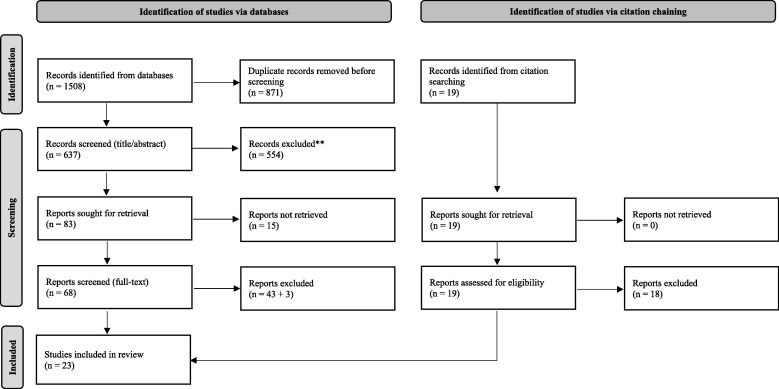
People who are homeless experience higher rates of vaccine-preventable disease, including COVID-19, than the general population, and poorer associated health outcomes. However, delivering vaccinations to people who are homeless is complex, and there is a lack of evidence to inform practice in this area. The aim of this systematic review is to: (a) identify, (b) analyse the characteristics of, and (c) evaluate the outcomes of, strategies to improve vaccination rates in people who are homeless. Literature was retrieved from eight electronic databases. Studies undertaken in high-income countries, published in English, in a peer-reviewed journal, and in full-text were considered. No limits were placed on study design or date. A total of 1,508 articles were retrieved and, after the removal of duplicates, 637 were screened. Twenty-three articles, reporting on nineteen separate vaccination strategies for hepatitis A/B, influenza, herpes zoster, invasive pneumococcal disease, and diphtheria in people who are homeless, were selected for inclusion. All the strategies were effective at improving vaccination rates in, people who are homeless. Most strategies involved vaccination clinics and most were delivered, at least in part, by nurses. Other characteristics of successful strategies included: delivering vaccinations at convenient locations; using accelerated vaccination schedules (if available); vaccinating at the first appointment, regardless of whether a person's vaccination history or serological status were known (if clinically safe); operating for a longer duration; offering training to staff about working with people who are homeless; widely promoting clinics; considering education, reminders, incentives, and co-interventions; ensuring no out-of-pocket costs; and working collaboratively with stakeholders, including people who are homeless themselves. These findings will inform evidence-based vaccination strategies, including for COVID-19, in people who are homeless, and improve associated health outcomes in this at-risk, hard-to-reach group.
无家可归者患可通过疫苗预防的疾病(包括 COVID-19)的比率高于一般人群,且相关健康结果较差。然而,为无家可归者接种疫苗很复杂,并且在这方面缺乏实践证据。本系统评价的目的是:(a) 识别,(b) 分析特征,以及 (c) 评估提高无家可归者疫苗接种率的策略的结果。从八个电子数据库中检索文献。考虑了在高收入国家进行的、以英语发表的、经过同行评审的期刊上发表的全文研究。未对研究设计或日期设置限制。共检索到 1508 篇文章,在去除重复项后,筛选出 637 篇文章。选择了 23 篇文章(报告了针对无家可归者的甲型肝炎/乙型肝炎、流感、疱疹、侵袭性肺炎球菌病和白喉的 19 项单独疫苗接种策略),以纳入本研究。所有策略均能有效提高无家可归者的疫苗接种率。大多数策略涉及疫苗接种诊所,且大多数策略(至少部分)由护士实施。成功策略的其他特征包括:在方便的地点提供疫苗接种;如果可用,使用加速疫苗接种时间表;无论一个人的疫苗接种史或血清学状态是否已知(如果临床安全),都在第一次预约时进行接种;延长接种时间;为工作人员提供有关与无家可归者合作的培训;广泛宣传诊所;考虑教育、提醒、激励和共同干预措施;确保无自付费用;与利益相关者(包括无家可归者本身)合作。这些发现将为无家可归者的疫苗接种策略(包括 COVID-19)提供循证依据,并改善这一高风险、难以接触到的群体的相关健康结果。