
尼日利亚举办蝙蝠节地区人类中的蝙蝠和狂犬病病毒暴露情况,2010 年和 2013 年。
Bat and Lyssavirus Exposure among Humans in Area that Celebrates Bat Festival, Nigeria, 2010 and 2013.
出版信息
Emerg Infect Dis. 2020 Jul;26(7):1399-1408. doi: 10.3201/eid2607.191016.
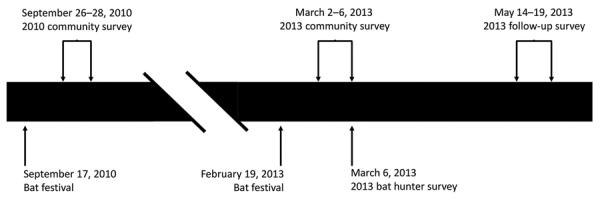
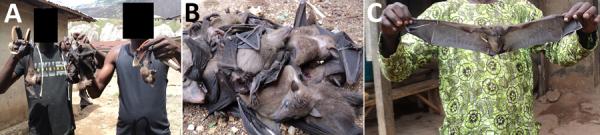
Using questionnaires and serologic testing, we evaluated bat and lyssavirus exposure among persons in an area of Nigeria that celebrates a bat festival. Bats from festival caves underwent serologic testing for phylogroup II lyssaviruses (Lagos bat virus, Shimoni bat virus, Mokola virus). The enrolled households consisted of 2,112 persons, among whom 213 (10%) were reported to have ever had bat contact (having touched a bat, having been bitten by a bat, or having been scratched by a bat) and 52 (2%) to have ever been bitten by a bat. Of 203 participants with bat contact, 3 (1%) had received rabies vaccination. No participant had neutralizing antibodies to phylogroup II lyssaviruses, but >50% of bats had neutralizing antibodies to these lyssaviruses. Even though we found no evidence of phylogroup II lyssavirus exposure among humans, persons interacting with bats in the area could benefit from practicing bat-related health precautions.
我们通过问卷调查和血清学检测评估了尼日利亚一个庆祝蝙蝠节地区人群的蝙蝠和狂犬病毒暴露情况。对来自节日洞穴的蝙蝠进行了血清学检测,以检测 II 型组狂犬病毒(拉各斯蝙蝠病毒、希莫尼蝙蝠病毒、莫科拉病毒)。登记的家庭共有 2112 人,其中 213 人(10%)报告曾接触过蝙蝠(触摸过蝙蝠、被蝙蝠咬伤或被蝙蝠抓伤),52 人(2%)曾被蝙蝠咬伤。在 203 名有蝙蝠接触史的参与者中,有 3 人(1%)接受过狂犬病疫苗接种。没有参与者对 II 型组狂犬病毒产生中和抗体,但超过 50%的蝙蝠对这些狂犬病毒产生了中和抗体。尽管我们没有发现人类感染 II 型组狂犬病毒的证据,但该地区与蝙蝠接触的人群可以从实践与蝙蝠相关的健康预防措施中受益。

 Zotero 插件