Division of Endocrine and Metabolic Disease, Center for Biomedical Sciences, Korea National Institute of Health, Cheongju, Chungbuk, 28159, Republic of Korea.
Division of Cardiovascular Disease, Center for Biomedical Sciences, Korea National Institute of Health, Cheongju, Chungbuk, 28159, Republic of Korea.
Sci Rep. 2020 Jun 22;10(1):10054. doi: 10.1038/s41598-020-66971-1.
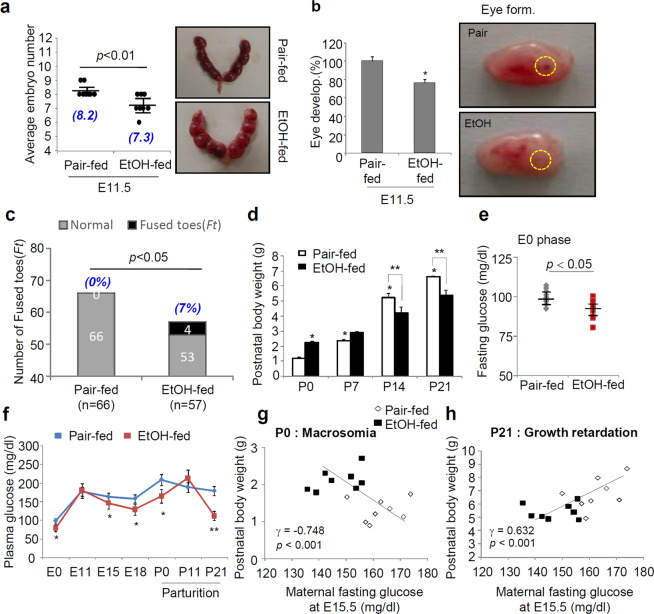
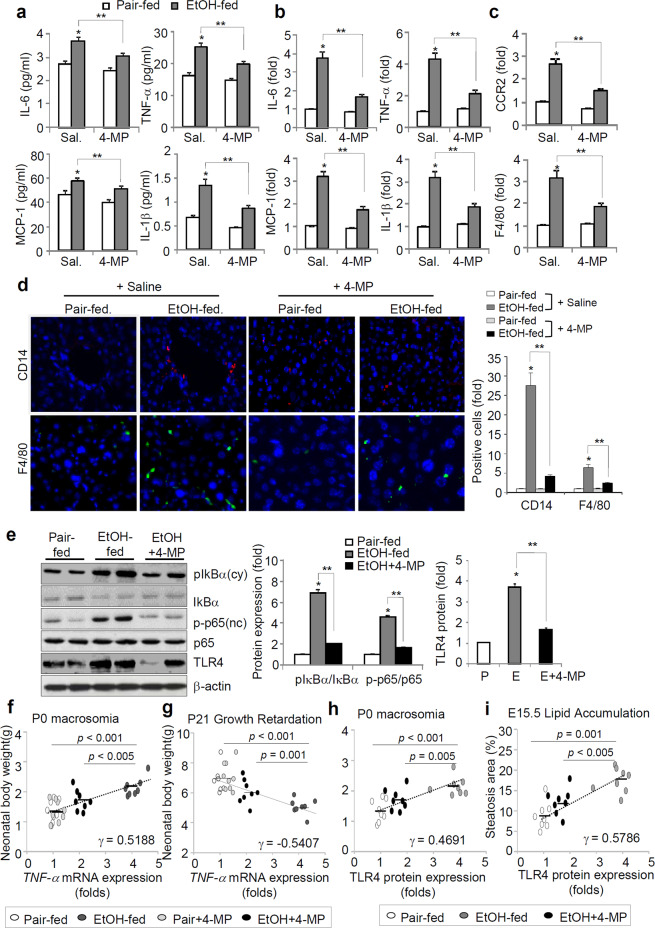
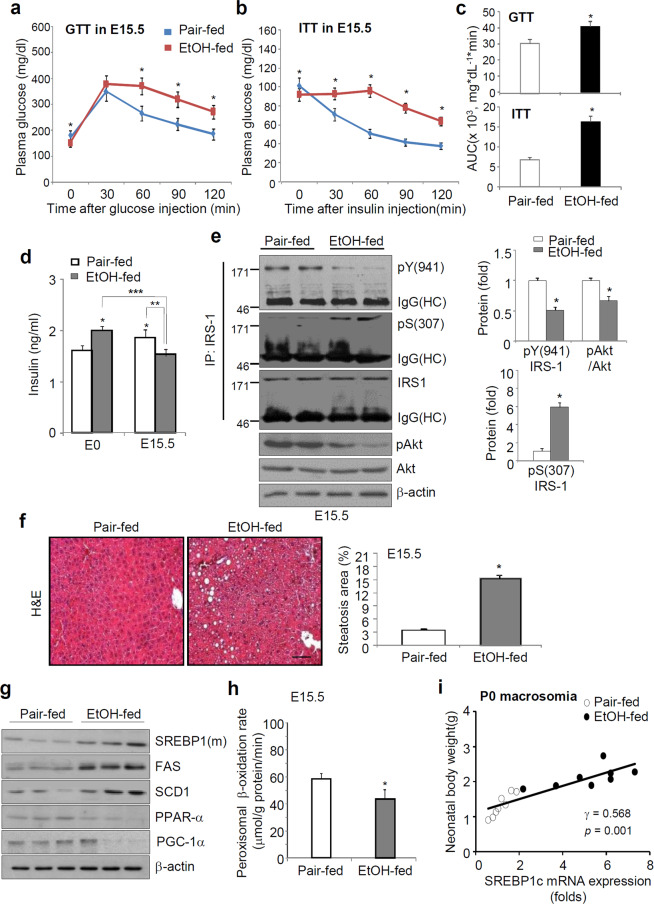
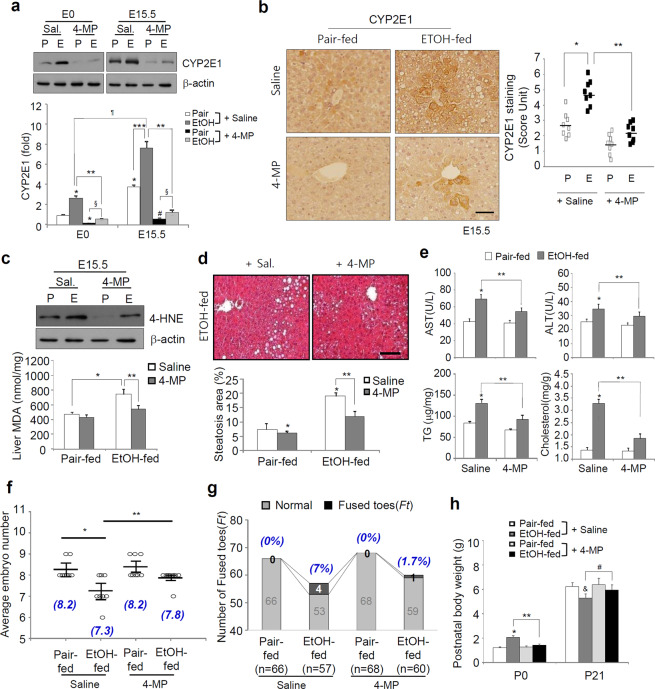
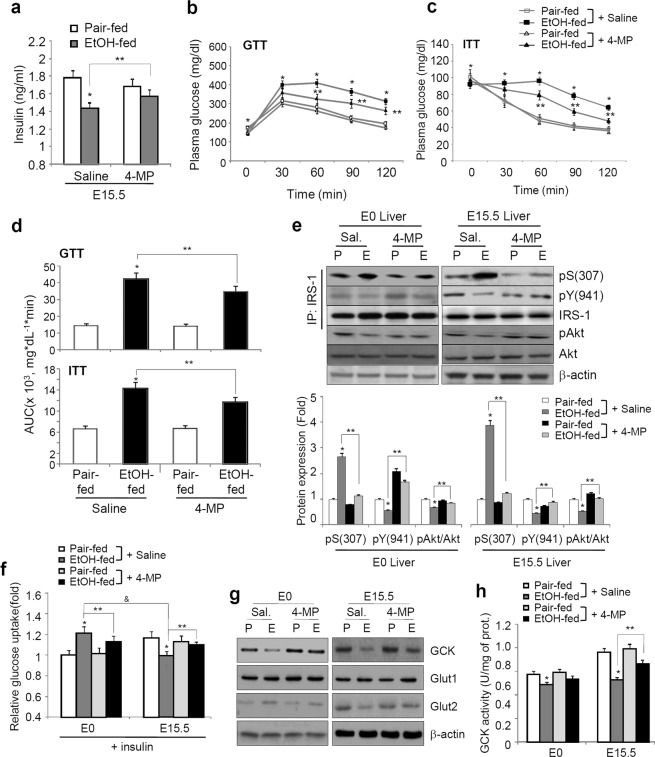
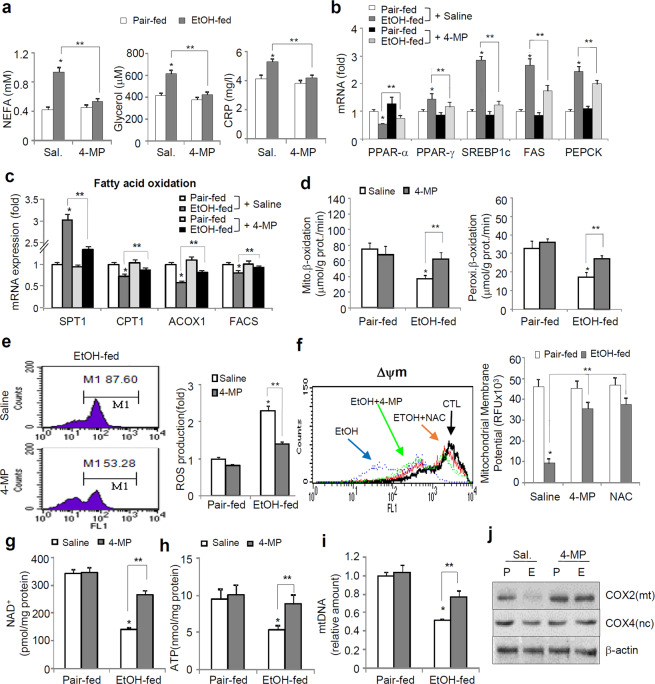
Alcohol consumption before or during pregnancy poses serious health risks to the fetus; however, the underlying mechanisms involved remain obscure. Here, we investigated whether ethanol consumption before pregnancy affects maternal or fetal health and whether pharmacological inhibition of CYP2E1, a major ethanol oxidation enzyme, by 4-methylpyrazole (4-MP) has therapeutic effects. We found that ethanol consumption (5%) 2 weeks before pregnancy resulted in a decrease in the number of viable fetuses and abnormal fetal development, and these effects were accompanied by impaired maternal glucose homeostasis and hepatic steatosis during pregnancy. Neonates of ethanol-fed mice had postnatal macrosomia and significantly decreased growth rates during the lactation period. However, treatment with 4-MP, a CYP2E1 inhibitor, markedly ameliorated the reduction in insulin action and glucose disposal responsiveness in the livers of ethanol-fed mice. Blockage of CYP2E1 significantly reduced the alteration in hepatic lipid deposition, fatty acid oxidation, mitochondrial energy status, and macrophage infiltration observed in ethanol-fed mice. Finally, there was a positive correlation between postnatal macrosomia or growth retardation and increased inflammatory responses. Collectively, our study suggests that even moderate ethanol intake may be detrimental to fetal development and may cause growth retardation through maternal metabolic disorders.
饮酒会对胎儿健康造成严重威胁;然而,其中涉及的潜在机制尚不清楚。在此,我们研究了孕前饮酒是否会影响母体或胎儿健康,以及是否可以通过 4-甲基吡唑(4-MP)抑制主要的乙醇氧化酶 CYP2E1 来进行治疗。我们发现,孕前 2 周摄入乙醇(5%)会导致胚胎存活率下降和胎儿发育异常,这些影响伴随着妊娠期间母体葡萄糖稳态和肝脂肪变性受损。乙醇喂养的小鼠的新生儿在产后有巨体症,并在哺乳期期间的生长速度明显下降。然而,用 CYP2E1 抑制剂 4-MP 治疗可显著改善乙醇喂养小鼠肝脏中胰岛素作用和葡萄糖处理的反应性降低。阻断 CYP2E1 可显著减少乙醇喂养小鼠肝脏中观察到的脂质沉积、脂肪酸氧化、线粒体能量状态和巨噬细胞浸润的改变。最后,新生儿巨体症或生长迟缓与炎症反应增加呈正相关。总之,我们的研究表明,即使是适度的乙醇摄入也可能对胎儿发育有害,并可能通过母体代谢紊乱导致生长迟缓。