Lv Xuefeng, Chen Lei, He Sangang, Liu Chenxi, Han Bin, Liu Zhilong, Yusupu Mayila, Blair Hugh, Kenyon Paul, Morris Stephen, Li Wenrong, Liu Mingjun
College of Life Science and Technology, Xinjiang University, Urmuqi 830000, China.
Institute of Animal Husbandry Quality Standards, Xinjiang Academy of Animal Sciences, Urmuqi 830000, China.
Animals (Basel). 2020 Jun 19;10(6):1058. doi: 10.3390/ani10061058.
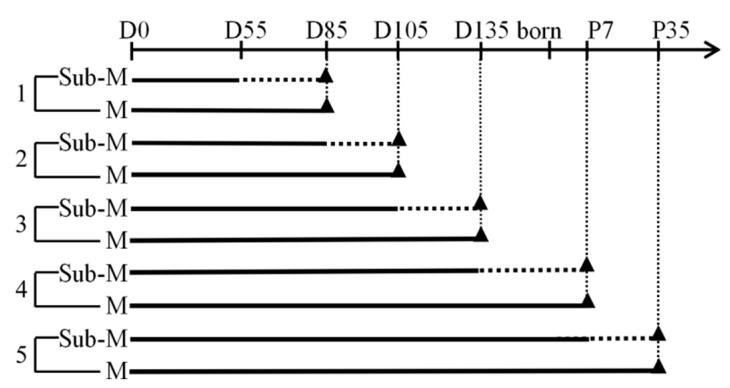
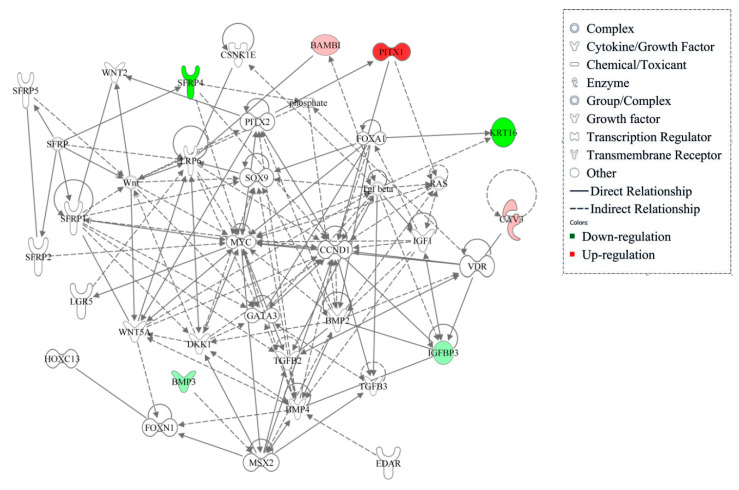
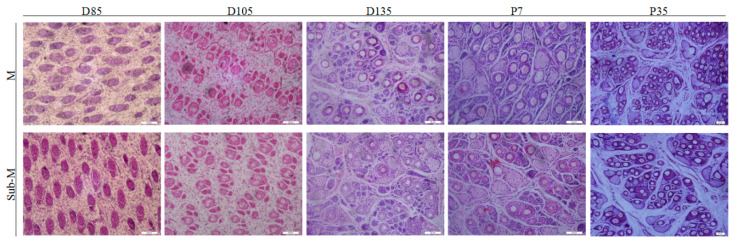
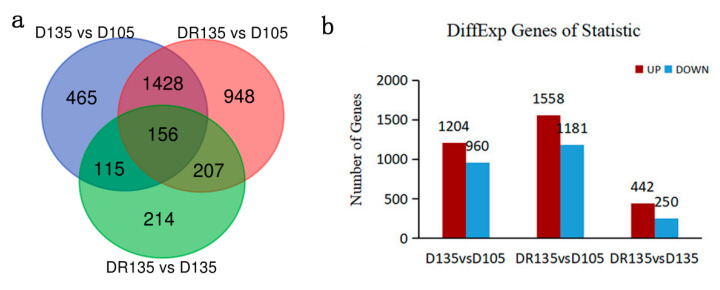
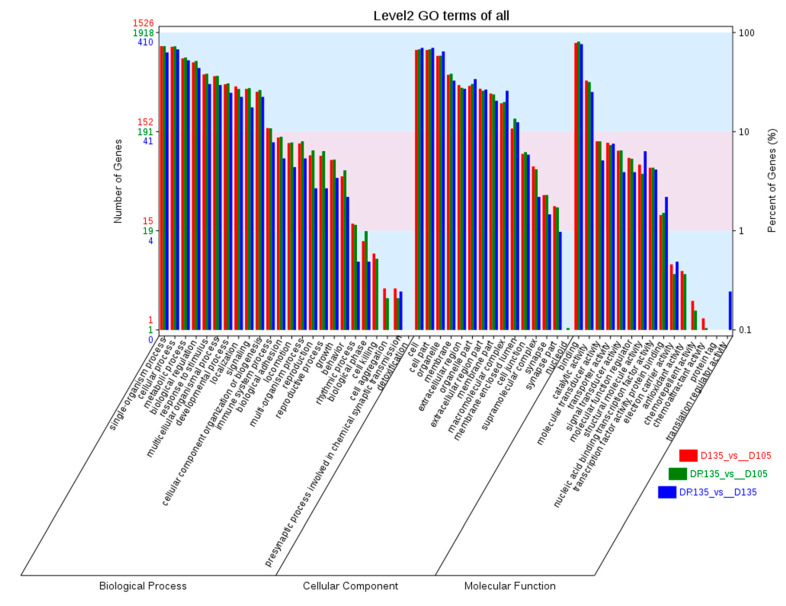
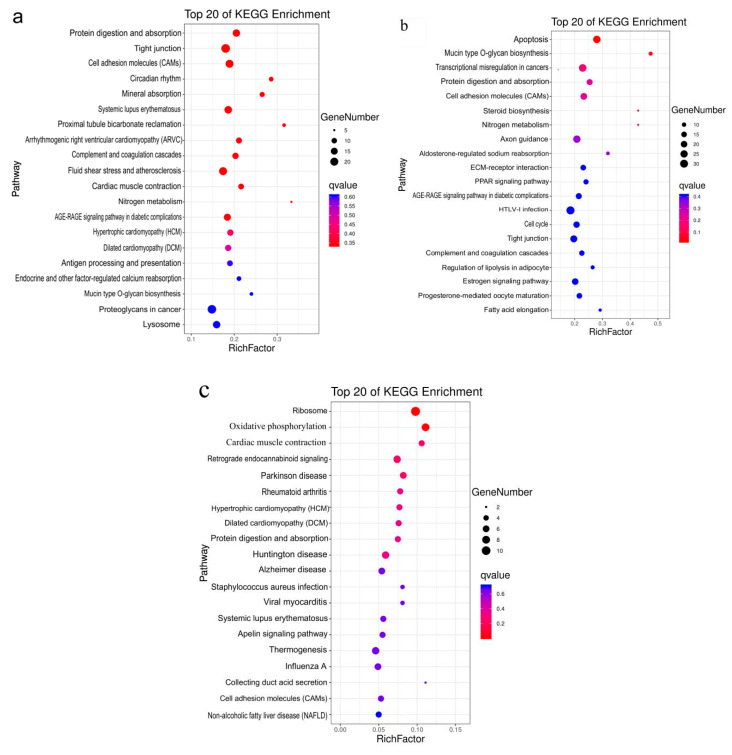
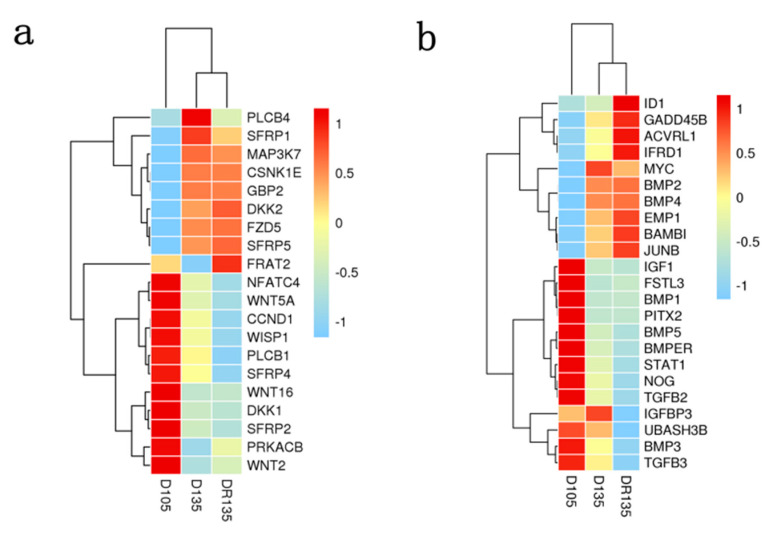
The high concentration of secondary branched wool follicles is a distinctive feature of the Merino sheep. At present, the molecular control of the development and branching of secondary wool follicles (SF) remains elusive. To reveal the potential genes associated with the development of hair follicles, we investigated the characteristics of prenatal and postnatal development of wool follicles, and the transcriptional expression profile in fetuses/lambs from dams under either maternal maintenance or sub-maintenance (75% maintenance) nutrition. The density of SF and the ratio of SF to primary wool follicles (PF) were reduced ( < 0.05) in fetuses from day 105 to 135 of gestation under sub-maintenance nutrition. Differentially expressed genes were enriched in the binding, single-organism process, cellular process, cell and cell part Gene Ontology (GO) functional categories and metabolism, apoptosis, and ribosome pathways. Four candidate genes, , , , and , which were involved in secondary wool follicles branching and development, were identified. Our results indicate that nutritional intervention imposed on pregnant ewes by short-term sub-maintenance nutrition could provide a strategy for the study of wool follicle development. Overall insight into the global gene expression associated with SF development can be used to investigate the underlying mechanisms of SF branching in Merino sheep.
次级分支毛囊的高浓度是美利奴羊的一个显著特征。目前,次级毛囊(SF)发育和分支的分子调控仍不清楚。为了揭示与毛囊发育相关的潜在基因,我们研究了毛囊产前和产后发育的特征,以及母体维持或亚维持(75%维持)营养条件下母羊所产胎儿/羔羊的转录表达谱。在亚维持营养条件下,妊娠105至135天胎儿的SF密度以及SF与初级毛囊(PF)的比例降低(<0.05)。差异表达基因富集于结合、单细胞过程、细胞过程、细胞和细胞部分基因本体(GO)功能类别以及代谢、凋亡和核糖体途径。鉴定出四个参与次级毛囊分支和发育的候选基因。我们的结果表明,短期亚维持营养对怀孕母羊进行营养干预可为毛囊发育研究提供一种策略。对与SF发育相关的全局基因表达的全面了解可用于研究美利奴羊SF分支的潜在机制。