Gong Gao, Fan Yixing, Yan Xiaochun, Li Wenze, Yan Xiaomin, Liu Hongfu, Zhang Ludan, Su Yixing, Zhang Jiaxin, Jiang Wei, Liu Zhihong, Wang Zhiying, Wang Ruijun, Zhang Yanjun, Lv Qi, Li Jinquan, Su Rui
College of Animal Science, Inner Mongolia Agricultural University, Hohhot, China.
College of Animal Science and Veterinary Medicine, Shenyang Agricultural University, Shenyang, China.
Front Vet Sci. 2022 Jun 14;9:894380. doi: 10.3389/fvets.2022.894380. eCollection 2022.
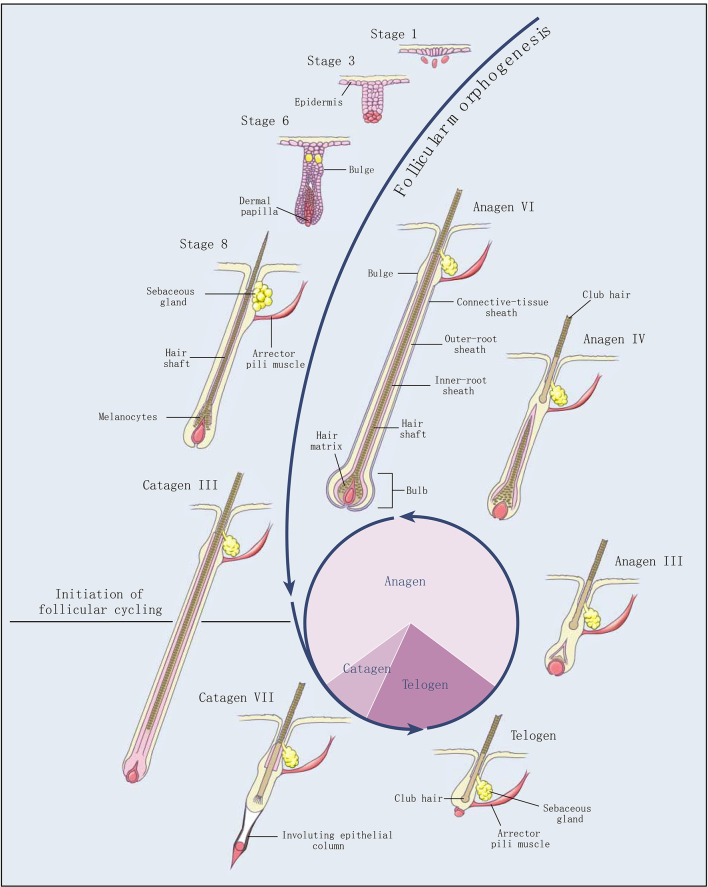
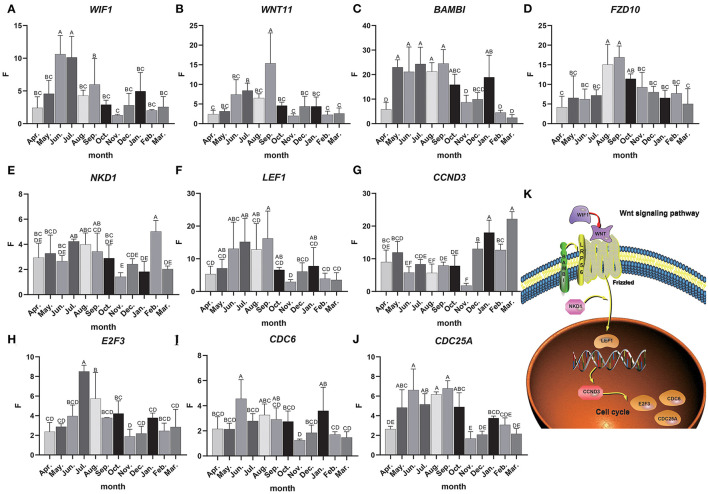
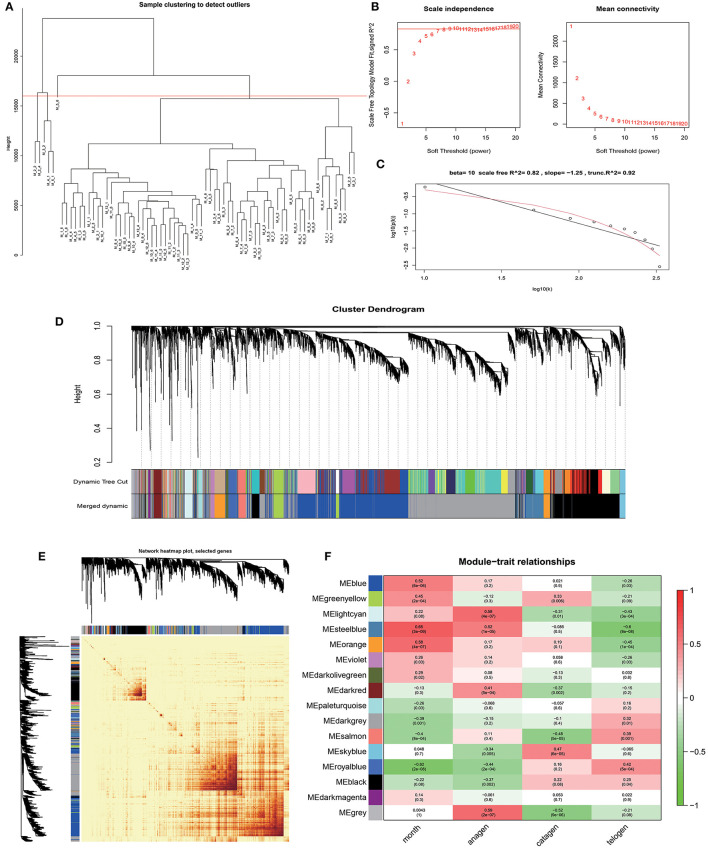
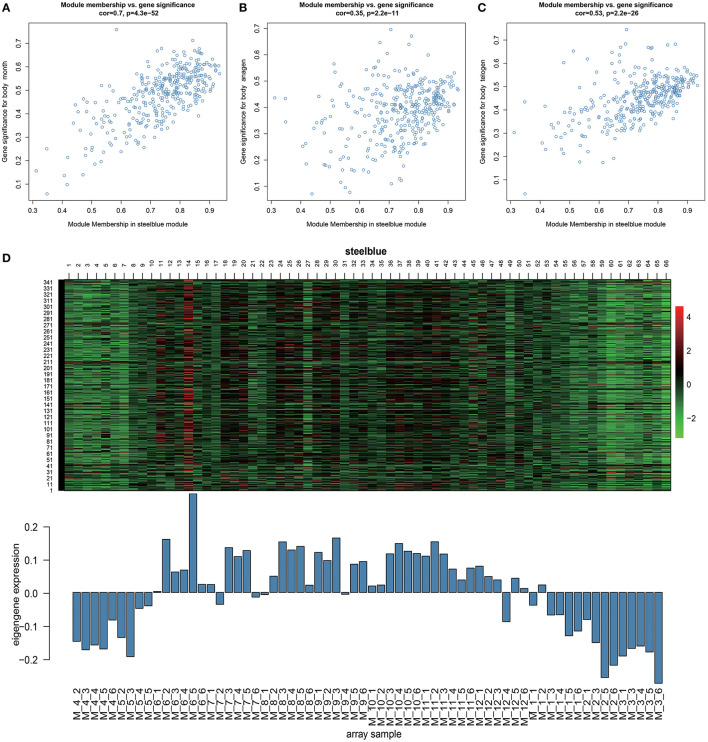
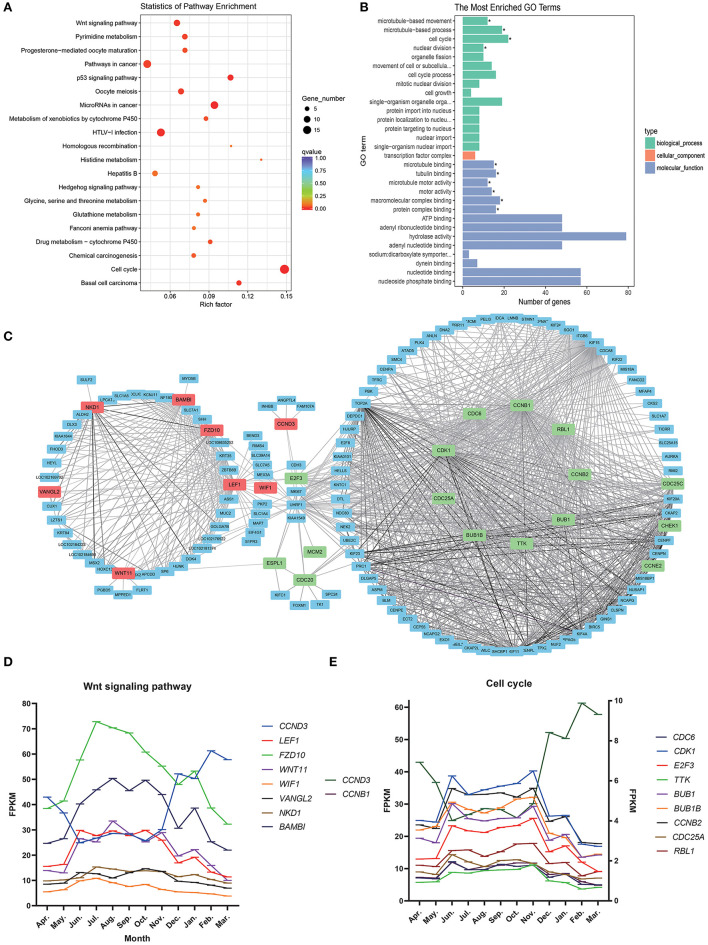
Cashmere goat from Inner Mongolia is an excellent local breed in China, and the related cashmere product is a kind of precious textile raw material with high price. Cashmere is generated from secondary hair follicles, which has obvious annual periodicity and includes three different stages: anagen, catagen, and telogen. Therefore, we investigated skin transcriptome data for 12 months using weighted gene co-expression network analysis (WGCNA) to explore essential modules, pathways, and genes responsible for the periodic growth and development of secondary hair follicles. A total of 17 co-expression modules were discovered by WGCNA, and there is a strong correlation between steelblue module and month (0.65, = 3E-09), anagen (0.52, = 1E-05), telogen (-0.6, = 8E-08). Gene expression was generally high during late anagen to catagen (June to December), while expression was downregulated from telogen to early anagen (January-May), which is similar to the growth rule of hair follicle cycle. KEGG pathway enrichment analyses of the genes of steelblue module indicated that genes are mainly enriched in Cell cycle, Wnt signaling pathway, p53 signaling pathway and other important signal pathways. These genes were also significantly enriched in GO functional annotation of the cell cycle, microtubule movement, microtubule binding, tubulin binding, and so on. Ten genes (, and ) were selected from these modules, and further identified as candidate biomarkers to regulate periodic development of hair follicles using qRT-PCR. The Wnt signaling pathway and Cell cycle play an important role in the periodic development of hair follicles. Ten genes were identified as essential functional molecules related to periodic development of hair follicle. These findings laid a foundation for understanding molecular mechanisms in biological functions such as hair follicle development and hair growth in cashmere goats.
内蒙古绒山羊是我国优良的地方品种,其相关羊绒产品是一种价格高昂的珍贵纺织原料。羊绒由次级毛囊产生,具有明显的年度周期性,包括生长期、退行期和休止期三个不同阶段。因此,我们使用加权基因共表达网络分析(WGCNA)对皮肤转录组数据进行了为期12个月的研究,以探索负责次级毛囊周期性生长和发育的关键模块、途径和基因。通过WGCNA共发现了17个共表达模块,其中钢蓝色模块与月份(0.65,P = 3E - 09)、生长期(0.52,P = 1E - 05)、休止期(-0.6,P = 8E - 08)之间存在很强的相关性。基因表达在生长期后期到退行期(6月至12月)通常较高,而从休止期到生长期早期(1月至5月)表达下调,这与毛囊周期的生长规律相似。对钢蓝色模块的基因进行KEGG通路富集分析表明,基因主要富集在细胞周期、Wnt信号通路、p53信号通路等重要信号通路中。这些基因在细胞周期、微管运动、微管结合、微管蛋白结合等GO功能注释中也显著富集。从这些模块中选择了10个基因(……),并使用qRT - PCR进一步鉴定为调节毛囊周期性发育的候选生物标志物。Wnt信号通路和细胞周期在毛囊的周期性发育中起重要作用。10个基因被确定为与毛囊周期性发育相关的关键功能分子。这些发现为理解绒山羊毛囊发育和毛发生长等生物学功能的分子机制奠定了基础。