Institute of Innate Immunity, Biophysical Imaging, Medical Faculty, University of Bonn, Bonn, Germany.
Department of Molecular Sensory Systems, Center of Advanced European Studies and Research (caesar), Bonn, Germany.
Elife. 2020 Jun 24;9:e57907. doi: 10.7554/eLife.57907.
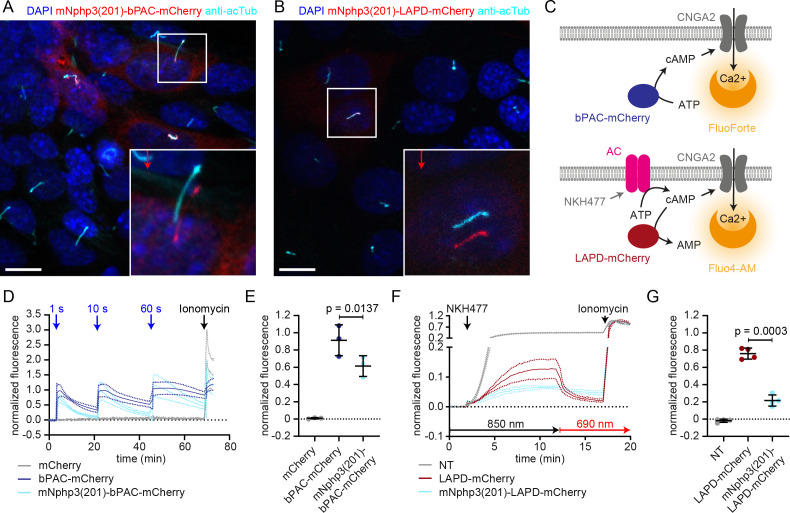
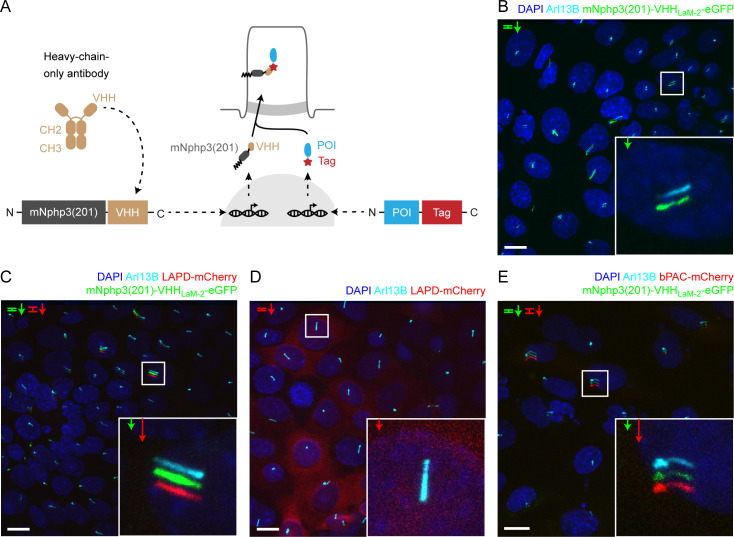
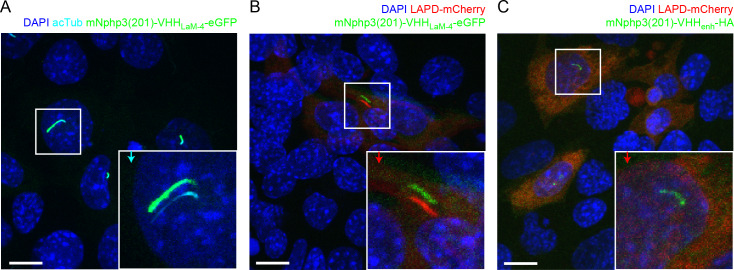
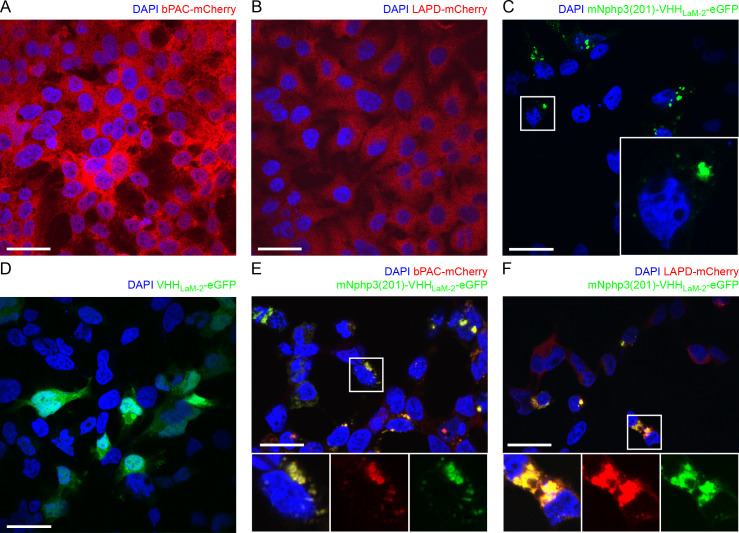
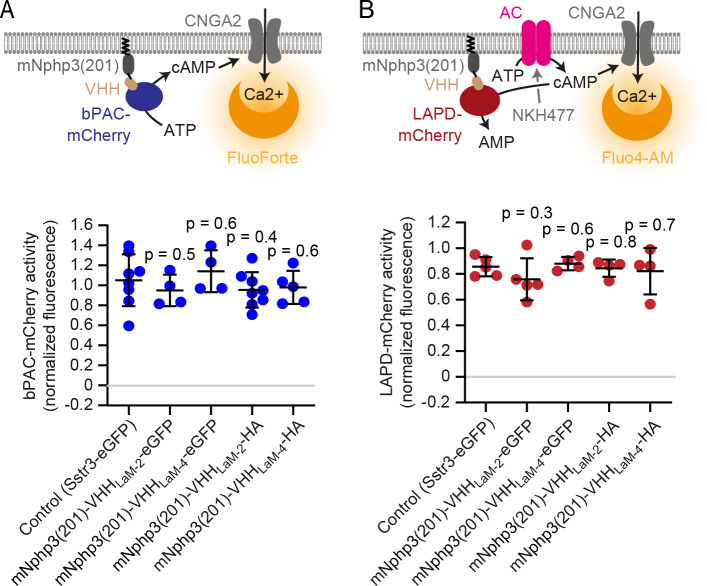
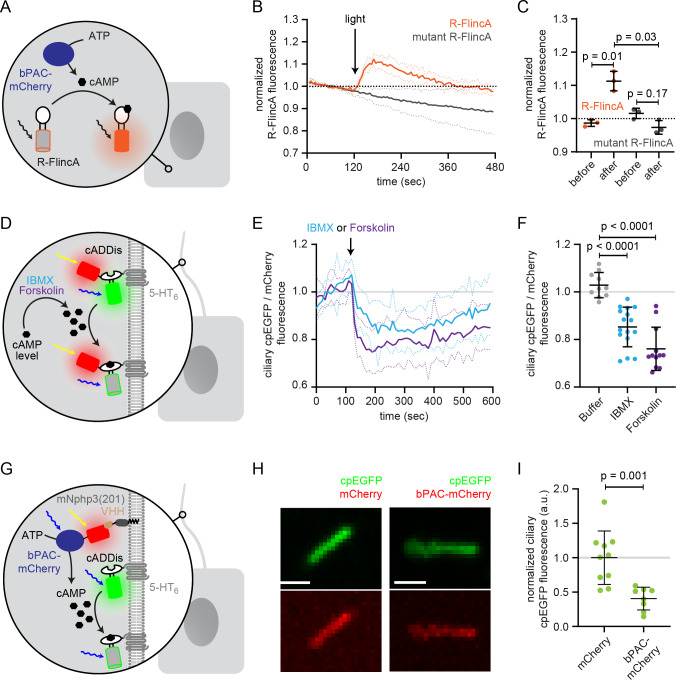
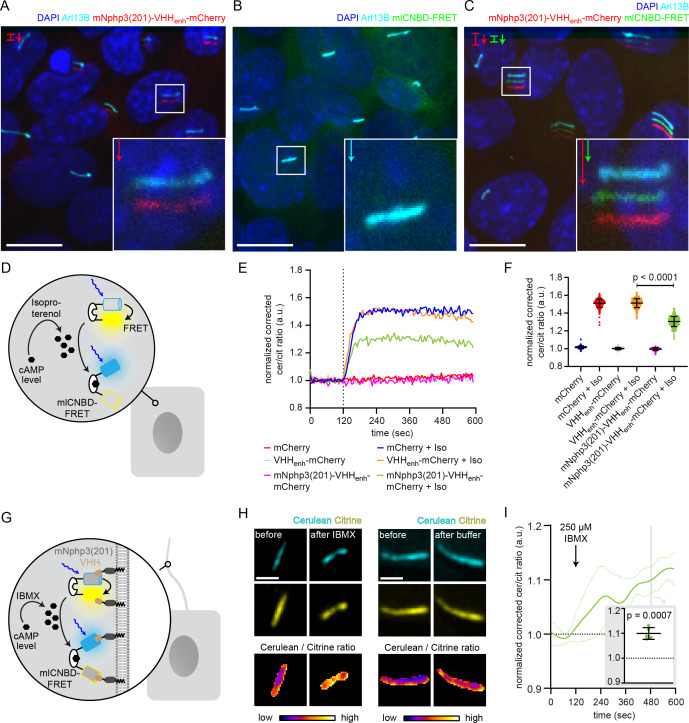
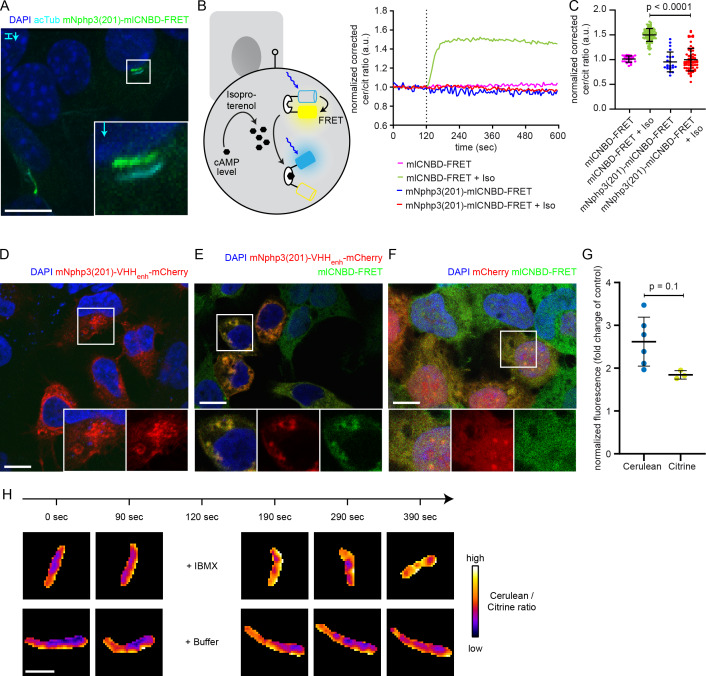
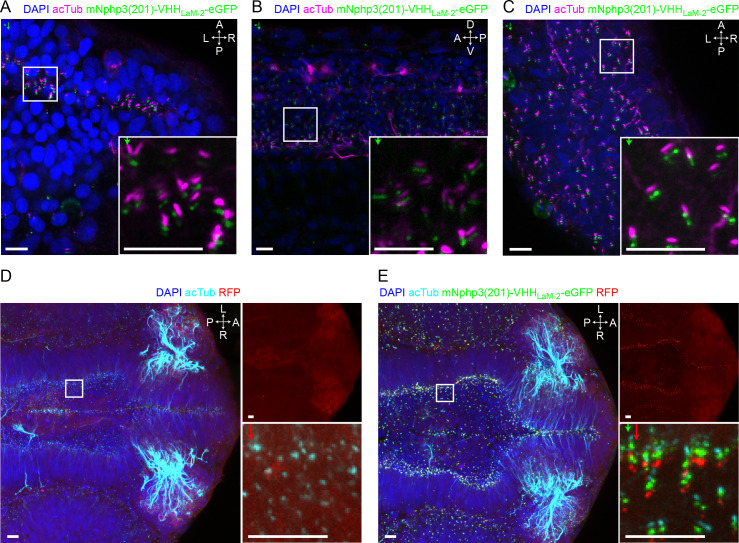
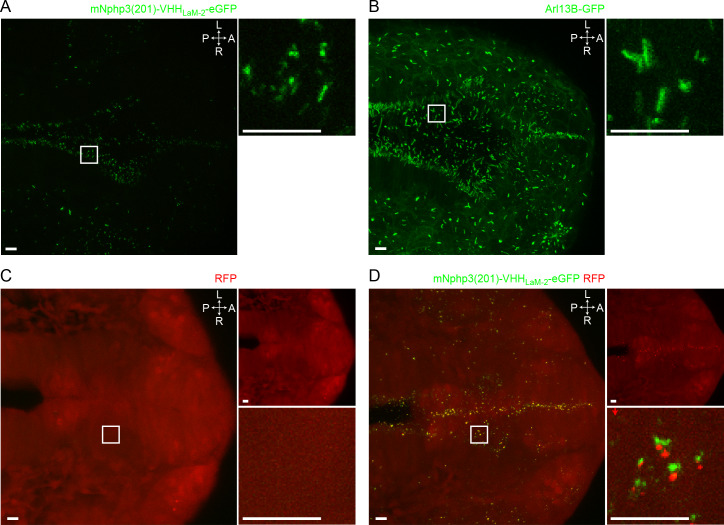
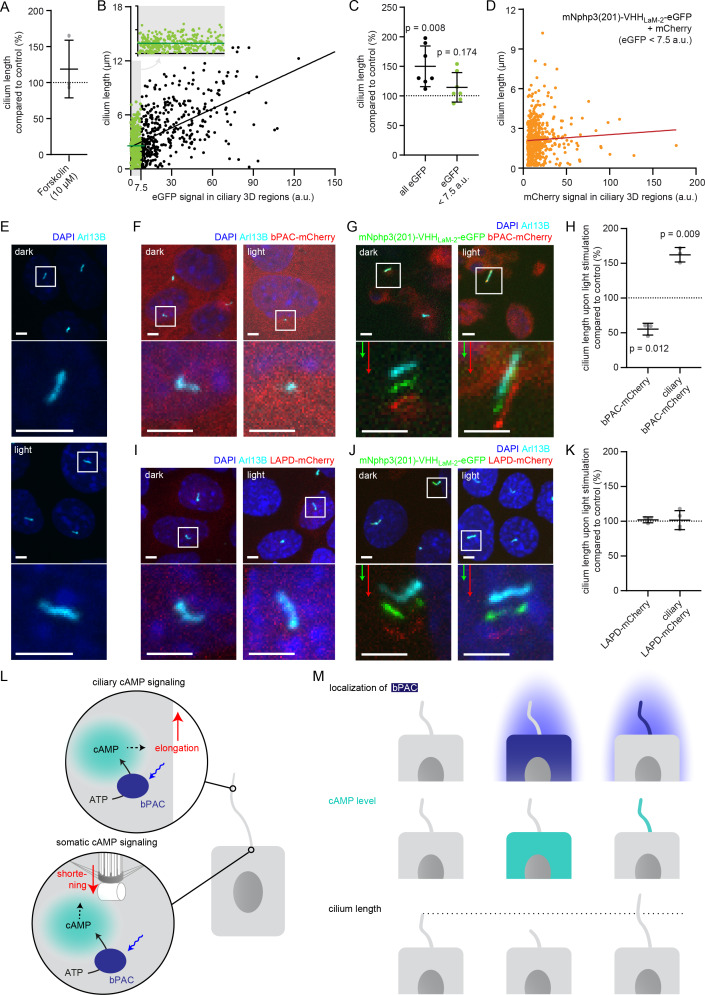
Compartmentalization of cellular signaling forms the molecular basis of cellular behavior. The primary cilium constitutes a subcellular compartment that orchestrates signal transduction independent from the cell body. Ciliary dysfunction causes severe diseases, termed ciliopathies. Analyzing ciliary signaling has been challenging due to the lack of tools to investigate ciliary signaling. Here, we describe a nanobody-based targeting approach for optogenetic tools in mammalian cells and in vivo in zebrafish to specifically analyze ciliary signaling and function. Thereby, we overcome the loss of protein function observed after fusion to ciliary targeting sequences. We functionally localized modifiers of cAMP signaling, the photo-activated adenylyl cyclase bPAC and the light-activated phosphodiesterase LAPD, and the cAMP biosensor mlCNBD-FRET to the cilium. Using this approach, we studied the contribution of spatial cAMP signaling in controlling cilia length. Combining optogenetics with nanobody-based targeting will pave the way to the molecular understanding of ciliary function in health and disease.
细胞信号的分隔构成了细胞行为的分子基础。初级纤毛构成了一个亚细胞区室,它独立于细胞体来协调信号转导。纤毛病是由于纤毛功能障碍引起的严重疾病。由于缺乏研究纤毛信号的工具,分析纤毛信号一直具有挑战性。在这里,我们描述了一种基于纳米体的针对哺乳动物细胞和斑马鱼体内的光遗传学工具的靶向方法,以专门分析纤毛信号和功能。通过这种方法,我们克服了融合到纤毛靶向序列后观察到的蛋白质功能丧失的问题。我们将 cAMP 信号的调节剂、光激活的腺苷酸环化酶 bPAC 和光激活的磷酸二酯酶 LAPD 以及 cAMP 生物传感器 mlCNBD-FRET 功能定位到纤毛上。使用这种方法,我们研究了空间 cAMP 信号在控制纤毛长度中的贡献。将光遗传学与基于纳米体的靶向相结合,将为理解纤毛在健康和疾病中的功能的分子机制铺平道路。