Tang Lingfei, Pruitt Patrick J, Yu Qijing, Homayouni Roya, Daugherty Ana M, Damoiseaux Jessica S, Ofen Noa
Institute of Gerontology, Wayne State University, Detroit, MI, United States.
Department of Psychology, Wayne State University, Detroit, MI, United States.
Front Hum Neurosci. 2020 Jun 5;14:204. doi: 10.3389/fnhum.2020.00204. eCollection 2020.
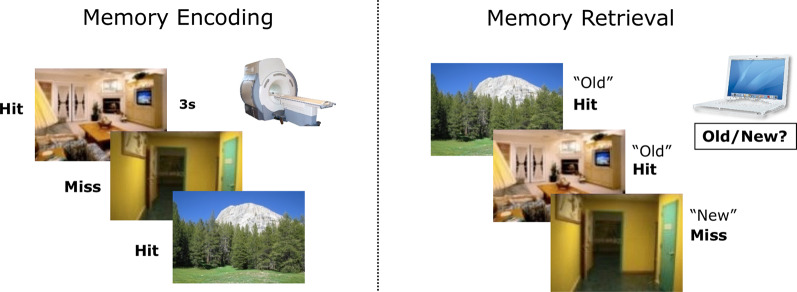
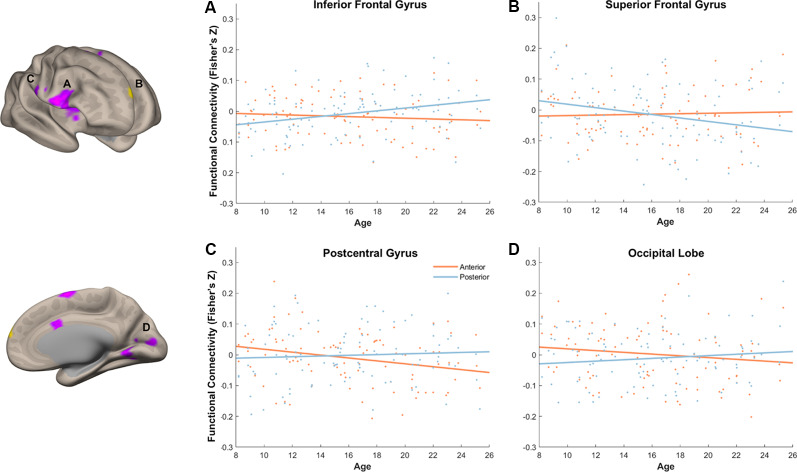
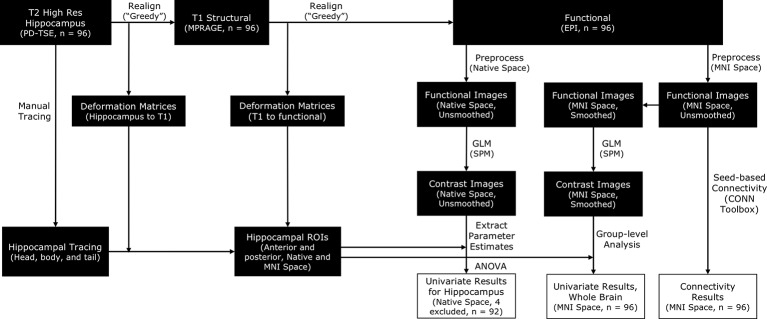
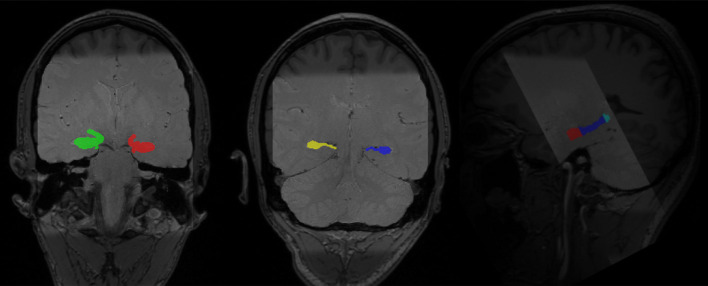
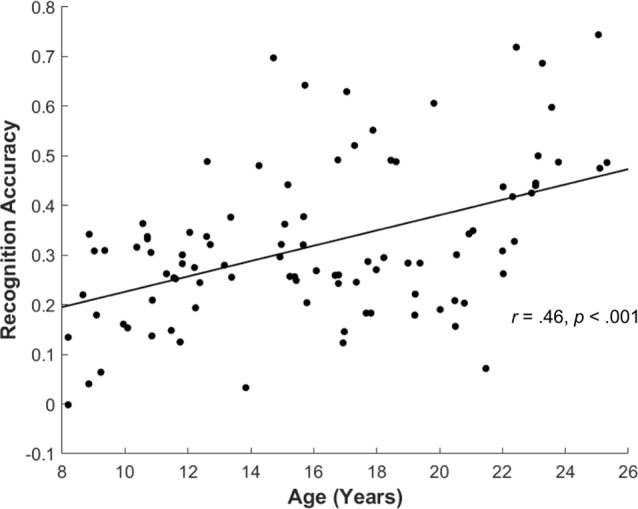
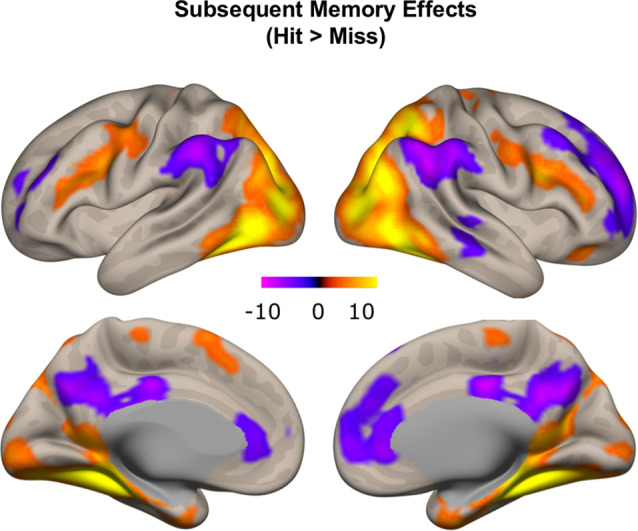
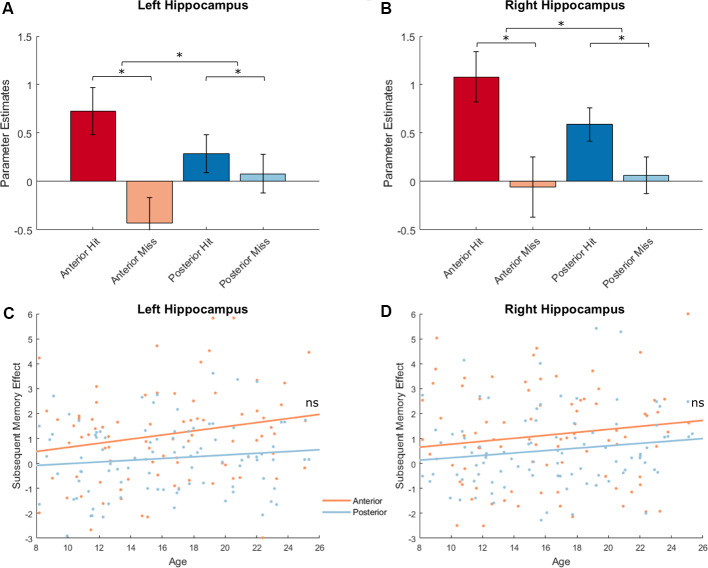
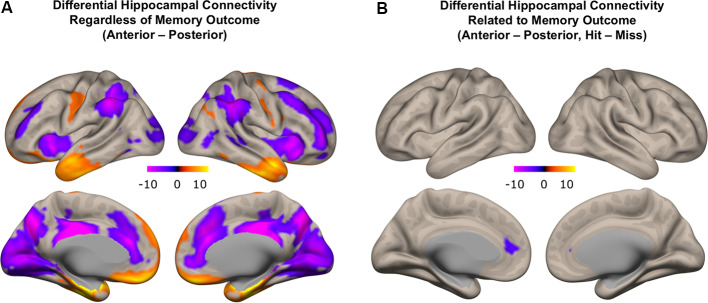
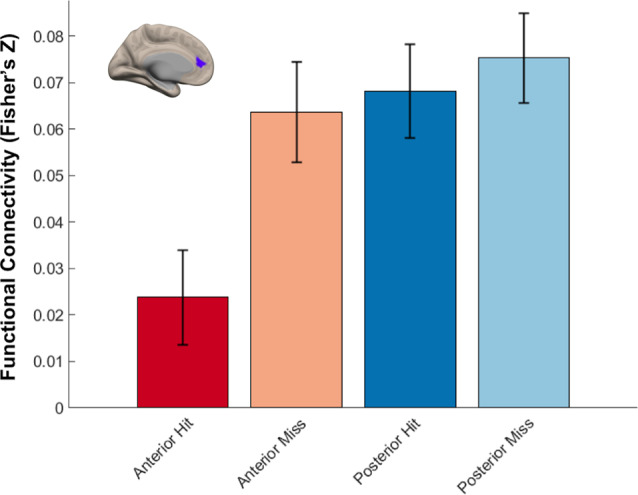
Neuroimaging evidence suggests that the development of the hippocampus, a brain structure critical for memory function, contributes to the improvements of episodic memory between middle childhood to adulthood. However, investigations on age differences in hippocampal activation and functional connectivity and their contributions to the development of memory have yielded mixed results. Given the known structural and functional heterogeneity along the long axis of the hippocampus, we investigated age differences in the activation and functional connectivity in hippocampal subregions with a cross-sectional sample of 96 participants ages 8-25 years. We found that anterior and posterior hippocampus supported memory formation, and there was overall stability in memory-related hippocampal activation with age. Without taking account of memory outcome, direct contrast between subregions showed higher functional connectivity of anterior, compared to the posterior hippocampus, with regions in the inferior frontal and lateral temporal lobes, and higher functional connectivity of posterior, compared to the anterior hippocampus, with regions in the medial and superior frontal, inferior parietal, and occipital lobes. A direct contrast between the memory-related connectivity patterns of anterior and posterior hippocampus identified a region in the medial frontal cortex, with which anterior and posterior hippocampus was differentially functionally connected. Finally, we identified age differences in memory-related differential hippocampal functional connectivity with several frontal and visual/sensory cortices, underscoring the importance of examining age differences in the patterns of hippocampal connectivity. Moreover, the specific patterns of differential anterior and posterior functional connectivity indicate an increase in the functional specialization along the long axis of the hippocampus and a dynamic shift in hippocampal connectivity patterns that supports memory development.
神经影像学证据表明,海马体(对记忆功能至关重要的脑结构)的发育有助于儿童中期到成年期情景记忆的改善。然而,关于海马体激活和功能连接的年龄差异及其对记忆发展的贡献的研究结果不一。鉴于海马体长轴上已知的结构和功能异质性,我们对96名8至25岁参与者的横断面样本进行了研究,以探讨海马体亚区域激活和功能连接的年龄差异。我们发现,海马体前部和后部支持记忆形成,与记忆相关的海马体激活随年龄增长总体保持稳定。在不考虑记忆结果的情况下,亚区域之间的直接对比显示,与海马体后部相比,海马体前部与额下回和颞叶外侧区域的功能连接更强;与海马体前部相比,海马体后部与额中回、额上回、顶下小叶和枕叶区域的功能连接更强。海马体前部和后部与记忆相关的连接模式之间的直接对比确定了内侧前额叶皮质中的一个区域,海马体前部和后部与该区域的功能连接存在差异。最后,我们确定了海马体与几个额叶和视觉/感觉皮质的与记忆相关的差异功能连接的年龄差异,强调了研究海马体连接模式年龄差异的重要性。此外,前部和后部差异功能连接的特定模式表明,海马体长轴上的功能特化增加,以及支持记忆发展的海马体连接模式的动态转变。