Hannachi Nadji, Ogé-Ganaye Emma, Baudoin Jean-Pierre, Fontanini Anthony, Bernot Denis, Habib Gilbert, Camoin-Jau Laurence
Aix Marseille Univ, IRD, APHM, MEPHI, IHU Méditerranée infection, Marseille, France.
Laboratoire d'Hématologie, Hôpital de la Timone, APHM, Boulevard Jean-Moulin, Marseille, France.
Front Pharmacol. 2020 Jun 5;11:863. doi: 10.3389/fphar.2020.00863. eCollection 2020.
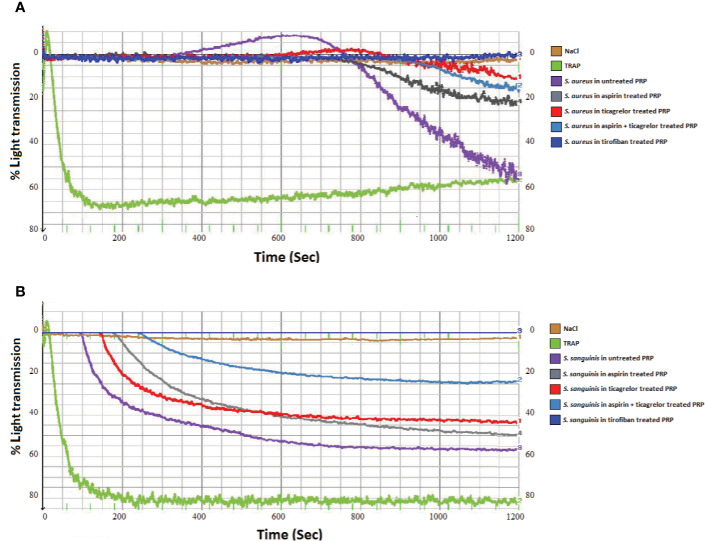
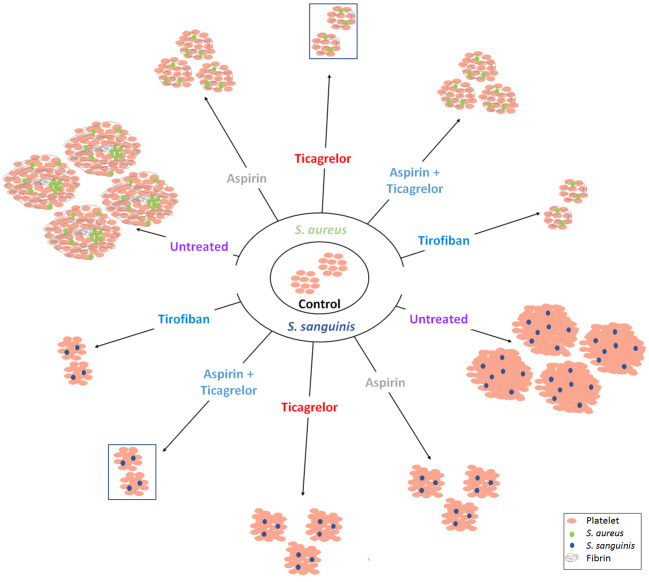
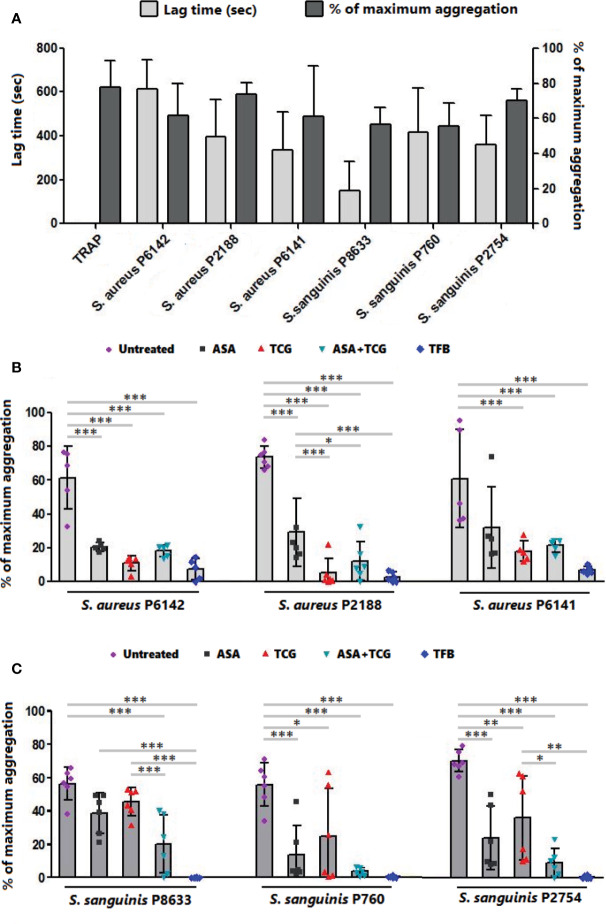
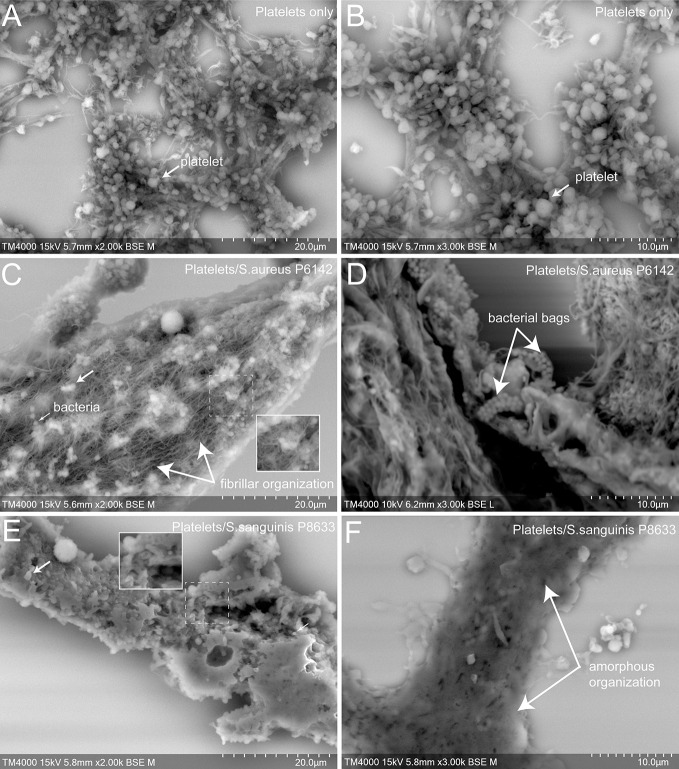
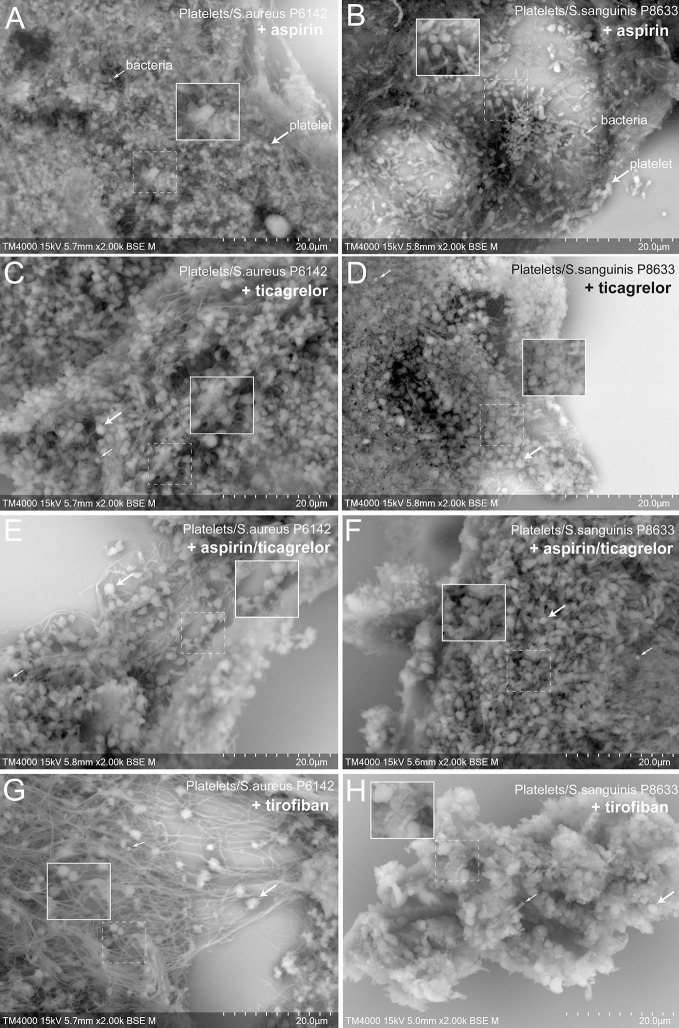
Platelets are the cornerstone of hemostasis. However, their exaggerated aggregation induces deleterious consequences. In several diseases, such as infectious endocarditis and sepsis, the interaction between platelets and bacteria leads to platelet aggregation. Despite platelet involvement, no antiplatelet therapy is currently recommended in these infectious diseases. We aimed here, to evaluate, , the effect of antiplatelet drugs on platelet aggregation induced by two of the bacterial pathogens most involved in infectious endocarditis, and . Blood samples were collected from healthy donors (n = 43). Treated platelet rich plasmas were incubated with three bacterial strains of each species tested. Platelet aggregation was evaluated by Light Transmission Aggregometry. CD62P surface exposure was evaluated by flow cytometry. Aggregate organizations were analyzed by scanning electron microscopy. All the strains tested induced a strong platelet aggregation. Antiplatelet drugs showed distinct effects depending on the bacterial species involved with different magnitude between strains of the same species. Ticagrelor exhibited the highest inhibitory effect on platelet activation (p <0.001) and aggregation (p <0.01) induced by . In the case of , platelet activation and aggregation were better inhibited using the combination of both aspirin and ticagrelor (p <0.05 and p <0.001 respectively). Aggregates ultrastructure and effect of antiplatelet drugs observed by scanning electron microscopy depended on the species involved. Our results highlighted that the effect of antiplatelet drugs depended on the bacterial species involved. We might recommend therefore to consider the germ involved before introduction of an optimal antiplatelet therapy.
血小板是止血的基石。然而,它们过度聚集会引发有害后果。在几种疾病中,如感染性心内膜炎和败血症,血小板与细菌之间的相互作用会导致血小板聚集。尽管血小板参与其中,但目前在这些感染性疾病中不推荐使用抗血小板治疗。我们在此旨在评估抗血小板药物对感染性心内膜炎中最常见的两种细菌病原体诱导的血小板聚集的影响。从健康供体(n = 43)采集血样。将经处理的富含血小板的血浆与每种测试物种的三种细菌菌株一起孵育。通过光透射聚集测定法评估血小板聚集。通过流式细胞术评估CD62P表面暴露。通过扫描电子显微镜分析聚集体结构。所有测试菌株均诱导强烈的血小板聚集。抗血小板药物根据所涉及的细菌种类表现出不同的效果,同一物种的菌株之间程度不同。替格瑞洛对由[细菌名称1]诱导的血小板活化(p <0.001)和聚集(p <0.01)表现出最高的抑制作用。在[细菌名称2]的情况下,联合使用阿司匹林和替格瑞洛能更好地抑制血小板活化和聚集(分别为p <0.05和p <0.001)。通过扫描电子显微镜观察到的聚集体超微结构和抗血小板药物的效果取决于所涉及的物种。我们的结果强调抗血小板药物的效果取决于所涉及的细菌种类。因此,我们可能建议在引入最佳抗血小板治疗之前考虑所涉及的病原体。