Mohan Sharad, Kiran Kumar K, Sutar Vivek, Saha Supradip, Rowe Janet, Davies Keith G
Division of Nematology, Indian Council of Agricultural Research, Indian Agricultural Research Institute, New Delhi, India.
Indian Council of Agricultural Research, Central Citrus Research Institute, Nagpur, India.
Front Plant Sci. 2020 Jun 9;11:763. doi: 10.3389/fpls.2020.00763. eCollection 2020.
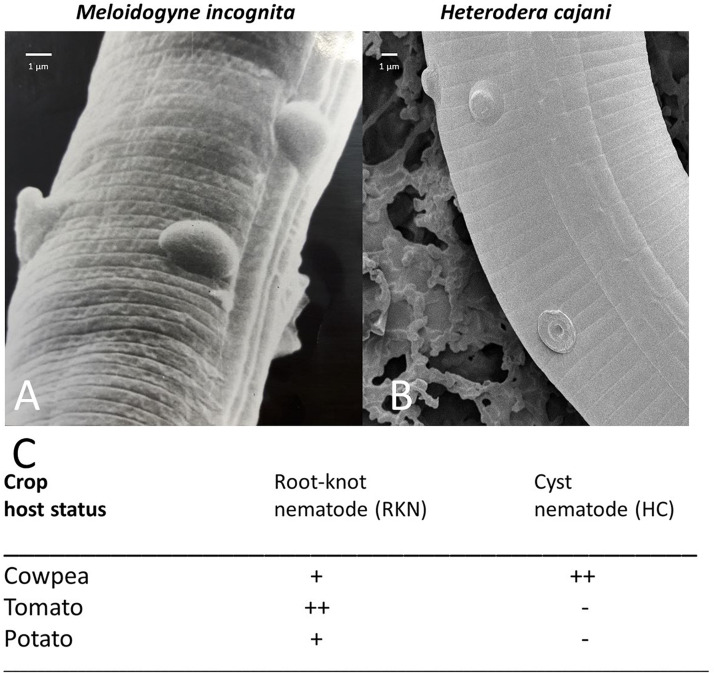
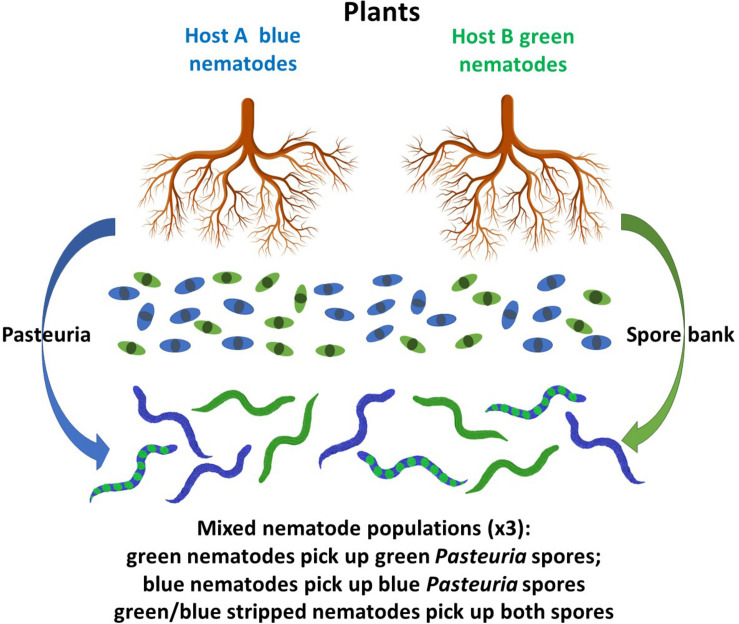
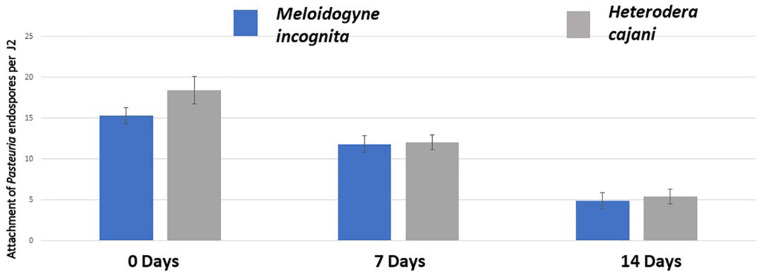
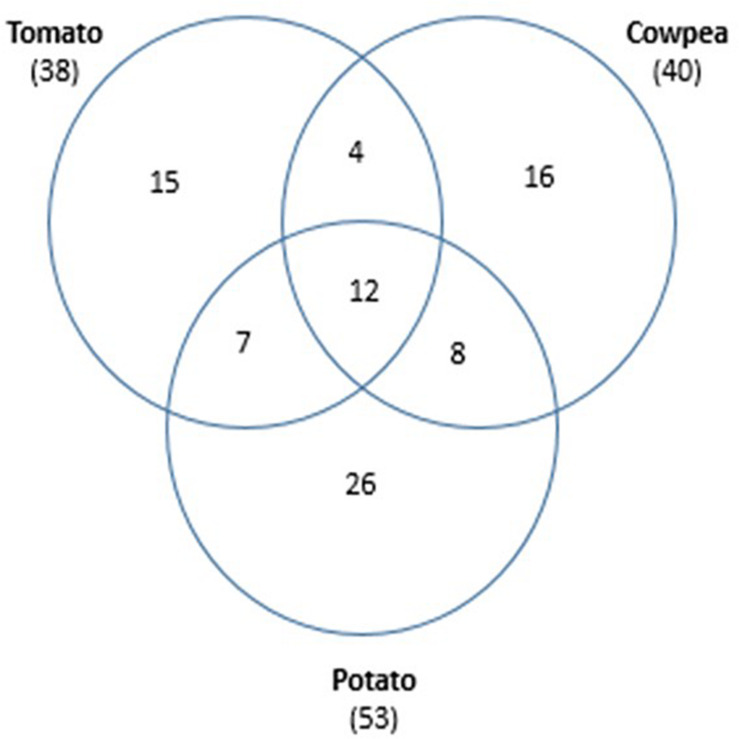
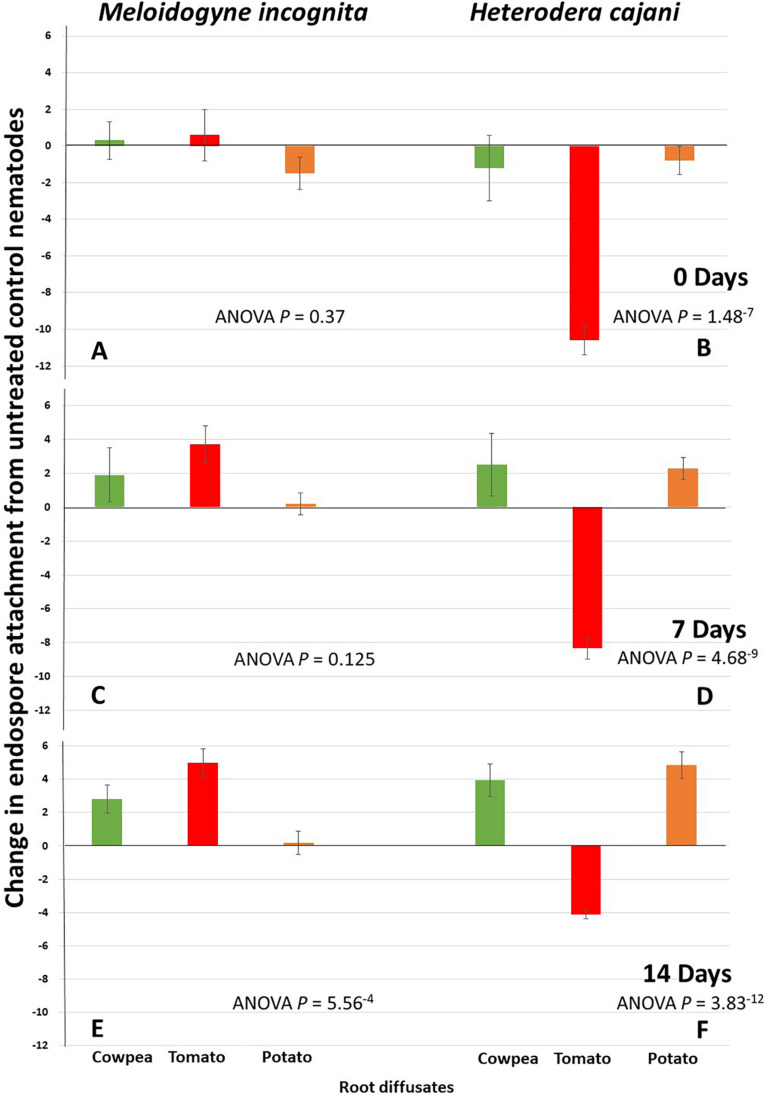
Phytonematodes are globally important functional components of the belowground ecology in both natural and agricultural soils; they are a diverse group of which some species are economically important pests, and environmentally benign control strategies are being sought to control them. Using eco-evolutionary theory, we test the hypothesis that root-exudates of host plants will increase the ability of a hyperparasitic bacteria, and other closely related bacteria, to infect their homologous pest nematodes, whereas non-host root exudates will not. Plant root-exudates from good hosts, poor hosts and non-hosts were characterized by gas chromatography-mass spectrometry (GC/MS) and we explore their interaction on the attachment of the hyperparasitic bacterial endospores to homologous and heterologous pest nematode cuticles. Although GC/MS did not identify any individual compounds as responsible for changes in cuticle susceptibility to endospore adhesion, standardized spore binding assays showed that endospore adhesion decreased with nematode age, and that infective juveniles pre-treated with homologous host root-exudates reduced the aging process and increased attachment of endospores to the nematode cuticle, whereas non-host root-exudates did not. We develop a working model in which plant root exudates manipulate the nematode cuticle aging process, and thereby, through increased bacterial endospore attachment, increase bacterial infection of pest nematodes. This we suggest would lead to a reduction of plant-parasitic nematode burden on the roots and increases plant fitness. Therefore, by the judicious manipulation of environmental factors produced by the plant root and by careful crop rotation this knowledge can help in the development of environmentally benign control strategies.
植物线虫是自然土壤和农业土壤地下生态系统中全球重要的功能组成部分;它们种类繁多,其中一些物种是具有经济重要性的害虫,人们正在寻求环境友好型的控制策略来控制它们。利用生态进化理论,我们检验了以下假设:寄主植物的根系分泌物会增强一种超寄生细菌及其他密切相关细菌感染其同源害虫线虫的能力,而非寄主根系分泌物则不会。通过气相色谱 - 质谱联用仪(GC/MS)对优良寄主、不良寄主和非寄主植物的根系分泌物进行了表征,并探讨了它们在超寄生细菌内生孢子附着于同源和异源害虫线虫表皮方面的相互作用。尽管GC/MS未鉴定出任何导致表皮对孢子附着敏感性变化的单一化合物,但标准化的孢子结合试验表明,孢子附着力随线虫年龄增长而降低,用同源寄主根系分泌物预处理的感染性幼虫可减缓衰老过程并增加孢子对线虫表皮的附着,而非寄主根系分泌物则无此作用。我们构建了一个工作模型,即植物根系分泌物操纵线虫表皮的衰老过程,从而通过增加细菌内生孢子的附着来增强对害虫线虫的细菌感染。我们认为这将减轻植物根系上植物寄生线虫的负担并提高植物适应性。因此,通过明智地操纵植物根系产生的环境因子以及谨慎地进行作物轮作,这一知识有助于制定环境友好型控制策略。