Nair Venugopalan D, Ge Yongchao, Li Side, Pincas Hanna, Jain Nimisha, Seenarine Nitish, Amper Mary Anne S, Goodpaster Bret H, Walsh Martin J, Coen Paul M, Sealfon Stuart C
Department of Neurology, Center for Advanced Research on Diagnostic Assays, Icahn School of Medicine at Mount Sinai, New York, NY, United States.
Department of Pharmacological Sciences, Icahn School of Medicine at Mount Sinai, New York, NY, United States.
Front Physiol. 2020 Jun 10;11:605. doi: 10.3389/fphys.2020.00605. eCollection 2020.
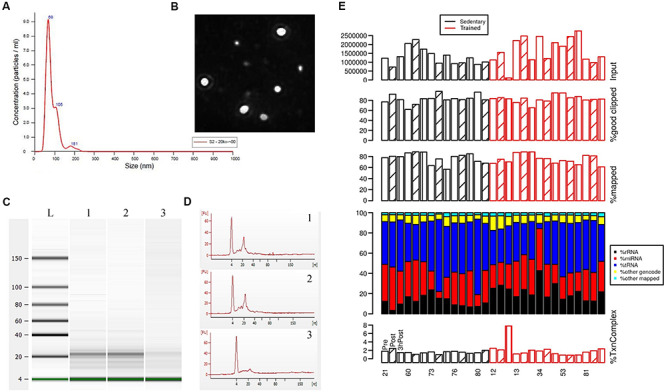
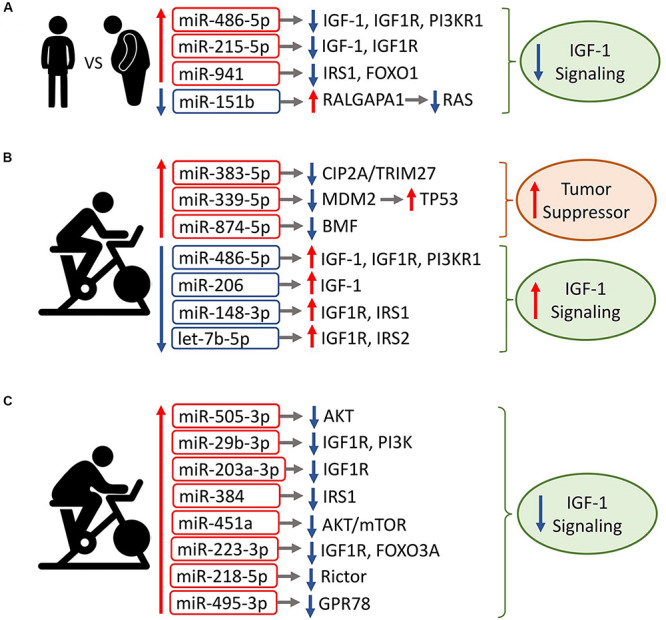
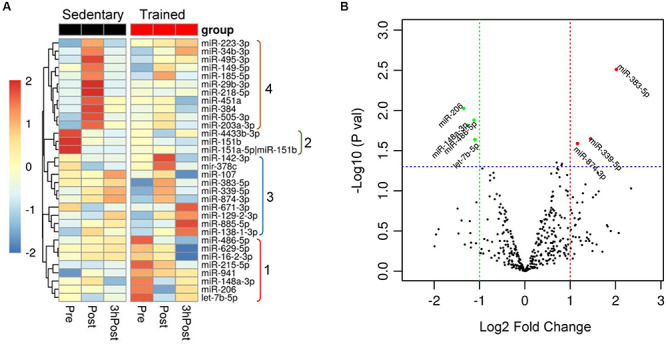
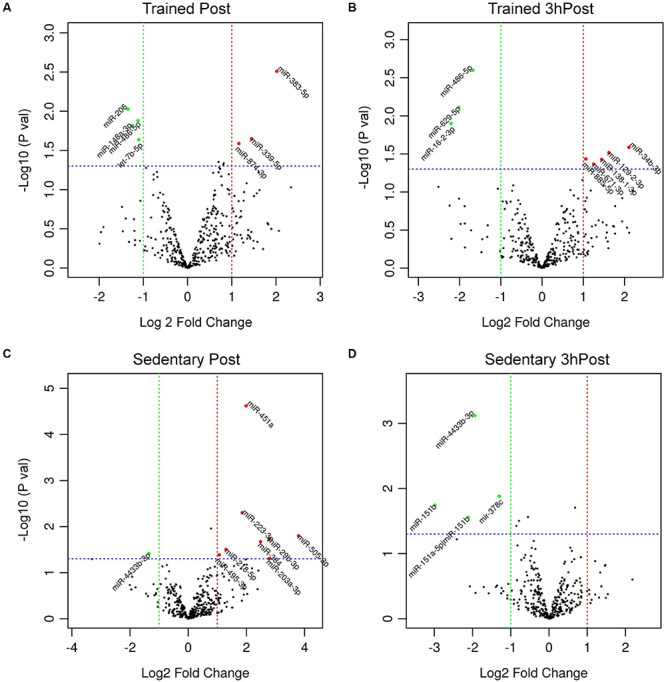
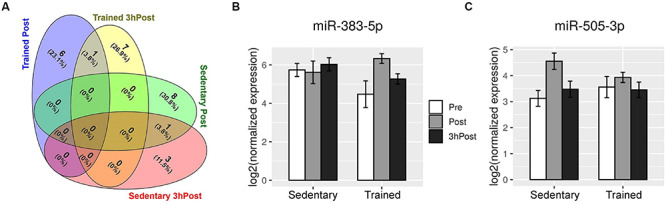
Exercise has multi-systemic benefits and attenuates the physiological impairments associated with aging. Emerging evidence suggests that circulating exosomes mediate some of the beneficial effects of exercise via the transfer of microRNAs between tissues. However, the impact of regular exercise and acute exercise on circulating exosomal microRNAs (exomiRs) in older populations remains unknown. In the present study, we analyzed circulating exomiR expression in endurance-trained elderly men ( = 5) and age-matched sedentary males ( = 5) at baseline (Pre), immediately after a forty minute bout of aerobic exercise on a cycle ergometer (Post), and three hours after this acute exercise (3hPost). Following the isolation and enrichment of exosomes from plasma, exosome-enriched preparations were characterized and exomiR levels were determined by sequencing. The effect of regular exercise on circulating exomiRs was assessed by comparing the baseline expression levels in the trained and sedentary groups. The effect of acute exercise was determined by comparing baseline and post-training expression levels in each group. Regular exercise resulted in significantly increased baseline expression of three exomiRs (miR-486-5p, miR-215-5p, miR-941) and decreased expression of one exomiR (miR-151b). Acute exercise altered circulating exomiR expression in both groups. However, exomiRs regulated by acute exercise in the trained group (7 miRNAs at Post and 8 at 3hPost) were distinct from those in the sedentary group (9 at Post and 4 at 3hPost). Pathway analysis prediction and reported target validation experiments revealed that the majority of exercise-regulated exomiRs are targeting genes that are related to IGF-1 signaling, a pathway involved in exercise-induced muscle and cardiac hypertrophy. The immediately post-acute exercise exomiR signature in the trained group correlates with activation of IGF-1 signaling, whereas in the sedentary group it is associated with inhibition of IGF-1 signaling. While further validation is needed, including measurements of IGF-1/IGF-1 signaling in blood or skeletal muscle, our results suggest that training status may counteract age-related anabolic resistance by modulating circulating exomiR profiles both at baseline and in response to acute exercise.
运动具有多系统益处,并可减轻与衰老相关的生理损伤。新出现的证据表明,循环外泌体通过组织间微小RNA的转移介导了运动的一些有益作用。然而,规律运动和急性运动对老年人群循环外泌体微小RNA(外泌体miRNA)的影响仍不清楚。在本研究中,我们分析了耐力训练的老年男性(n = 5)和年龄匹配的久坐男性(n = 5)在基线(Pre)、在自行车测力计上进行40分钟有氧运动后即刻(Post)以及此次急性运动后3小时(3hPost)时循环外泌体miRNA的表达。从血浆中分离和富集外泌体后,对外泌体富集制剂进行表征,并通过测序确定外泌体miRNA水平。通过比较训练组和久坐组的基线表达水平来评估规律运动对循环外泌体miRNA的影响。通过比较每组的基线和训练后表达水平来确定急性运动的影响。规律运动导致三种外泌体miRNA(miR-486-5p、miR-215-5p、miR-941)的基线表达显著增加,而一种外泌体miRNA(miR-151b)的表达降低。急性运动改变了两组的循环外泌体miRNA表达。然而,训练组中受急性运动调节的外泌体miRNA(运动后7种微小RNA,运动后3小时8种)与久坐组(运动后9种,运动后3小时4种)不同。通路分析预测和已报道的靶点验证实验表明,大多数受运动调节的外泌体miRNA靶向与IGF-1信号通路相关的基因,该通路参与运动诱导的肌肉和心脏肥大。训练组急性运动后即刻的外泌体miRNA特征与IGF-1信号通路的激活相关,而在久坐组中则与IGF-1信号通路的抑制相关。虽然需要进一步验证,包括测量血液或骨骼肌中的IGF-1/IGF-1信号通路,但我们的结果表明,训练状态可能通过在基线和对急性运动的反应中调节循环外泌体miRNA谱来抵消与年龄相关的合成代谢抵抗。