Zhuang Zhenjie, Chen Qianying, Huang Cihui, Wen Junmao, Huang Haifu, Liu Zhanhua
Guangzhou University of Chinese Medicine, Guangzhou, China.
Shenzhen Hospital of Guangzhou University of Chinese Medicine, Shenzhen, China.
Evid Based Complement Alternat Med. 2020 May 30;2020:7658342. doi: 10.1155/2020/7658342. eCollection 2020.
HeChan tablet (HCT) is a traditional Chinese medicine preparation extensively prescribed to treat lung cancer in China. However, the pharmacological mechanisms of HCT on lung cancer remain to be elucidated.
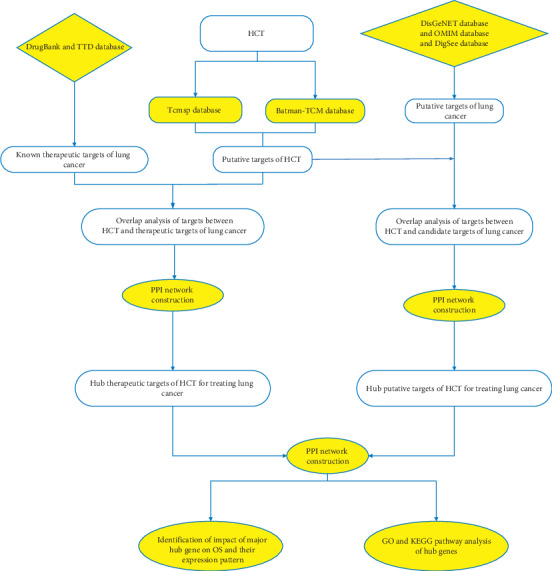
A comprehensive network pharmacology-based strategy was conducted to explore underlying mechanisms of HCT on lung cancer. Putative targets and compounds of HCT were retrieved from TCMSP and BATMAN-TCM databases; related genes of lung cancer were retrieved from OMIM and DisGeNET databases; known therapeutic target genes of lung cancer were retrieved from TTD and DrugBank databases; PPI networks among target genes were constructed to filter hub genes by STRING. Furthermore, the pathway and GO enrichment analysis of hub genes was performed by clusterProfiler, and the clinical significance of hub genes was identified by The Cancer Genome Atlas.
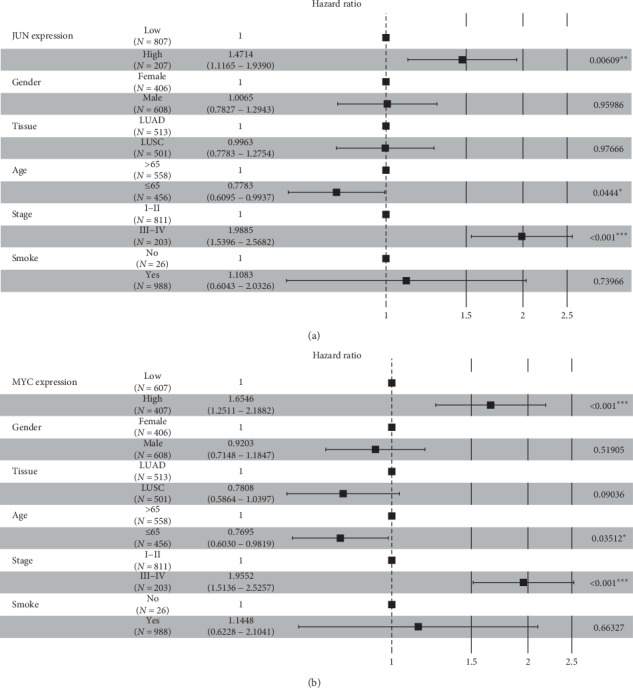
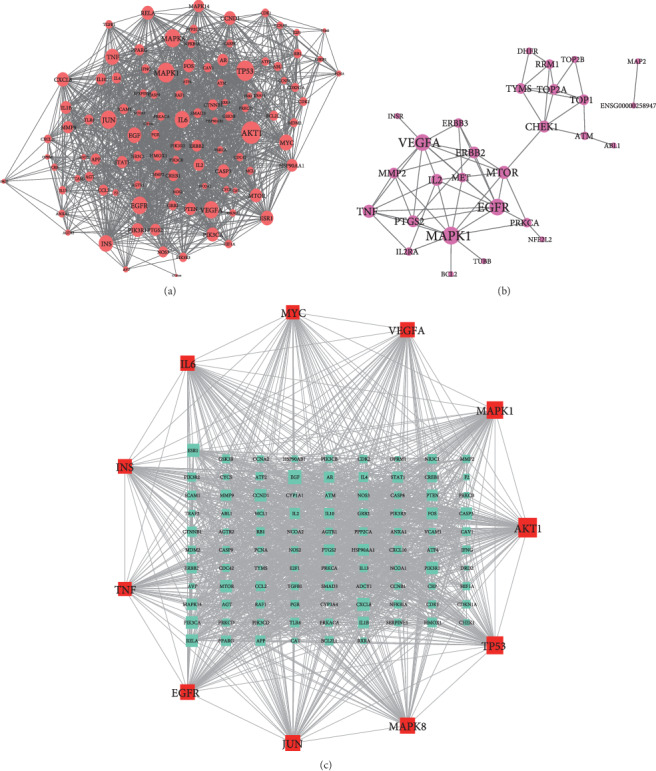
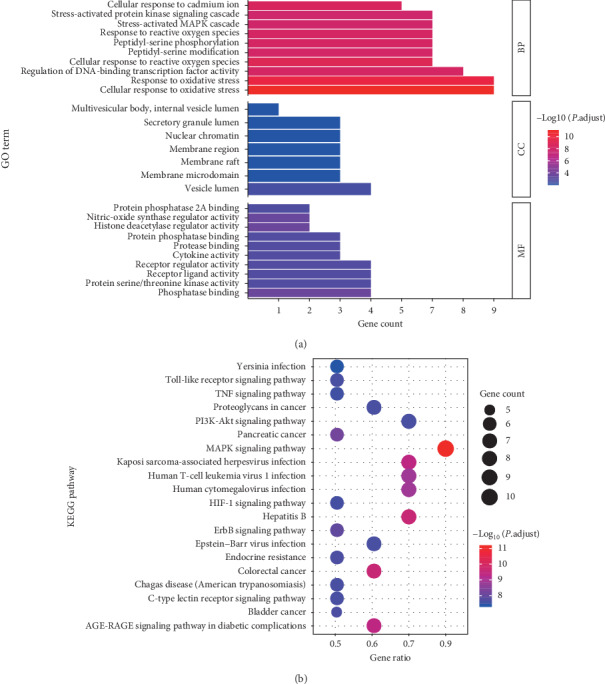
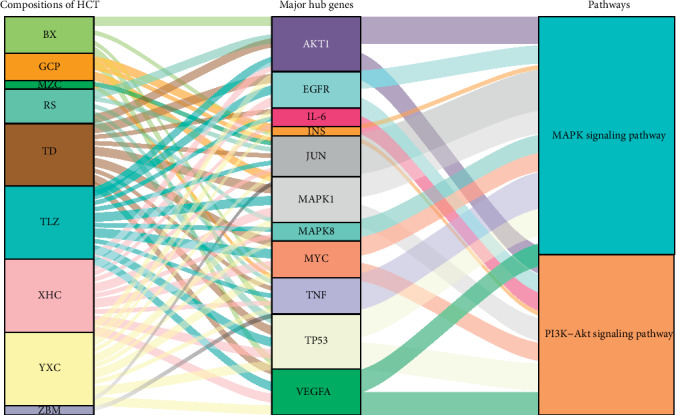
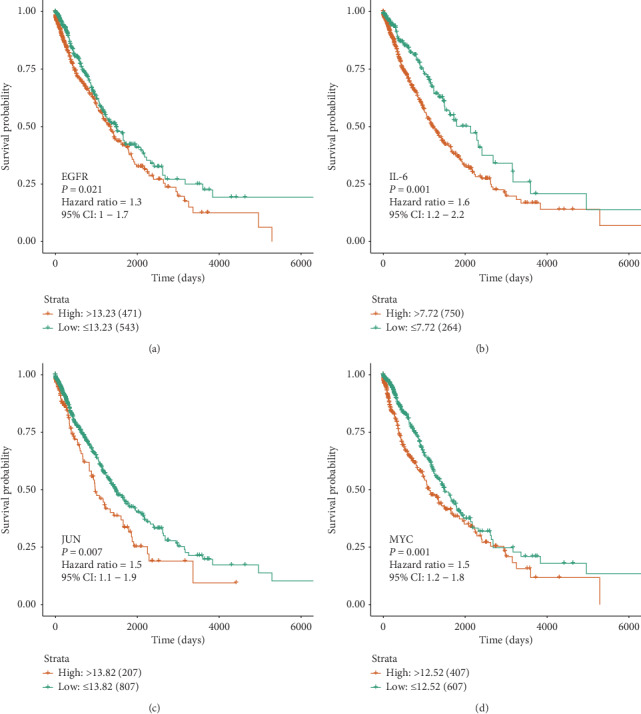
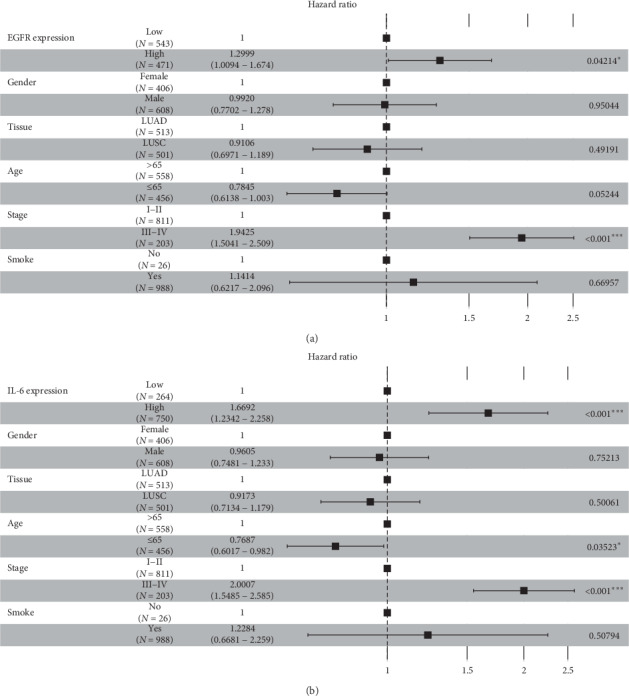
A total of 206 compounds and 2,433 target genes of HCT were obtained. 5,317 related genes of lung cancer and 77 known therapeutic target genes of lung cancer were identified. 507 unique target genes were identified among HCT-related genes of lung cancer and 34 unique target genes were identified among HCT-known therapeutic target genes of lung cancer. By PPI networks, 11 target genes AKT1, TP53, MAPK8, JUN, EGFR, TNF, INS, IL-6, MYC, VEGFA, and MAPK1 were identified as major hub genes. IL-6, JUN, EGFR, and MYC were shown to associate with the survival of lung cancer patients. Five compounds of HCT, quercetin, luteolin, kaempferol, beta-sitosterol, and baicalein were recognized as key compounds of HCT on lung cancer. The gene enrichment analysis implied that HCT probably benefitted patients with lung cancer by modulating the MAPK and PI3K-Akt pathways.
This study predicted pharmacological and molecular mechanisms of HCT against lung cancer and could pave the way for further experimental research and clinical application of HCT.
和蟾片(HCT)是一种在中国被广泛用于治疗肺癌的中药制剂。然而,HCT治疗肺癌的药理机制仍有待阐明。
采用基于网络药理学的综合策略来探究HCT治疗肺癌的潜在机制。从中药系统药理学数据库(TCMSP)和中药系统生物学数据库(BATMAN-TCM)中检索HCT的潜在靶点和化合物;从在线人类孟德尔遗传数据库(OMIM)和疾病基因数据库(DisGeNET)中检索肺癌的相关基因;从治疗靶点数据库(TTD)和药物银行数据库(DrugBank)中检索肺癌已知的治疗靶点基因;通过STRING构建靶点基因之间的蛋白质-蛋白质相互作用(PPI)网络以筛选核心基因。此外,利用clusterProfiler对核心基因进行通路和基因本体(GO)富集分析,并通过癌症基因组图谱(The Cancer Genome Atlas)确定核心基因的临床意义。
共获得HCT的206种化合物和2433个靶点基因。鉴定出5317个肺癌相关基因和77个肺癌已知的治疗靶点基因。在肺癌的HCT相关基因中鉴定出507个独特的靶点基因,在肺癌的HCT已知治疗靶点基因中鉴定出34个独特的靶点基因。通过PPI网络,鉴定出11个靶点基因AKT1、TP53、MAPK8、JUN、EGFR、TNF、INS、IL-6、MYC、VEGFA和MAPK1为主要核心基因。IL-6、JUN、EGFR和MYC被证明与肺癌患者的生存相关。HCT的5种化合物,槲皮素、木犀草素、山奈酚、β-谷甾醇和黄芩苷被认为是HCT治疗肺癌的关键化合物。基因富集分析表明,HCT可能通过调节丝裂原活化蛋白激酶(MAPK)和磷脂酰肌醇-3激酶-蛋白激酶B(PI3K-Akt)通路使肺癌患者受益。
本研究预测了HCT抗肺癌的药理和分子机制,可为HCT进一步的实验研究和临床应用铺平道路。