Clore Laboratory, University of Buckingham, Buckingham MK18 1EG, UK.
Institute of Ageing and Chronic Disease, University of Liverpool, Liverpool L7 8TX, UK.
J Nutr Sci. 2020 Jun 18;9:e23. doi: 10.1017/jns.2020.19. eCollection 2020.
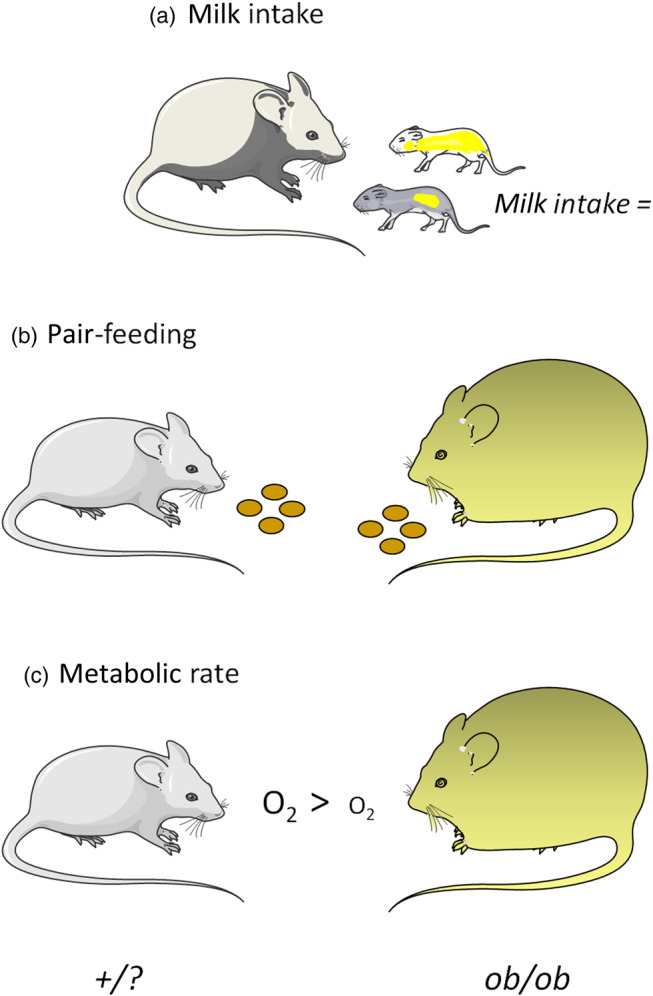
Rodents with mutations in the leptin, or leptin receptor, genes have been extensively used to investigate the regulation of energy balance and the factors that underlie the development of obesity. The excess energy gain of these mutants has long been considered as being due in part to increased metabolic efficiency, consequent to reduced energy expenditure, but this view has recently been challenged. We argue, particularly though not exclusively, from data on / mice, that three lines of evidence support the proposition that reduced expenditure is important in the aetiology of obesity in leptin pathway mutants (irrespective of the genetic background): (i) milk intake is similar in suckling / and / mice; (ii) / mice deposit excess energy when pair-fed to the food intake of lean siblings; (iii) in several studies mutant mice have been shown to exhibit a lower RMR 'per animal' at temperatures below thermoneutrality. When metabolic rate is expressed 'per unit body weight' (inappropriately, because of body composition differences), then it is invariably lower in the obese than the lean. It is important to differentiate the causes from the consequences of obesity. Hyperphagic, mature obese animals weighing 2-3 times their lean siblings may well have higher expenditure 'per animal', reflecting the costs of being larger and of enhanced obligatory diet-induced thermogenesis resulting from the increased food intake. This cannot, however, be used to inform the aetiology of their obesity.
带有瘦素或瘦素受体基因突变的啮齿动物被广泛用于研究能量平衡的调节以及导致肥胖的因素。这些突变体的能量过剩长期以来一直被认为部分是由于代谢效率的提高,这是由于能量消耗减少所致,但这种观点最近受到了挑战。我们认为,特别是但不限于从 / 小鼠的数据来看,有三条证据支持这样一种观点,即减少支出在瘦素途径突变体肥胖的发病机制中很重要(与遗传背景无关):(i)哺乳期 / 和 / 小鼠的牛奶摄入量相似;(ii)当以与瘦型同窝仔的食物摄入量相同时,/ 小鼠会储存多余的能量;(iii)在几项研究中,已经表明突变小鼠在低于体温中性的温度下表现出较低的 RMR(每只动物)。当代谢率以“每单位体重”表示时(由于身体成分的差异,这是不恰当的),肥胖动物的代谢率总是低于瘦型动物。区分肥胖的原因和后果很重要。处于成熟肥胖期、体重是瘦型同窝仔 2-3 倍的多食动物可能每只动物的支出更高,这反映了体型较大和由于食物摄入增加而导致的强制性饮食诱导产热增强的成本。然而,这不能用于解释它们肥胖的病因。