Department of Pediatric Pulmonology, Allergy and Clinical Immunology, Poznań University of Medical Sciences, Poznań, Poland.
Molecular and Cell Biology Unit, Department of Pediatric Pulmonology, Allergy and Clinical Immunology, Poznań University of Medical Sciences, Poznań, Poland.
Biomed Res Int. 2020 Jun 10;2020:7196981. doi: 10.1155/2020/7196981. eCollection 2020.
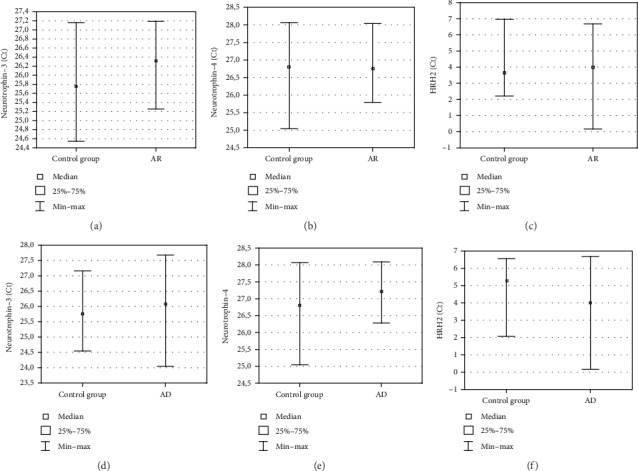
In the study, we included 86 children diagnosed with atopic asthma ( = 25), allergic rhinitis ( = 20), and atopic dermatitis ( = 20) and healthy control subjects ( = 21) of Caucasian origin from the Polish population. The blood leukocyte expression of 31 genes involved in neuroinflammatory response (neurotrophins, their receptors, neuropeptides, and histamine signaling pathway) was analysed using TaqMan low-density arrays. The relative expression of selected proteins from plasma was done using TaqMan Protein Assays. Statistical analysis was done using Statistica.
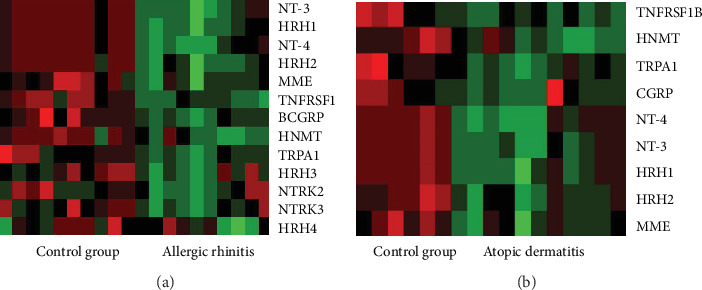
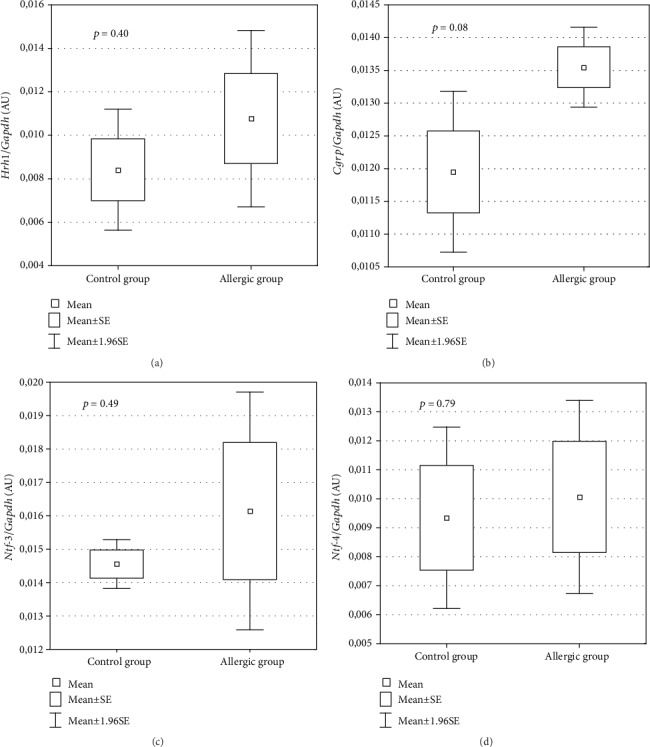
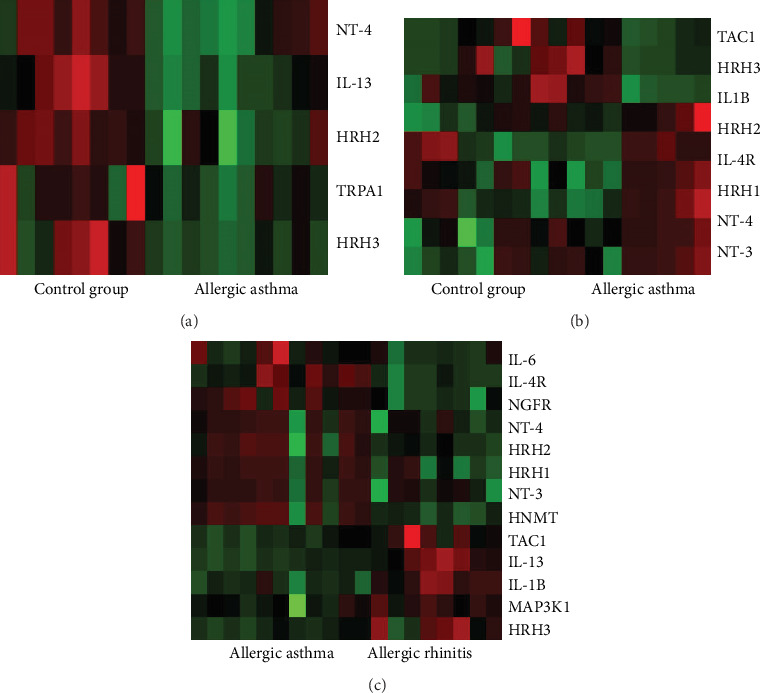
Blood expression of 31 genes related to neuroimmune interactions showed significant increase in both allergic diseases, allergic rhinitis and atopic dermatitis, in comparison to the control group. We found 12 genes significantly increased in allergic rhinitis and 9 genes in which the expression was elevated in atopic dermatitis. Moreover, 9 genes with changed expression in atopic dermatitis overlapped with those in allergic rhinitis. Atopic asthma showed 5 genes with altered expression. The peripheral expression of neuroinflammatory genes in the human study was verified in target tissues (nasal epithelium and skin) in a rat model of allergic inflammation.
A common pattern of neuroinflammatory gene expression between allergic rhinitis and atopic dermatitis may reflect similar changes in sensory nerve function during chronic allergic inflammation.
在研究中,我们纳入了 86 名患有特应性哮喘(=25 例)、过敏性鼻炎(=20 例)和特应性皮炎(=20 例)的儿童以及来自波兰人群的健康对照受试者(=21 例)。使用 TaqMan 低密度基因芯片分析了涉及神经炎症反应的 31 个基因(神经营养因子、其受体、神经肽和组胺信号通路)在白细胞中的表达。使用 TaqMan 蛋白分析测定了来自血浆的选定蛋白的相对表达。使用 Statistica 进行统计分析。
与对照组相比,两种过敏性疾病(过敏性鼻炎和特应性皮炎)的血液中与神经免疫相互作用相关的 31 个基因的表达均显著增加。我们发现过敏性鼻炎中有 12 个基因显著增加,特应性皮炎中有 9 个基因表达升高。此外,特应性皮炎中表达改变的 9 个基因与过敏性鼻炎中改变的基因重叠。特应性哮喘有 5 个基因表达改变。在变应性炎症大鼠模型中,在目标组织(鼻上皮和皮肤)中验证了人类研究中神经炎症基因的外周表达。
过敏性鼻炎和特应性皮炎之间神经炎症基因表达的共同模式可能反映了慢性变应性炎症过程中感觉神经功能的相似变化。