Department of Pulmonary and Critical Care Medicine, Asan Medical Center, University of Ulsan College of Medicine, Seoul, Korea.
Division of Infectious Diseases, Department of Medicine, Samsung Medical Center, Sungkyunkwan University School of Medicine, Seoul, Korea.
J Korean Med Sci. 2020 Jun 29;35(25):e237. doi: 10.3346/jkms.2020.35.e237.
The coronavirus disease 2019 (COVID-19) pandemic is an emerging threat worldwide. It remains unclear how comorbidities affect the risk of infection and severity of COVID-19.
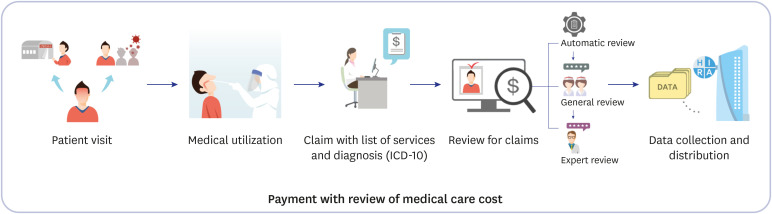
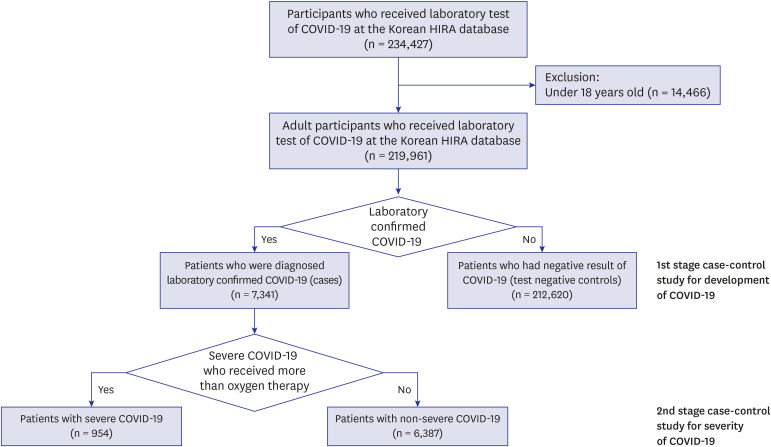
This is a nationwide retrospective case-control study of 219,961 individuals, aged 18 years or older, whose medical costs for COVID-19 testing were claimed until May 15, 2020. COVID-19 diagnosis and infection severity were identified from reimbursement data using diagnosis codes and on the basis of respiratory support use, respectively. Odds ratios (ORs) were estimated using multiple logistic regression, after adjusting for age, sex, region, healthcare utilization, and insurance status.
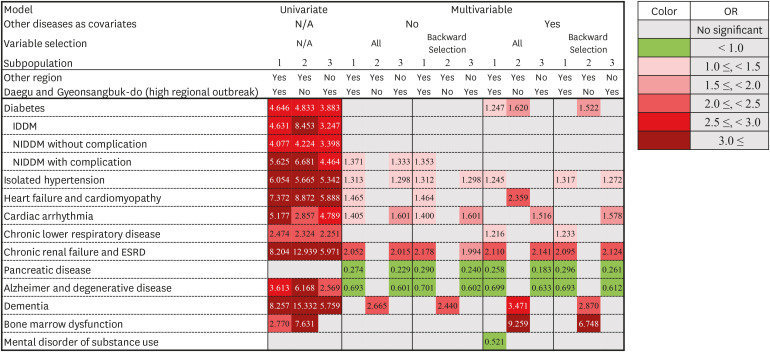
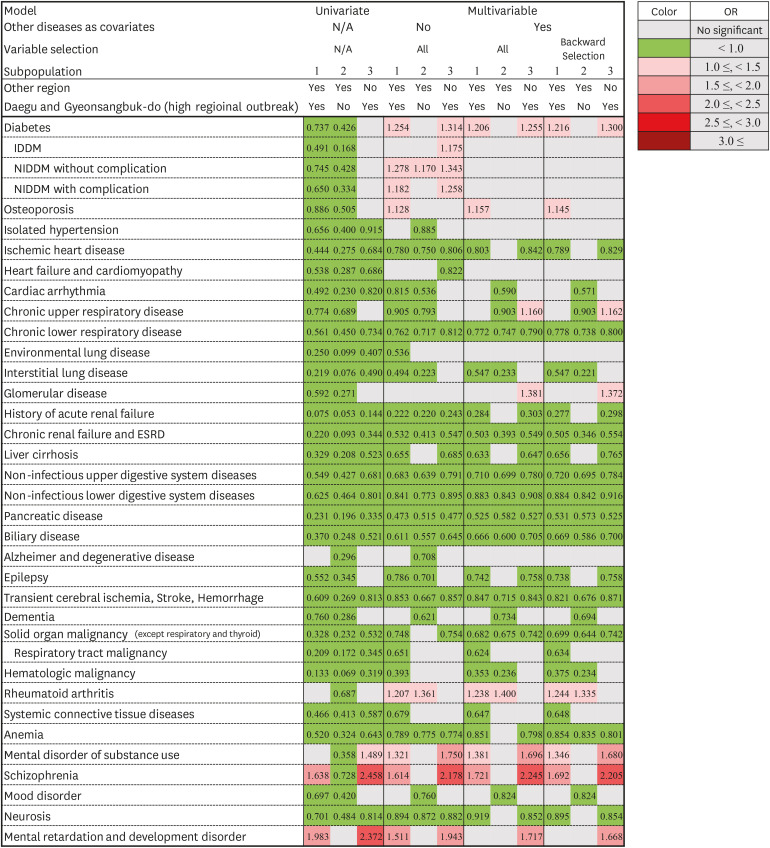
The COVID-19 group (7,341 of 219,961) was young and had a high proportion of female. Overall, 13.0% (954 of 7,341) of the cases were severe. The severe COVID-19 group had older patients and a proportion of male ratio than did the non-severe group. Diabetes (odds ratio range [ORR], 1.206-1.254), osteoporosis (ORR, 1.128-1.157), rheumatoid arthritis (ORR, 1.207-1.244), substance use (ORR, 1.321-1.381), and schizophrenia (ORR, 1.614-1.721) showed significant association with COVID-19. In terms of severity, diabetes (OR, 1.247; 95% confidential interval, 1.009-1.543), hypertension (ORR, 1.245-1.317), chronic lower respiratory disease (ORR, 1.216-1.233), chronic renal failure, and end-stage renal disease (ORR, 2.052-2.178) were associated with severe COVID-19.
We identified several comorbidities associated with COVID-19. Health care workers should be more careful while diagnosing and treating COVID-19 when patients have the abovementioned comorbidities.
2019 年冠状病毒病(COVID-19)大流行是全球新出现的威胁。目前尚不清楚合并症如何影响 COVID-19 的感染风险和严重程度。
这是一项针对 219961 名年龄在 18 岁及以上的个体的全国性回顾性病例对照研究,这些个体的 COVID-19 检测医疗费用可追溯至 2020 年 5 月 15 日。COVID-19 的诊断和感染严重程度是通过使用诊断代码从报销数据中确定的,同时根据呼吸支持的使用情况确定的。使用多变量逻辑回归估计比值比(OR),并调整了年龄、性别、地区、医疗保健利用和保险状况。
COVID-19 组(219961 例中的 7341 例)患者年龄较轻,女性比例较高。总体而言,13.0%(7341 例中的 954 例)为重症。重症 COVID-19 组患者年龄较大,男性比例高于轻症组。糖尿病(比值比范围 [ORR],1.206-1.254)、骨质疏松症(ORR,1.128-1.157)、类风湿关节炎(ORR,1.207-1.244)、物质使用(ORR,1.321-1.381)和精神分裂症(ORR,1.614-1.721)与 COVID-19 显著相关。在严重程度方面,糖尿病(OR,1.247;95%置信区间,1.009-1.543)、高血压(ORR,1.245-1.317)、慢性下呼吸道疾病(ORR,1.216-1.233)、慢性肾衰竭和终末期肾病(ORR,2.052-2.178)与重症 COVID-19 相关。
我们确定了一些与 COVID-19 相关的合并症。当患者存在上述合并症时,医护人员在诊断和治疗 COVID-19 时应更加小心。