Department of Infectious Diseases and Hepatopathy, The First Affiliated Hospital of Xi'an Jiaotong University, Xi'an, Shannxi Province, 710061, People's Republic of China.
The First Department of Orthopedics, The Second Affiliated Hospital of Xi'an Jiaotong University, Xi'an, Shannxi Province, 710004, People's Republic of China.
Br J Nutr. 2020 Dec 28;124(12):1293-1302. doi: 10.1017/S0007114520002366. Epub 2020 Jun 30.
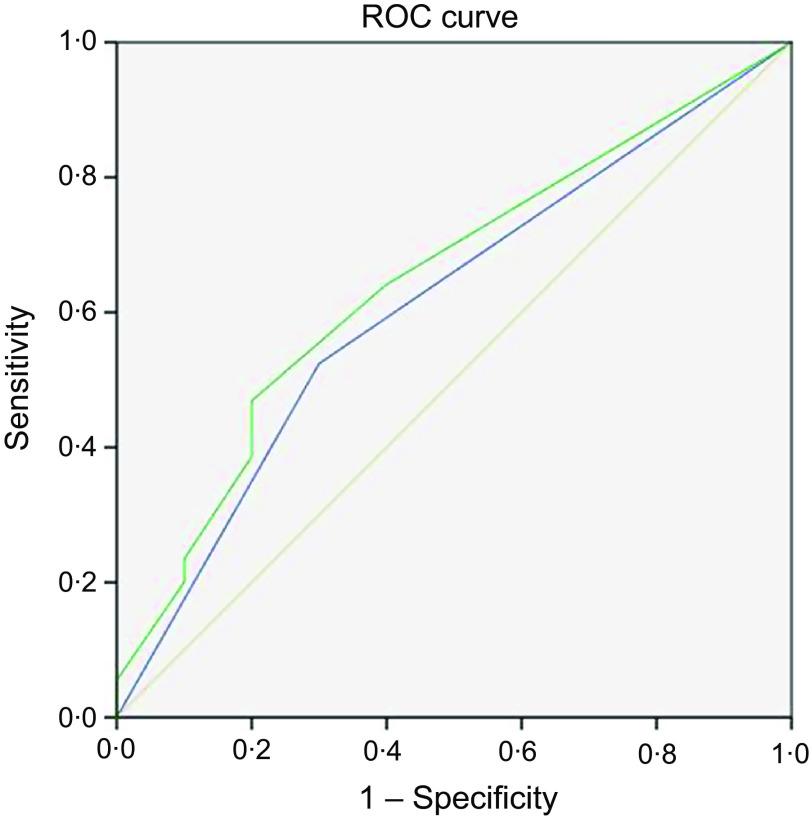
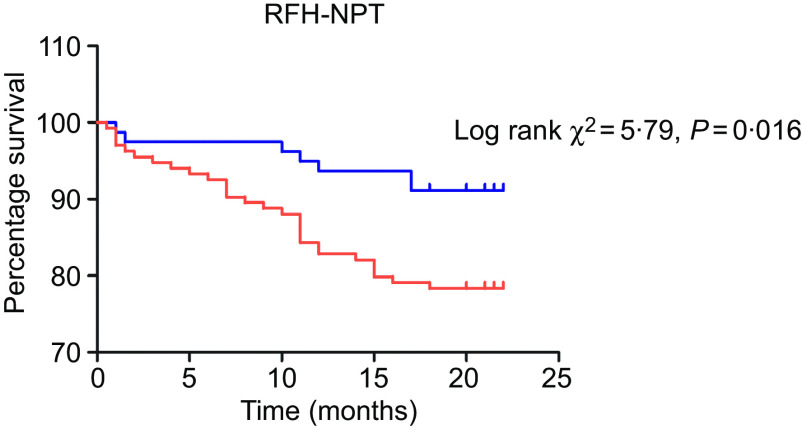
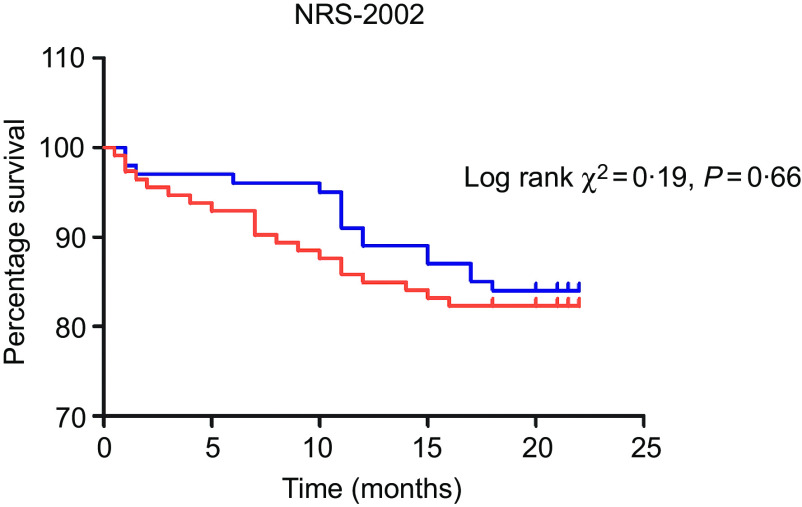
The European Society for Clinical Nutrition and Metabolism (ESPEN) guidelines recommend the Royal Free Hospital-Nutritional Prioritizing Tool (RFH-NPT) to identify malnutrition risk in patients with liver disease. However, little is known about the application of the RFH-NPT to screen for the risk of malnutrition in China, where patients primarily suffer from hepatitis virus-related cirrhosis. A total of 155 cirrhosis patients without liver cancer or uncontrolled co-morbid illness were enrolled in this prospective study. We administered the Nutritional Risk Screening 2002 (NRS-2002), RFH-NPT, Malnutrition Universal Screening Tool (MUST) and Liver Disease Undernutrition Screening Tool (LDUST) to the patients within 24 h after admission and performed follow-up observations for 1·5 years. The RFH-NPT and NRS-2002 had higher sensitivities (64·8 and 52·4 %) and specificities (60 and 70 %) than the other tools with regard to screening for malnutrition risk in cirrhotic patients. The prevalence of nutritional risk was higher under the use of the RFH-NPT against the NRS-2002 (63 v. 51 %). The RFH-NPT tended more easily to detect malnutrition risk in patients with advanced Child-Pugh classes (B and C) and lower Model for End-stage Liver Disease scores (<15) compared with NRS-2002. RFH-NPT score was an independent predictive factor for mortality. Patients identified as being at high malnutrition risk with the RFH-NPT had a higher mortality rate than those at low risk; the same result was not obtained with the NRS-2002. Therefore, we suggest that using the RFH-NPT improves the ability of clinicians to predict malnutrition risk in patients with cirrhosis primarily caused by hepatitis virus infection at an earlier stage.
欧洲临床营养与代谢学会(ESPEN)指南建议使用皇家自由医院营养优先工具(RFH-NPT)来识别肝病患者的营养风险。然而,对于 RFH-NPT 在中国用于筛查营养不良风险的应用知之甚少,中国的肝病患者主要患有肝炎病毒相关的肝硬化。本前瞻性研究共纳入 155 例无肝癌或未控制合并症的肝硬化患者。我们在入院后 24 小时内对患者进行了营养风险筛查 2002 版(NRS-2002)、RFH-NPT、营养不良通用筛查工具(MUST)和肝病营养不足筛查工具(LDUST)的评估,并进行了 1.5 年的随访观察。RFH-NPT 和 NRS-2002 筛查肝硬化患者营养风险的敏感性(分别为 64.8%和 52.4%)和特异性(分别为 60%和 70%)均高于其他工具。RFH-NPT 比 NRS-2002 (分别为 63%和 51%)更易检测到营养风险。RFH-NPT 更易检测到 Child-Pugh 分级较高(B 和 C)和终末期肝病模型评分较低(<15)的患者存在营养风险。RFH-NPT 评分是死亡率的独立预测因素。RFH-NPT 高风险的患者死亡率高于低风险患者;NRS-2002 则不然。因此,我们建议使用 RFH-NPT 可提高临床医生预测主要由肝炎病毒感染引起的肝硬化患者营养风险的能力,并可更早地进行预测。