School of Medicine and Surgery, University of Milano-Bicocca, Monza, Italy.
Respiratory Unit, San Gerardo Hospital, ASST di Monza, Monza, Italy.
PLoS One. 2020 Jun 30;15(6):e0235468. doi: 10.1371/journal.pone.0235468. eCollection 2020.
Hospital readmissions are a frequent complication of pneumonia. Most data regarding readmissions are obtained from the United States, whereas few data are available from the European healthcare utilization (HCU) systems. In a large cohort of Italian patients with a previous hospitalization for pneumonia, our aim was to evaluate the incidence and predictors of early readmissions due to pneumonia.
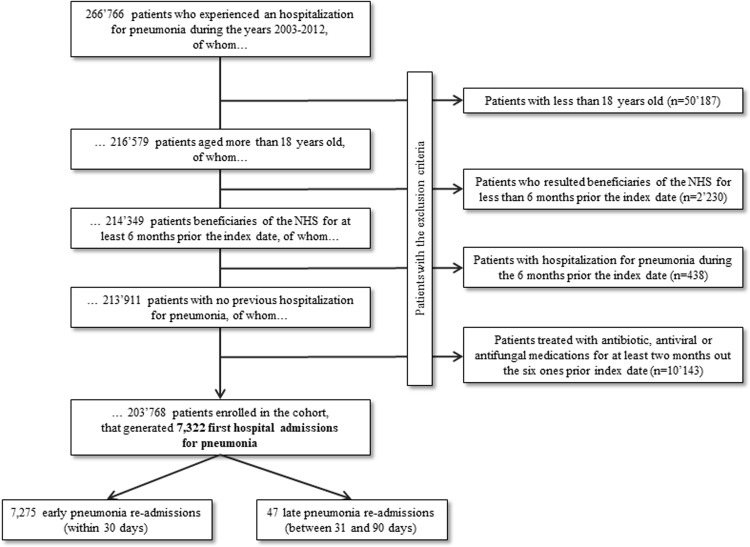
This is a observational retrospective, population based, cohort study. Data were retrieved from the HCU databases of the Italian Lombardy region. 203,768 patients were hospitalized for pneumonia between 2003 and 2012. The outcome was the first rehospitalization for pneumonia. The patients were followed up after the index hospital admission to estimate the hazard ratio, and relative 95% confidence interval, of the outcome associated with the risk factors that we had identified.
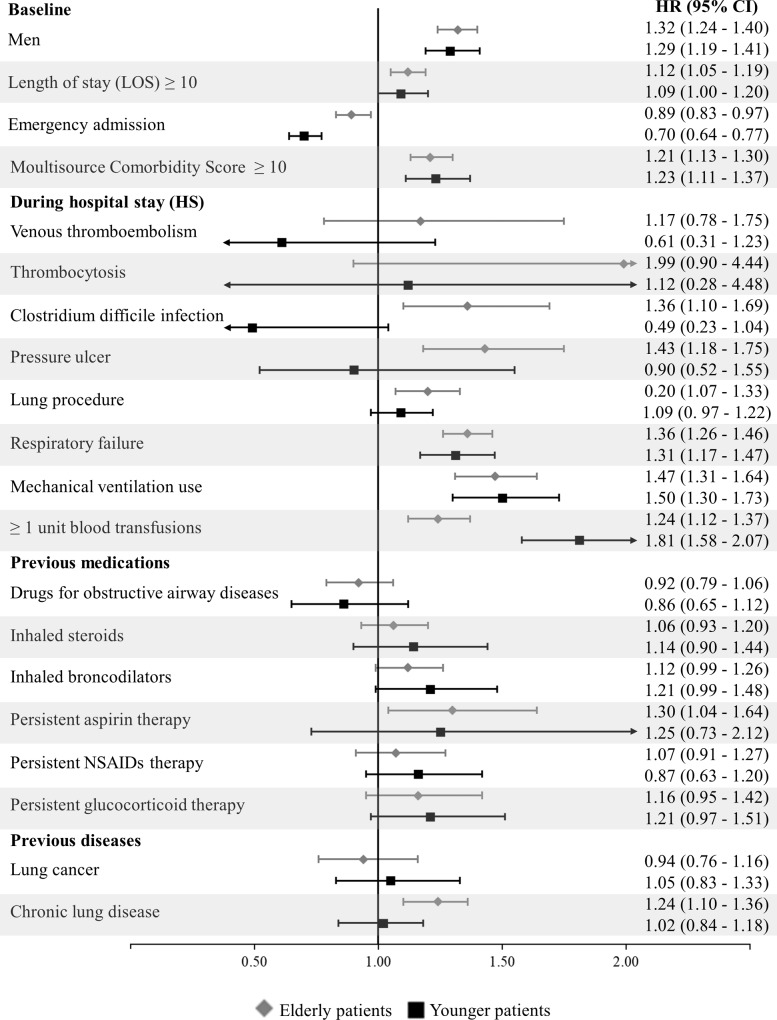
7,275 patients (3.6%) had an early pneumonia readmission. Male gender, age ≥70 years, length of stay of the first admission and a higher burden of comorbidities were significantly associated with the outcome. Chronic use of antidepressants, antiarrhythmics, glucocorticoids and drugs for obstructive airway diseases were also more frequently prescribed in patients requiring rehospitalization. Previous use of inhaled broncodilators, including both beta2-agonists and anticholinergics, but not inhaled steroids, were associated with an increased risk of hospital readmission.
Frail elderly patients with multiple comorbidities and complex drug regimens were at higher risk of early rehospitalization and, thus, may require closer follow-up and prevention strategies.
医院再入院是肺炎的常见并发症。大多数有关再入院的数据均来自美国,而来自欧洲医疗保健利用(HCU)系统的数据则很少。在意大利一组先前因肺炎住院的大量患者中,我们的目的是评估因肺炎而早期再入院的发生率和预测因素。
这是一项回顾性、基于人群的观察性队列研究。数据从意大利伦巴第地区的 HCU 数据库中检索。2003 年至 2012 年间,有 203768 名患者因肺炎住院。主要结局为肺炎的首次再住院。在指数住院后对患者进行随访,以评估与我们确定的危险因素相关的结局的风险比和相对 95%置信区间。
7275 名患者(3.6%)发生了早期肺炎再入院。男性,年龄≥70 岁,首次入院的住院时间和合并症负担较高与结局显著相关。慢性使用抗抑郁药、抗心律失常药、皮质类固醇和治疗阻塞性气道疾病的药物在需要再入院的患者中也更频繁地开具。先前使用包括β2-激动剂和抗胆碱能药在内的吸入性支气管扩张剂,但不包括吸入性类固醇,与住院再入院风险增加相关。
患有多种合并症和复杂药物治疗方案的体弱老年患者再入院的风险较高,因此可能需要更密切的随访和预防策略。