Division of Critical Care, Department of Pediatrics, Nationwide Children's Hospital, The Ohio State University, Columbus, Ohio, USA.
Partner Therapeutics, Lexington, Massachusetts, USA.
Clin Infect Dis. 2022 Jan 7;74(1):144-148. doi: 10.1093/cid/ciaa904.
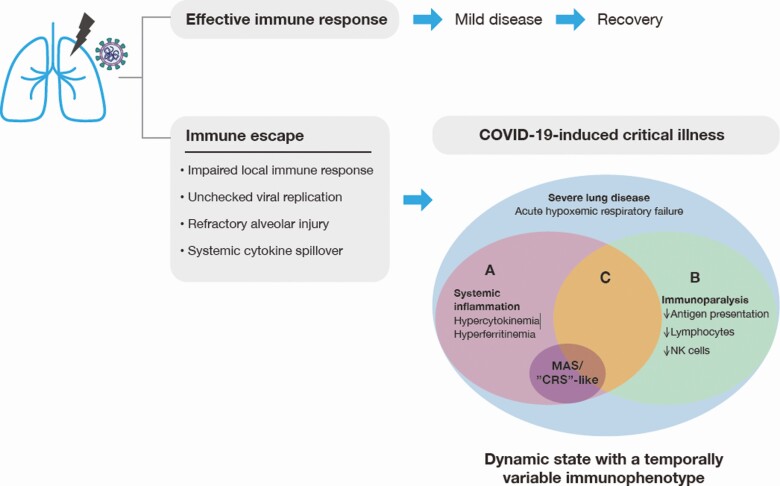
We are learning that the host response to severe acute respiratory syndrome coronavirus 2 ( SARS-CoV-2) infection is complex and highly dynamic. Effective initial host defense in the lung is associated with mild symptoms and disease resolution. Viral evasion of the immune response can lead to refractory alveolar damage, ineffective lung repair mechanisms, and systemic inflammation with associated organ dysfunction. The immune response in these patients is highly variable and can include moderate to severe systemic inflammation and/or marked systemic immune suppression. There is unlikely to be a "one size fits all" approach to immunomodulation in patients with coronavirus disease 2019 (COVID-19). We believe that a personalized, immunophenotype-driven approach to immunomodulation that may include anticytokine therapy in carefully selected patients and immunostimulatory therapies in others is the shortest path to success in the study and treatment of patients with critical illness due to COVID-19.
我们逐渐了解到,宿主对严重急性呼吸综合征冠状病毒 2(SARS-CoV-2)感染的反应是复杂且高度动态的。肺部有效的初始宿主防御与症状轻微和疾病痊愈有关。病毒逃避免疫反应可导致难治性肺泡损伤、无效的肺修复机制以及伴有相关器官功能障碍的全身炎症。这些患者的免疫反应差异很大,可能包括中度至重度全身炎症和/或明显的全身免疫抑制。对于 2019 冠状病毒病(COVID-19)患者来说,免疫调节不太可能采用“一刀切”的方法。我们认为,针对免疫调节的个体化、免疫表型驱动方法,可能包括在精心挑选的患者中使用抗细胞因子疗法,以及在其他患者中使用免疫刺激疗法,这是研究和治疗 COVID-19 导致的危重症患者的成功捷径。