Bouzo Daniel, Cokcetin Nural N, Li Liping, Ballerin Giulia, Bottomley Amy L, Lazenby James, Whitchurch Cynthia B, Paulsen Ian T, Hassan Karl A, Harry Elizabeth J
The ithree institute, University of Technology Sydney, Ultimo, NSW, Australia.
The ithree institute, University of Technology Sydney, Ultimo, NSW, Australia
mSystems. 2020 Jun 30;5(3):e00106-20. doi: 10.1128/mSystems.00106-20.
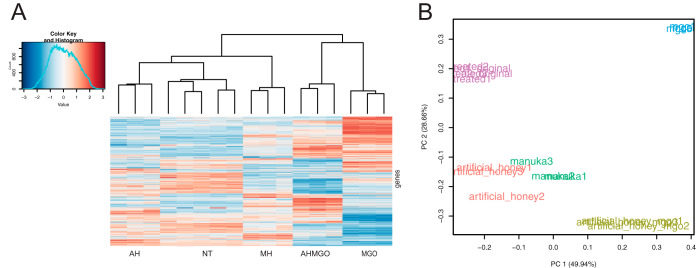
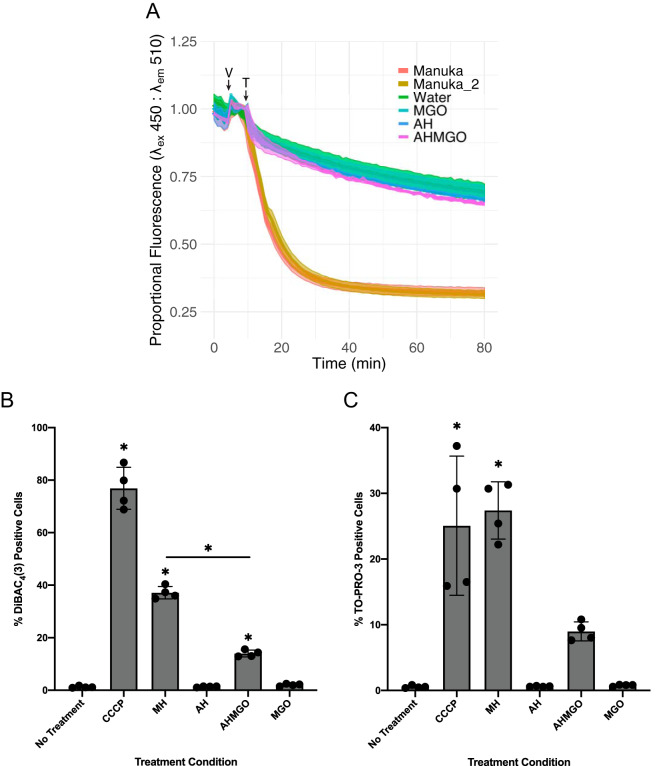
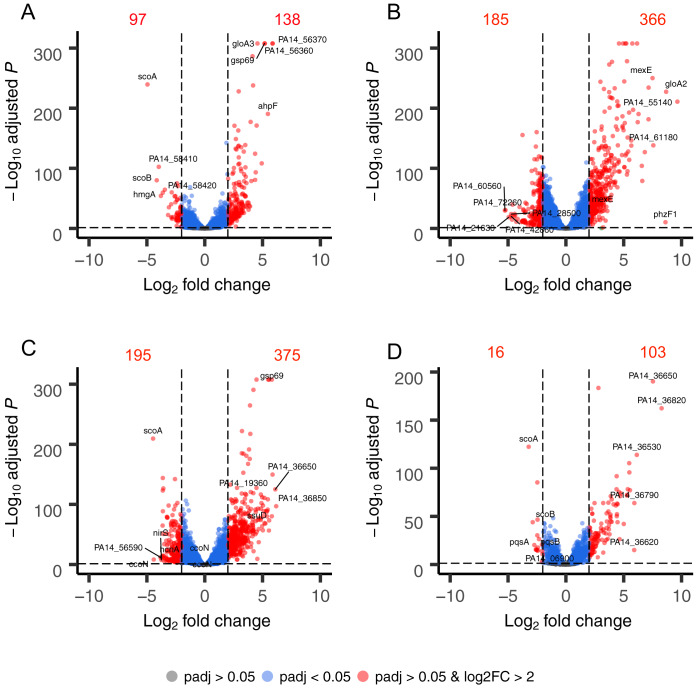
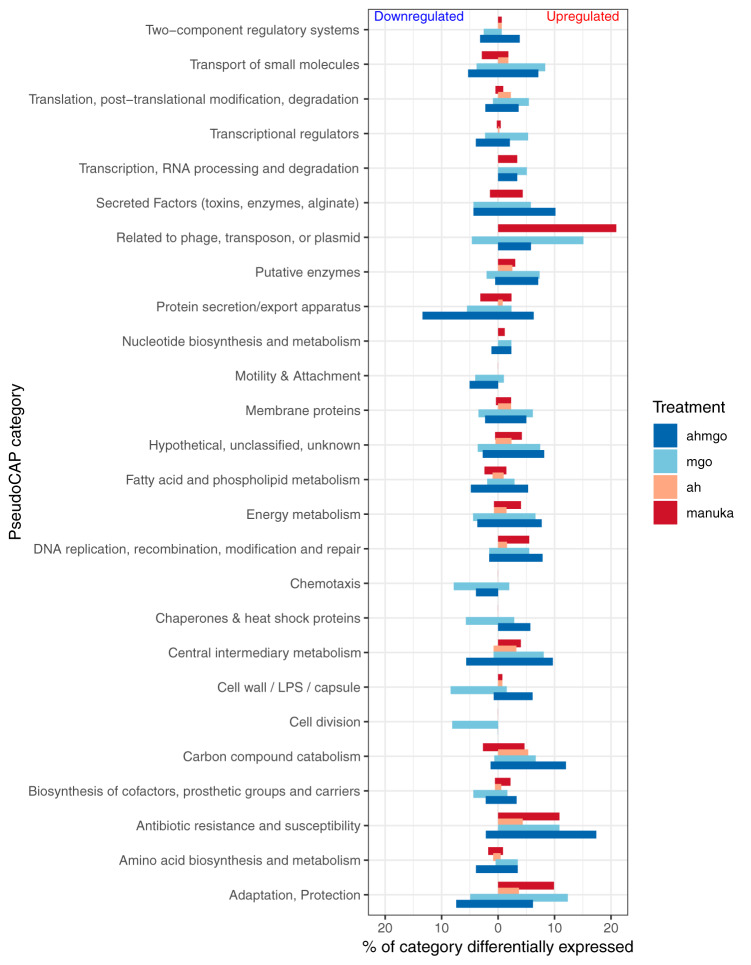
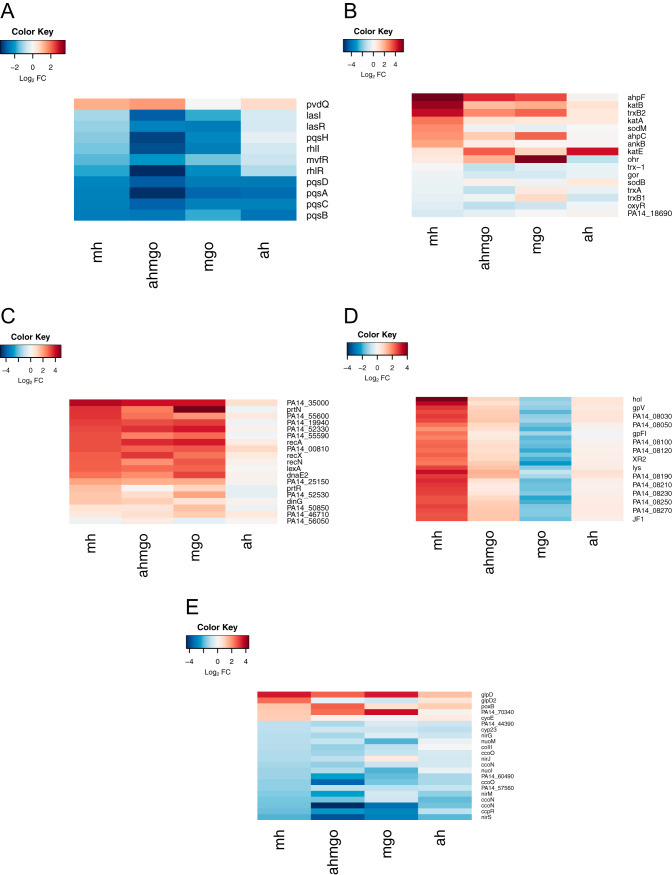
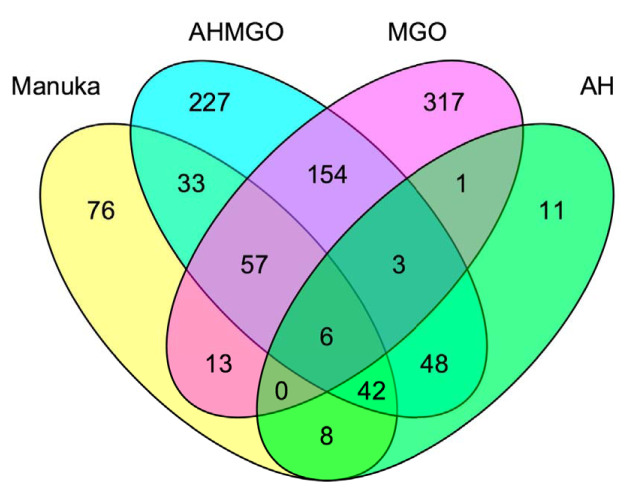
Manuka honey has broad-spectrum antimicrobial activity, and unlike traditional antibiotics, resistance to its killing effects has not been reported. However, its mechanism of action remains unclear. Here, we investigated the mechanism of action of manuka honey and its key antibacterial components using a transcriptomic approach in a model organism, We show that no single component of honey can account for its total antimicrobial action, and that honey affects the expression of genes in the SOS response, oxidative damage, and quorum sensing. Manuka honey uniquely affects genes involved in the explosive cell lysis process and in maintaining the electron transport chain, causing protons to leak across membranes and collapsing the proton motive force, and it induces membrane depolarization and permeabilization in These data indicate that the activity of manuka honey comes from multiple mechanisms of action that do not engender bacterial resistance. The threat of antimicrobial resistance to human health has prompted interest in complex, natural products with antimicrobial activity. Honey has been an effective topical wound treatment throughout history, predominantly due to its broad-spectrum antimicrobial activity. Unlike traditional antibiotics, honey-resistant bacteria have not been reported; however, honey remains underutilized in the clinic in part due to a lack of understanding of its mechanism of action. Here, we demonstrate that honey affects multiple processes in bacteria, and this is not explained by its major antibacterial components. Honey also uniquely affects bacterial membranes, and this can be exploited for combination therapy with antibiotics that are otherwise ineffective on their own. We argue that honey should be included as part of the current array of wound treatments due to its effective antibacterial activity that does not promote resistance in bacteria.
麦卢卡蜂蜜具有广谱抗菌活性,与传统抗生素不同,尚未有对其杀菌作用产生抗性的报道。然而,其作用机制仍不清楚。在此,我们使用转录组学方法在一种模式生物中研究了麦卢卡蜂蜜及其关键抗菌成分的作用机制。我们发现,蜂蜜的任何单一成分都无法解释其全部抗菌作用,并且蜂蜜会影响SOS反应、氧化损伤和群体感应中的基因表达。麦卢卡蜂蜜独特地影响参与爆炸性细胞裂解过程和维持电子传递链的基因,导致质子跨膜泄漏并使质子动力势崩溃,并且它会诱导膜去极化和通透性增加。这些数据表明,麦卢卡蜂蜜的活性来自多种作用机制,不会产生细菌抗性。抗菌药物耐药性对人类健康的威胁促使人们对具有抗菌活性的复杂天然产物产生兴趣。蜂蜜在历史上一直是一种有效的局部伤口治疗方法,主要是由于其广谱抗菌活性。与传统抗生素不同,尚未有对蜂蜜产生抗性的细菌的报道;然而,蜂蜜在临床上仍未得到充分利用,部分原因是对其作用机制缺乏了解。在此,我们证明蜂蜜会影响细菌中的多个过程,而这无法用其主要抗菌成分来解释。蜂蜜还独特地影响细菌膜,这可用于与单独使用时无效的抗生素联合治疗。我们认为,由于蜂蜜具有有效的抗菌活性且不会促进细菌产生抗性,因此应将其纳入当前一系列伤口治疗方法之中。