Molecular Medicine, Scripps Research Institute, La Jolla, California, USA
School of Biomedical Engineering, Heart Research Institute and Charles Perkins Centre, The University of Sydney, Camperdown, New South Wales, Australia
Stroke Vasc Neurol. 2020 Jun;5(2):185-197. doi: 10.1136/svn-2019-000302. Epub 2019 Dec 15.
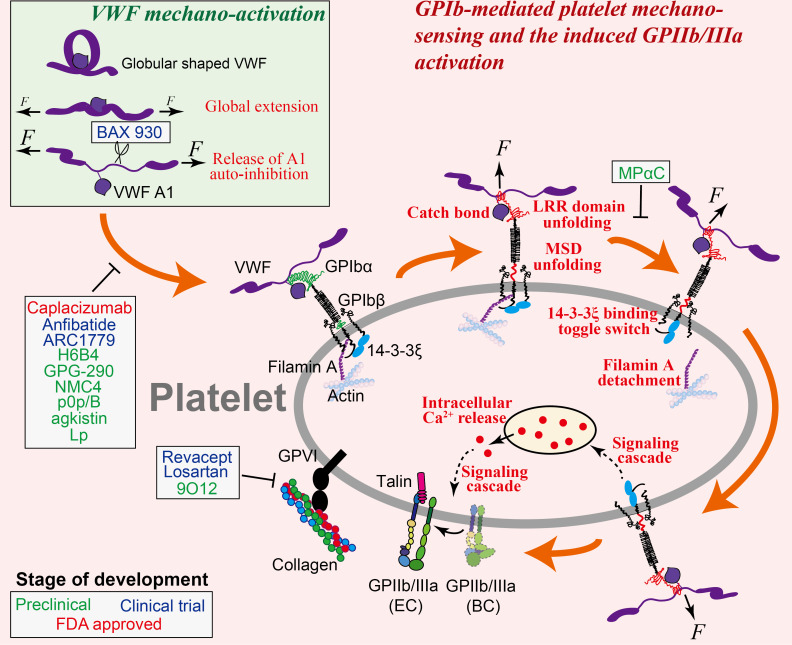
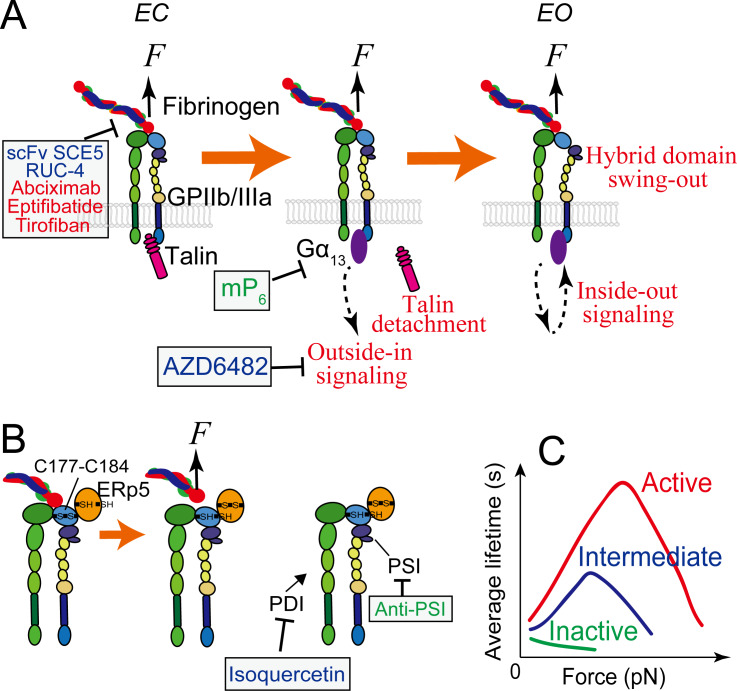
Arterial thrombosis is in part contributed by excessive platelet aggregation, which can lead to blood clotting and subsequent heart attack and stroke. Platelets are sensitive to the haemodynamic environment. Rapid haemodynamcis and disturbed blood flow, which occur in vessels with growing thrombi and atherosclerotic plaques or is caused by medical device implantation and intervention, promotes platelet aggregation and thrombus formation. In such situations, conventional antiplatelet drugs often have suboptimal efficacy and a serious side effect of excessive bleeding. Investigating the mechanisms of platelet biomechanical activation provides insights distinct from the classic views of agonist-stimulated platelet thrombus formation. In this work, we review the recent discoveries underlying haemodynamic force-reinforced platelet binding and mechanosensing primarily mediated by three platelet receptors: glycoprotein Ib (GPIb), glycoprotein IIb/IIIa (GPIIb/IIIa) and glycoprotein VI (GPVI), and their implications for development of antithrombotic 'mechano-medicine' .
动脉血栓形成部分是由血小板过度聚集引起的,这可能导致血液凝结,进而引发心脏病发作和中风。血小板对血流动力学环境很敏感。在生长中的血栓和动脉粥样硬化斑块的血管中或由医疗器械植入和介入引起的快速血流动力学和血流紊乱,会促进血小板聚集和血栓形成。在这种情况下,传统的抗血小板药物通常疗效不佳,且出血过多的副作用严重。研究血小板生物力学激活的机制提供了与经典激动剂刺激血小板血栓形成观点不同的见解。在这项工作中,我们综述了血流动力强化血小板结合和机械感知的最新发现,主要由三种血小板受体介导:糖蛋白 Ib(GPIb)、糖蛋白 IIb/IIIa(GPIIb/IIIa)和糖蛋白 VI(GPVI),以及它们对开发抗血栓“机械医学”的意义。