Department of Microbiology and Immunology, Emory University School of Medicine, Atlanta, GA, USA.
Influenza Division, Centers for Disease Control and Prevention, Atlanta, GA, USA.
Nat Commun. 2019 Aug 6;10(1):3526. doi: 10.1038/s41467-019-11428-x.
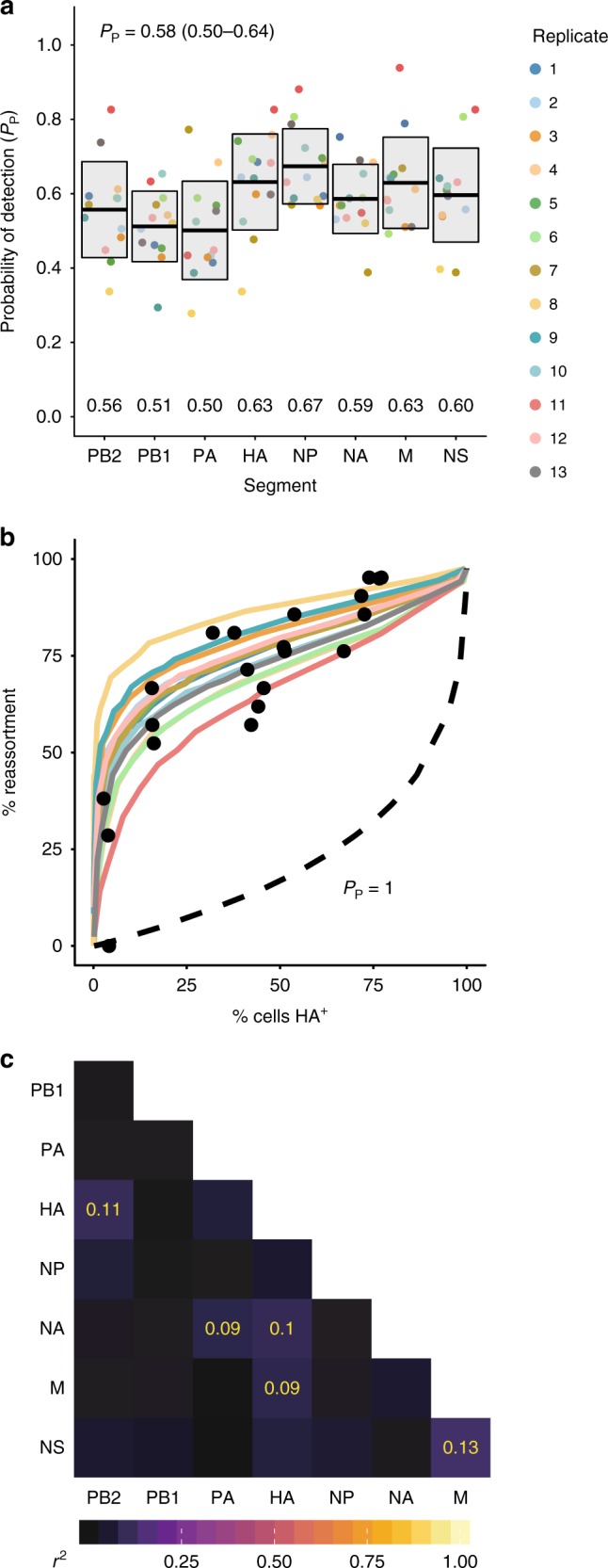
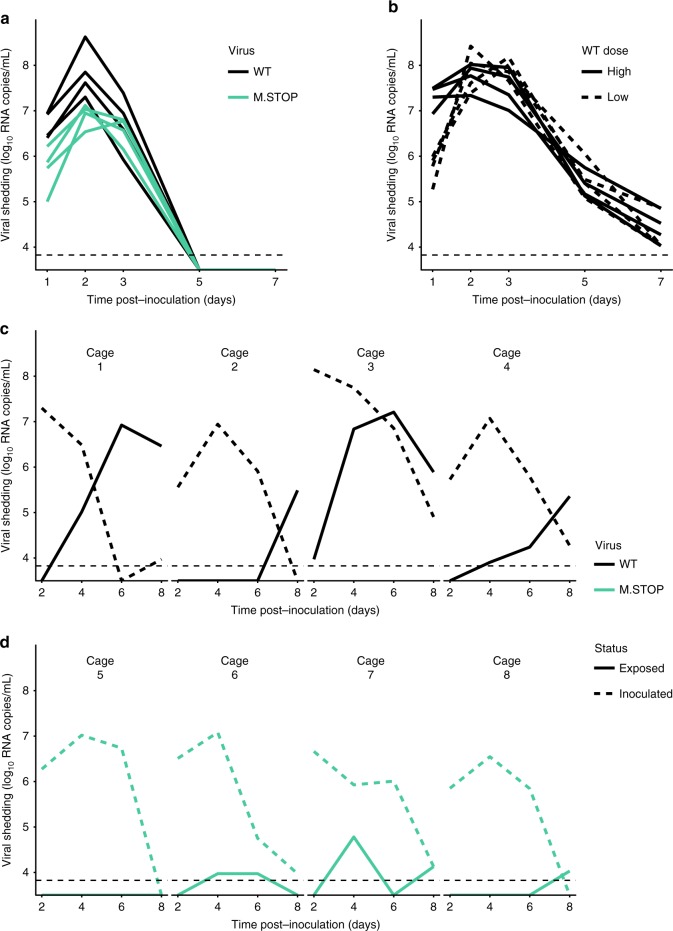
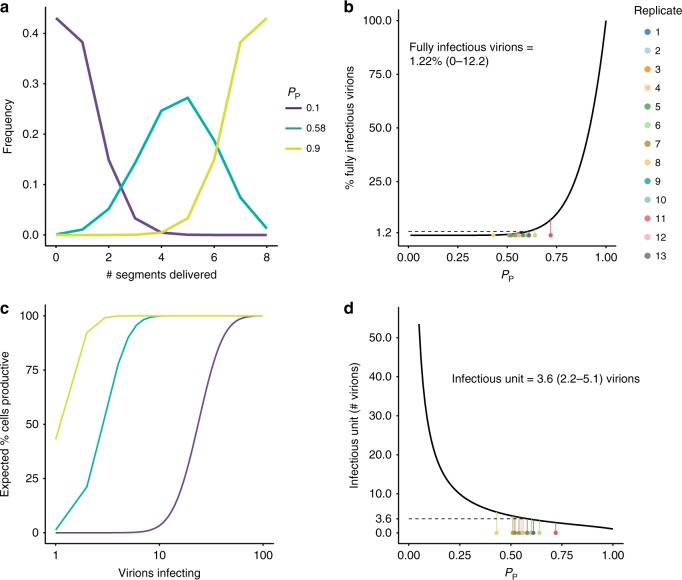
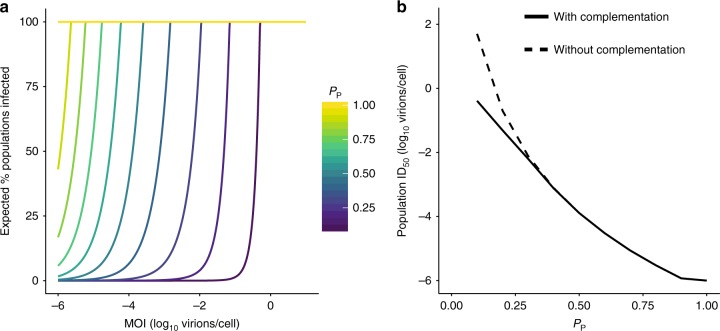
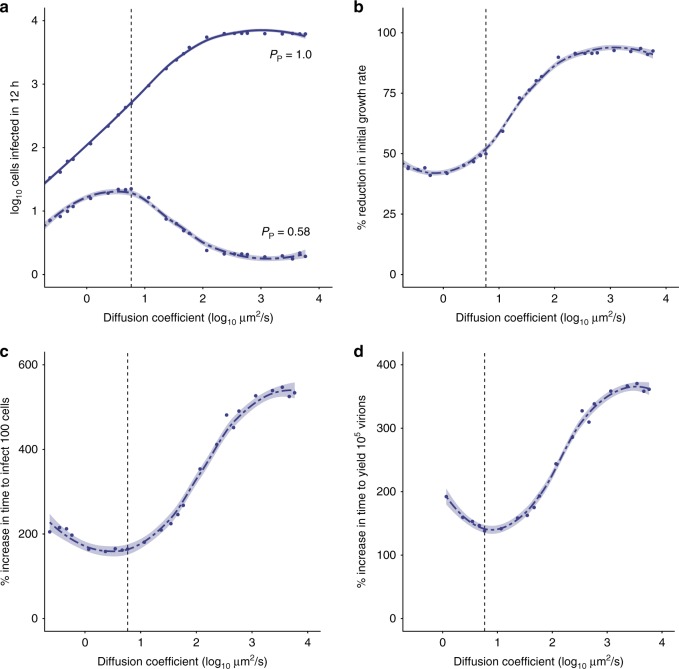
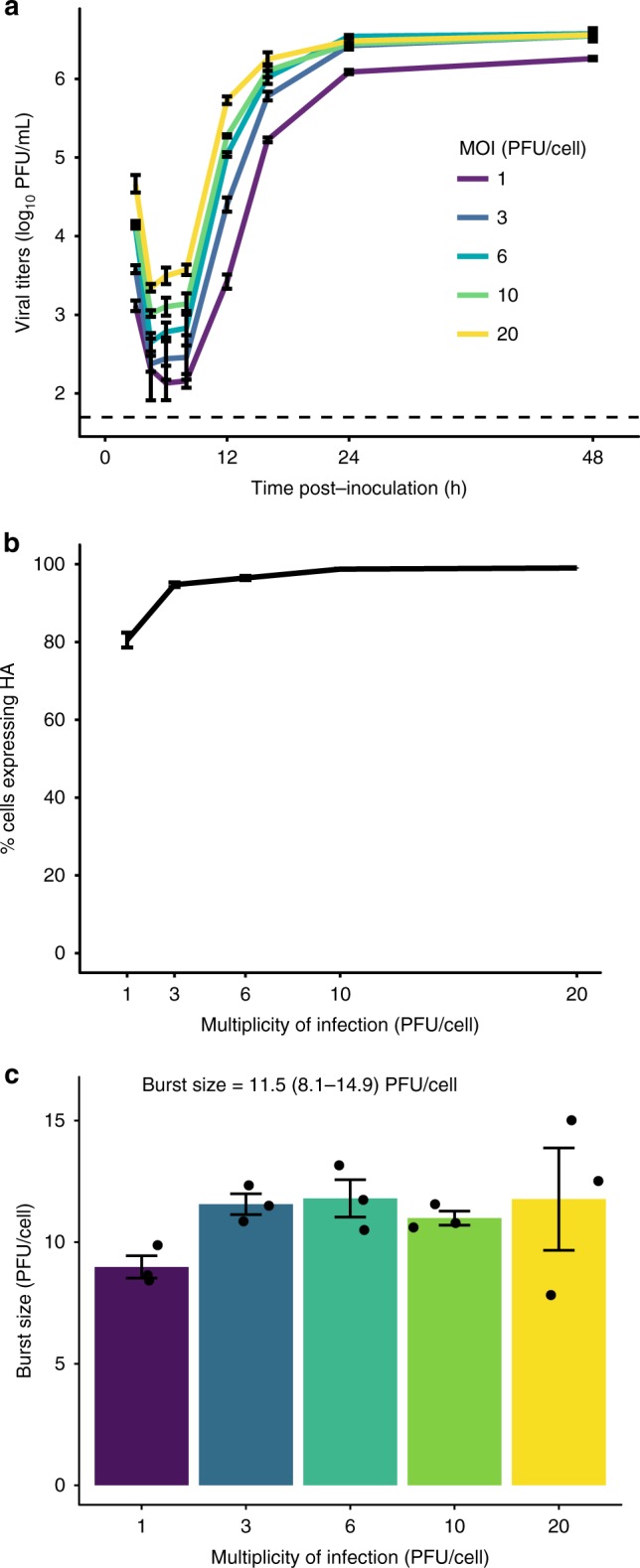
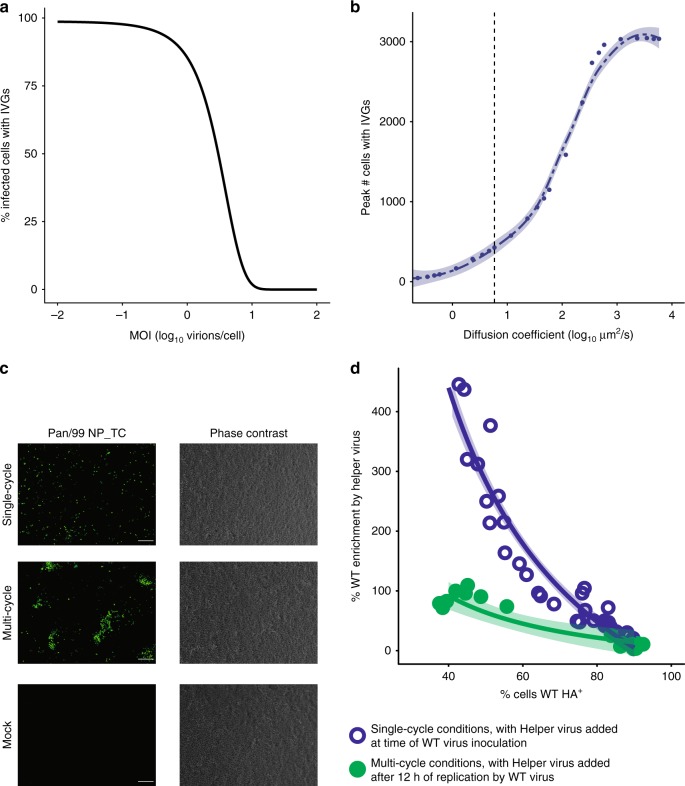
Segmentation of viral genomes into multiple RNAs creates the potential for replication of incomplete viral genomes (IVGs). Here we use a single-cell approach to quantify influenza A virus IVGs and examine their fitness implications. We find that each segment of influenza A/Panama/2007/99 (H3N2) virus has a 58% probability of being replicated in a cell infected with a single virion. Theoretical methods predict that IVGs carry high costs in a well-mixed system, as 3.6 virions are required for replication of a full genome. Spatial structure is predicted to mitigate these costs, however, and experimental manipulations of spatial structure indicate that local spread facilitates complementation. A virus entirely dependent on co-infection was used to assess relevance of IVGs in vivo. This virus grows robustly in guinea pigs, but is less infectious and does not transmit. Thus, co-infection allows IVGs to contribute to within-host spread, but complete genomes may be critical for transmission.
将病毒基因组分割成多个 RNA 片段为不完全病毒基因组(IVG)的复制创造了潜力。在这里,我们使用单细胞方法来定量流感 A 病毒 IVG 并研究其适应度的影响。我们发现,在感染单个病毒粒子的细胞中,流感 A/Panama/2007/99(H3N2)病毒的每个片段都有 58%的概率被复制。理论方法预测,在充分混合的系统中,IVG 会带来很高的成本,因为需要 3.6 个病毒粒子才能复制完整的基因组。然而,空间结构被预测可以减轻这些成本,并且对空间结构的实验操作表明,局部传播有助于互补。我们使用完全依赖于共感染的病毒来评估 IVG 在体内的相关性。这种病毒在豚鼠中生长旺盛,但传染性较低且不传播。因此,共感染允许 IVG 有助于在宿主内传播,但完整的基因组可能对传播至关重要。