Pharmaceutical College, Shandong University of TCM, Jinan, China.
Department of Pharmacy, Jinan Second People's Hospital, Jinan, China.
Pharm Biol. 2020 Dec;58(1):561-573. doi: 10.1080/13880209.2020.1778740.
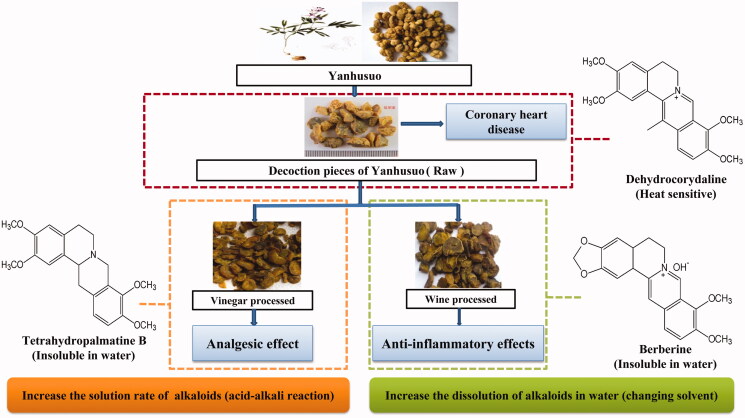
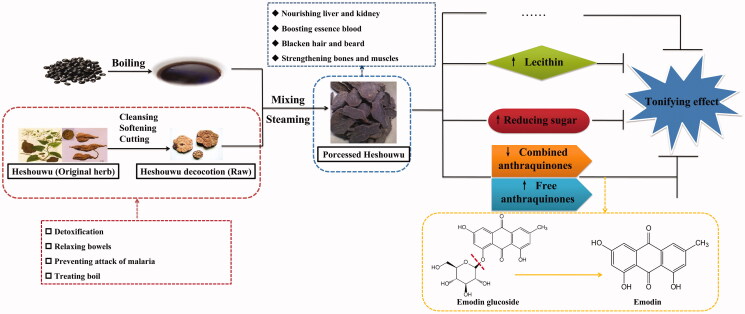
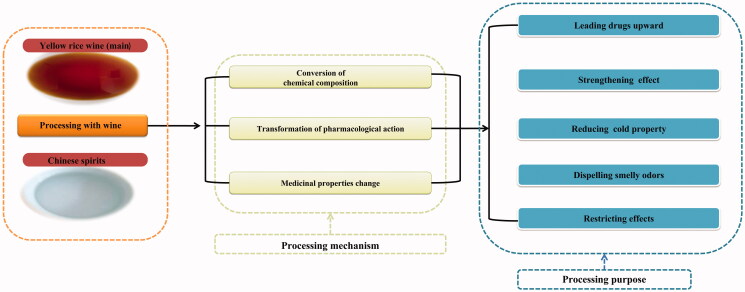
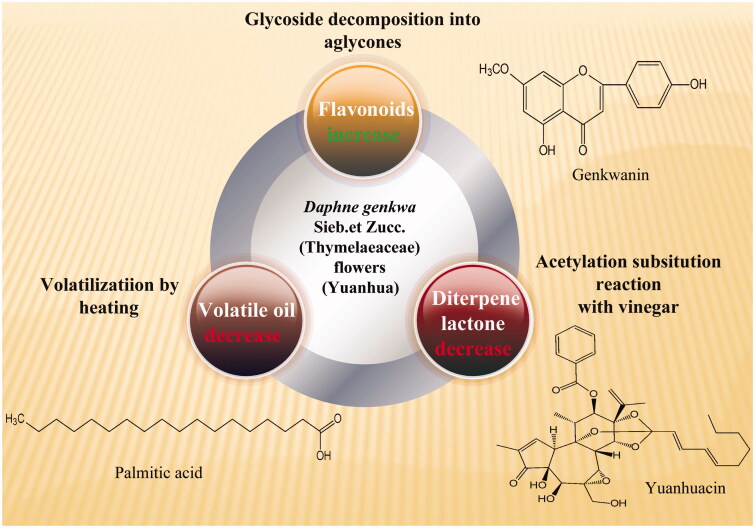
The Chinese medicinal materials originate from animals, plants, or minerals must undergo appropriate treatment before use as decoction pieces. Processing of Chinese medicines with liquid excipients is a pharmaceutical technique that transforms medicinal raw materials into decoction pieces which are significantly different from the original form. During processing, significant changes occur in chemical constituents, which inevitably affects clinical efficacy. At present, the liquid materials in processing mainly involve wine, vinegar, honey, saline water, ginger juice, herbal juice, etc. This review introduces the typical methods of liquid excipients processing, summarizes the influence on chemical composition, pharmacological efficacy, and expounds the ways and mechanisms of liquid excipients to change the properties of drugs, enhance the efficacy, eliminate or reduce toxicity and adverse reaction. English and Chinese literature from 1986 to 2020 was collected from databases including Web of Science, PubMed, Elsevier, Chinese Pharmacopoeia 2015, and CNKI (Chinese). Liquid excipients, processing, pharmacological effects, synergism, chemical constitution, traditional Chinese medicine (TCM) were used as the key words. Liquid excipients play a key role in the application of TCM. Processing with proper liquid excipients can change the content of toxic or active components by physical or chemical transformation, decrease or increase drug dissolution, alter drug pharmacokinetics, or exert their own pharmacological effects. Thus, processing with liquid excipients is essential to ensure the safety and efficacy of TCM in clinic. This article could be helpful for researchers who are interested in traditional Chinese herbs processed with liquid excipients.
中药材来源于动物、植物或矿物,在用作饮片之前必须经过适当的处理。用液体制剂加工中药材是一种制药技术,它将药用原料转化为饮片,与原始形式有很大的不同。在加工过程中,化学成分会发生显著变化,这不可避免地会影响临床疗效。目前,加工中的液体制剂主要涉及酒、醋、蜂蜜、盐水、姜汁、草药汁等。本文介绍了液体制剂加工的典型方法,总结了对化学成分、药理作用的影响,阐述了液体制剂改变药物性质、增强疗效、消除或减少毒性和不良反应的途径和机制。本文从 1986 年至 2020 年,通过 Web of Science、PubMed、Elsevier、《中国药典》2015 版和中国知网(CNKI)等数据库收集了英文和中文文献。以液体制剂、炮制、药理作用、协同作用、化学成分、中药(TCM)为关键词。液体制剂在中药应用中起着关键作用。用适当的液体制剂进行炮制,可以通过物理或化学转化改变有毒或有效成分的含量,降低或增加药物的溶解度,改变药物的药代动力学,或发挥自身的药理作用。因此,用液体制剂进行炮制对于保证中药在临床上的安全性和疗效至关重要。本文可为对液体制剂炮制的中药感兴趣的研究人员提供参考。