Department of Computer Engineering, Erciyes University, Kayseri, 38039, Turkey.
Bioinformatics Division, Genome and Stem Cell Center, Erciyes University, Kayseri, 38039, Turkey.
BMC Med Res Methodol. 2020 Jul 2;20(1):176. doi: 10.1186/s12874-020-01048-1.
The capacity of the current molecular testing convention does not allow high-throughput and community level scans of COVID-19 infections. The diameter in the current paradigm of shallow tracing is unlikely to reach the silent clusters that might be as important as the symptomatic cases in the spread of the disease. Group testing is a feasible and promising approach when the resources are scarce and when a relatively low prevalence regime is observed on the population.
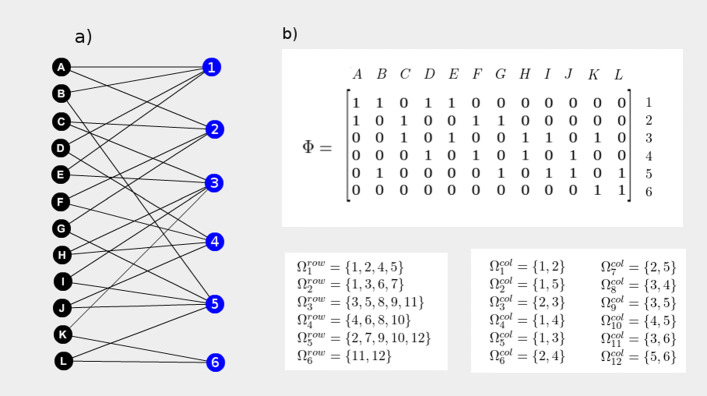
We employed group testing with a sparse random pooling scheme and conventional group test decoding algorithms both for exact and inexact recovery.
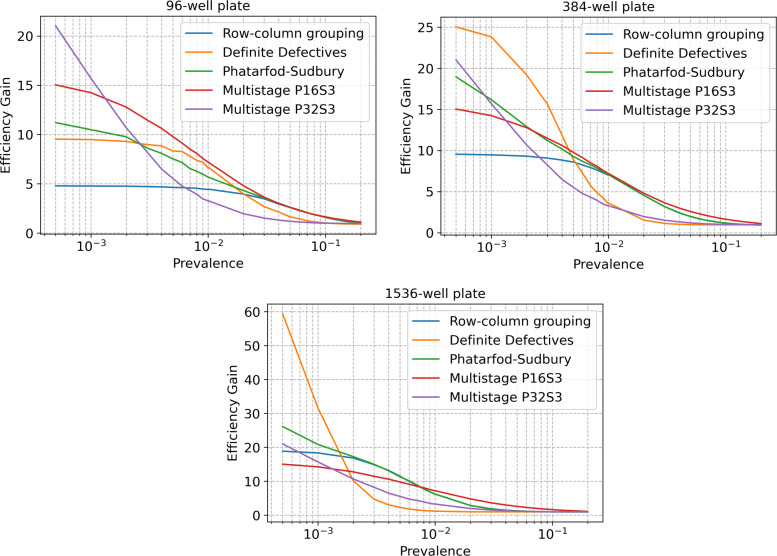
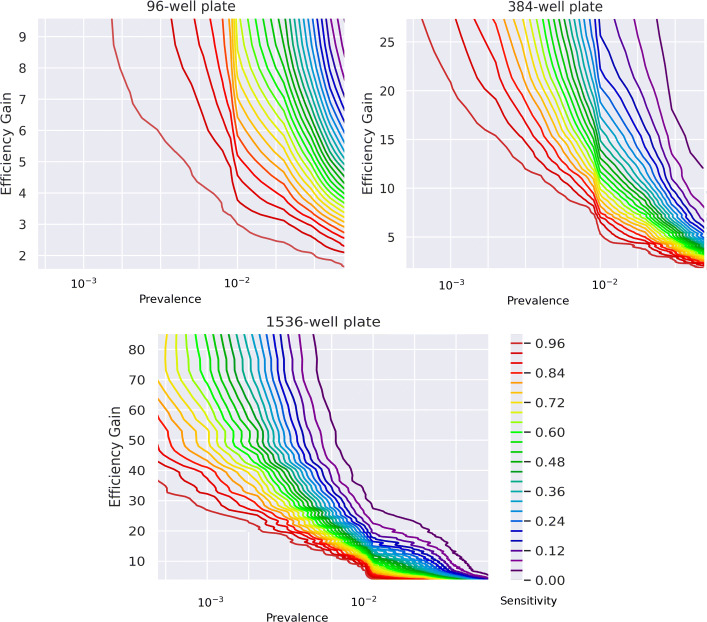
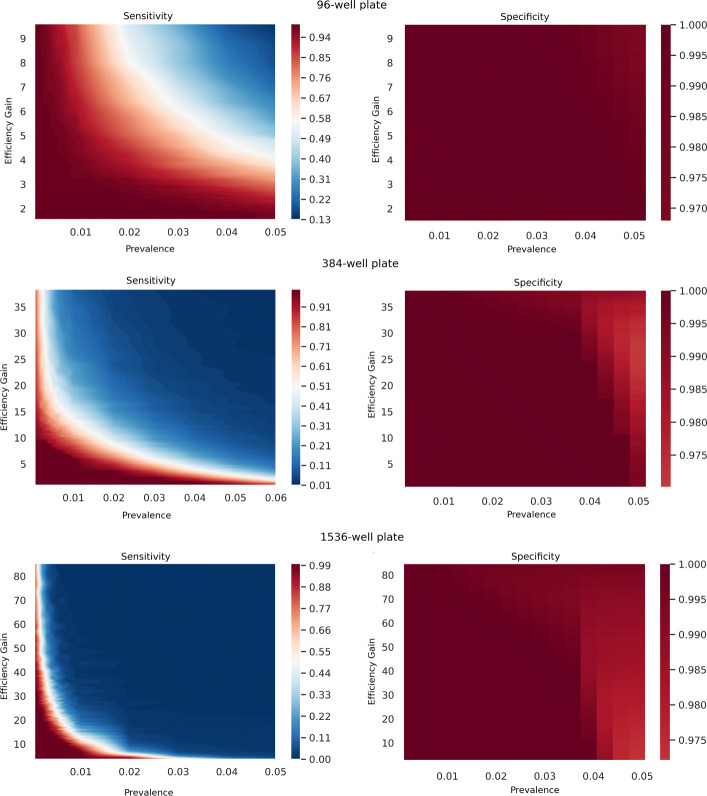
Our simulations showed that significant reduction in per case test numbers (or expansion in total test numbers preserving the number of actual tests conducted) for very sparse prevalence regimes is available. Currently proposed COVID-19 group testing schemes offer a gain up to 15X-20X scale-up. There is a good probability that the required scale up to achieve massive scale testing might be greater in certain scenarios. We investigated if further improvement is available, especially in sparse prevalence occurrence where outbreaks are needed to be avoided by population scans.
Our simulations show that sparse random pooling can provide improved efficiency gains compared to conventional group testing or Reed-Solomon error correcting codes. Therefore, we propose that special designs for different scenarios could be available and it is possible to scale up testing capabilities significantly.
目前的分子检测方法无法进行高通量和社区级别的 COVID-19 感染扫描。在目前的浅层溯源模式下,其检测范围很窄,难以发现那些可能与有症状病例同等重要的静默感染集群。在资源有限且人群中观察到相对较低的流行率时,组检测是一种可行且有前途的方法。
我们采用了稀疏随机池化方案的组检测,并使用传统的组测试解码算法进行精确和不精确的恢复。
我们的模拟结果表明,在非常稀疏的流行率情况下,每个病例的检测数量(或在保持实际检测数量的情况下扩大总检测数量)可以显著减少。目前提出的 COVID-19 组检测方案可提供高达 15 倍至 20 倍的扩展。在某些情况下,可能需要更大的扩展才能实现大规模检测。我们研究了是否可以进一步提高效率,特别是在需要通过人群扫描来避免疫情爆发的稀疏流行情况下。
我们的模拟结果表明,与传统的组检测或 Reed-Solomon 纠错码相比,稀疏随机池化可以提供更高的效率增益。因此,我们提出可以针对不同场景进行特殊设计,并有可能显著提高检测能力。