Department of Chemistry and Biochemistry, Calvin University, Grand Rapids, MI 49546, USA.
Howard Hughes Medical Institute, Department of Molecular, Cellular, and Developmental Biology, University of Colorado-Boulder, Boulder, CO 80309, USA.
J Cell Sci. 2020 Jul 24;133(14):jcs239814. doi: 10.1242/jcs.239814.
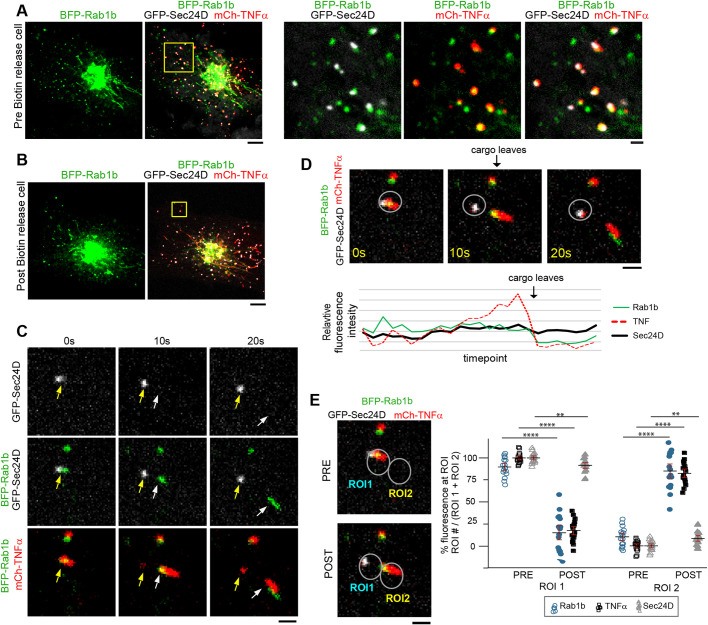
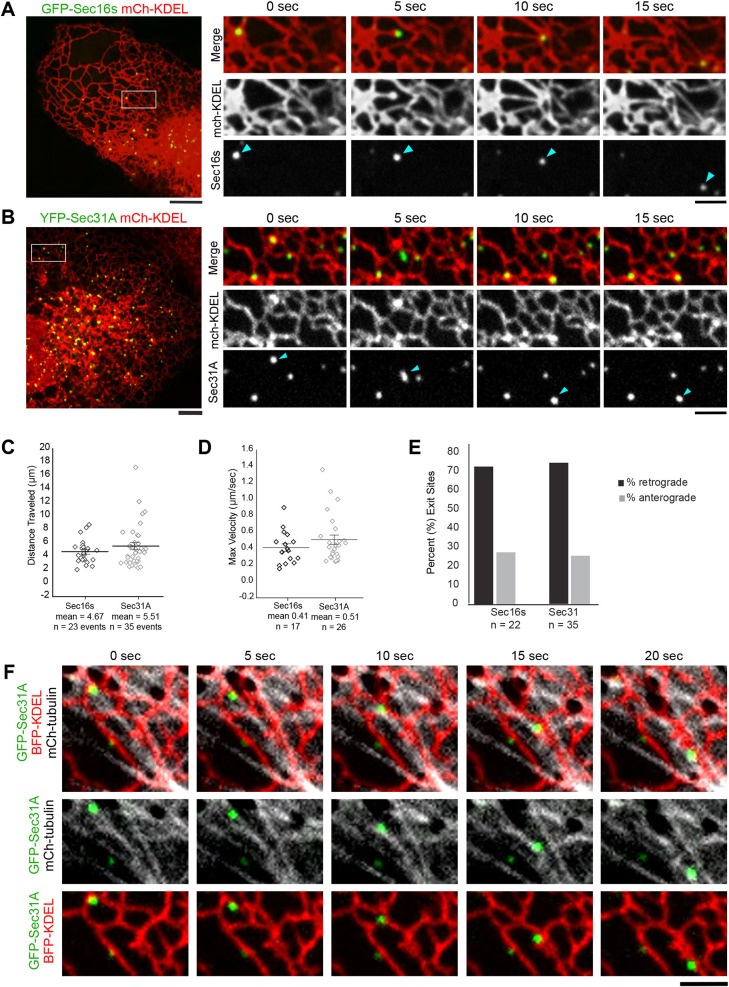
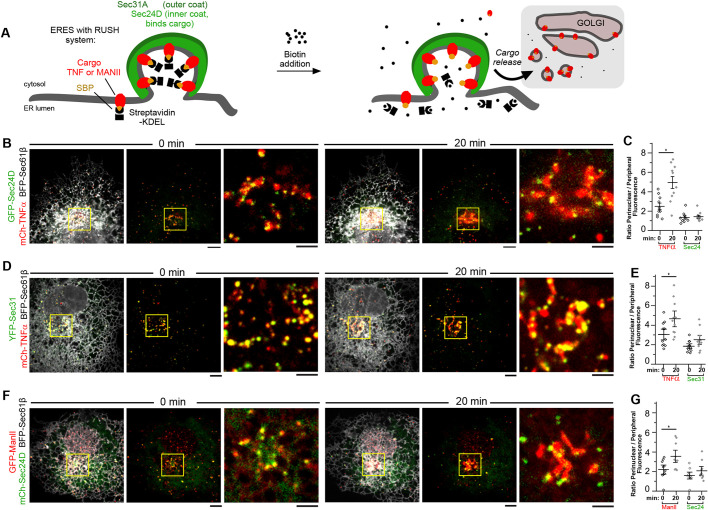
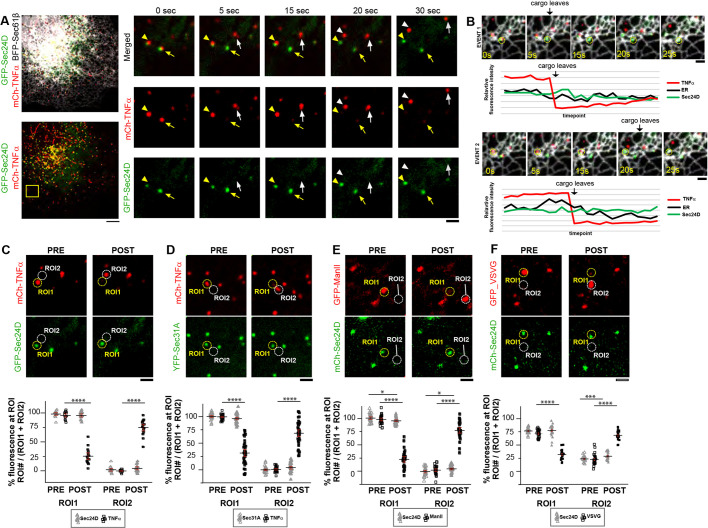
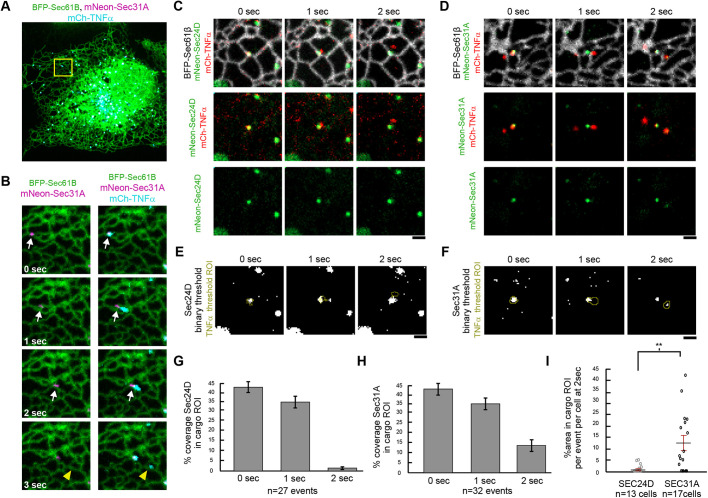
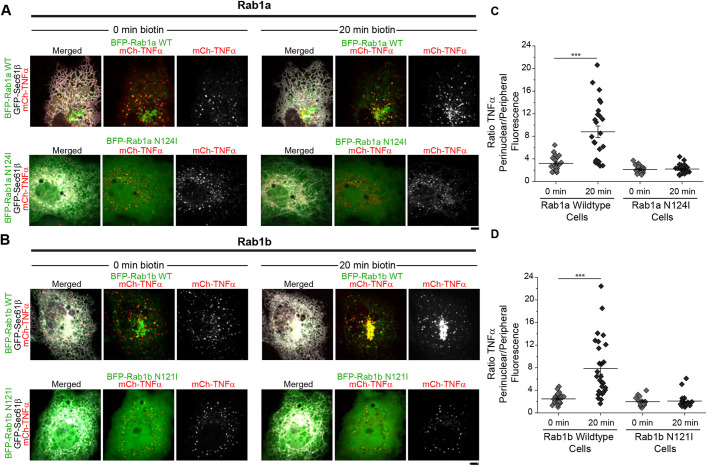
Secretory cargo is recognized, concentrated and trafficked from endoplasmic reticulum (ER) exit sites (ERES) to the Golgi. Cargo export from the ER begins when a series of highly conserved COPII coat proteins accumulate at the ER and regulate the formation of cargo-loaded COPII vesicles. In animal cells, capturing live cargo trafficking past this point is challenging; it has been difficult to discriminate whether cargo is trafficked to the Golgi in a COPII-coated vesicle. Here, we describe a recently developed live-cell cargo export system that can be synchronously released from ERES to illustrate trafficking in animal cells. We found that components of the COPII coat remain associated with the ERES while cargo is extruded into COPII-uncoated, non-ER associated, Rab1 (herein referring to Rab1a or Rab1b)-dependent carriers. Our data suggest that, in animal cells, COPII coat components remain stably associated with the ER at exit sites to generate a specialized compartment, but once cargo is sorted and organized, Rab1 labels these export carriers and facilitates efficient forward trafficking.This article has an associated First Person interview with the first author of the paper.
分泌货物从内质网(ER)出口部位(ERES)被识别、浓缩并转运到高尔基体。当一系列高度保守的 COPII 衣壳蛋白在内质网上积累并调节货物装载的 COPII 囊泡的形成时,货物从 ER 中的出口就开始了。在动物细胞中,捕获经过这一点的活货物运输是具有挑战性的;很难区分货物是否在 COPII 包被的囊泡中被转运到高尔基体。在这里,我们描述了一种最近开发的活细胞货物出口系统,可以从 ERES 中同步释放,以说明动物细胞中的运输。我们发现,COPII 外套的成分在货物挤出 COPII 无被膜、非 ER 相关、Rab1(在此指 Rab1a 或 Rab1b)依赖性载体时仍与 ERES 相关联。我们的数据表明,在动物细胞中,COPII 外套的成分在出口部位仍与 ER 稳定相关,以产生一个专门的隔室,但一旦货物被分拣和组织,Rab1 标记这些出口载体并促进有效的正向运输。本文附有对该论文第一作者的第一人称采访。