Alkhamis Moh A, Al Youha Sarah, Khajah Mohammad M, Ben Haider Nour, Alhardan Sumayah, Nabeel Ahmad, Al Mazeedi Sulaiman, Al-Sabah Salman K
Department of Epidemiology and Biostatistics, Faculty of Public Health, Health Sciences Center, Kuwait University, Kuwait.
Jaber Al-Ahmad Al-Sabah Hospital, Ministry of Health, Kuwait.
Int J Infect Dis. 2020 Sep;98:153-160. doi: 10.1016/j.ijid.2020.06.078. Epub 2020 Jun 30.
Prompt understanding of the temporal and spatial patterns of the COVID-19 pandemic on a national level is a critical step for the timely allocation of surveillance resources. Therefore, this study explored the temporal and spatiotemporal dynamics of the COVID-19 pandemic in Kuwait using daily confirmed case data collected between the 23 February and 07 May 2020.
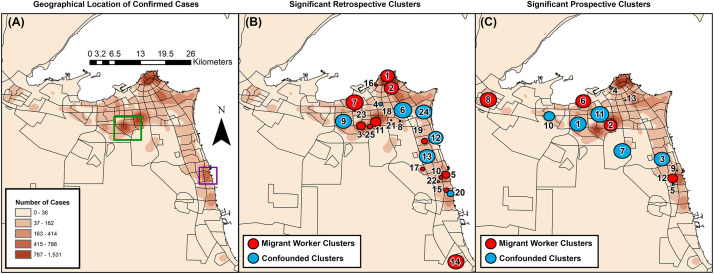
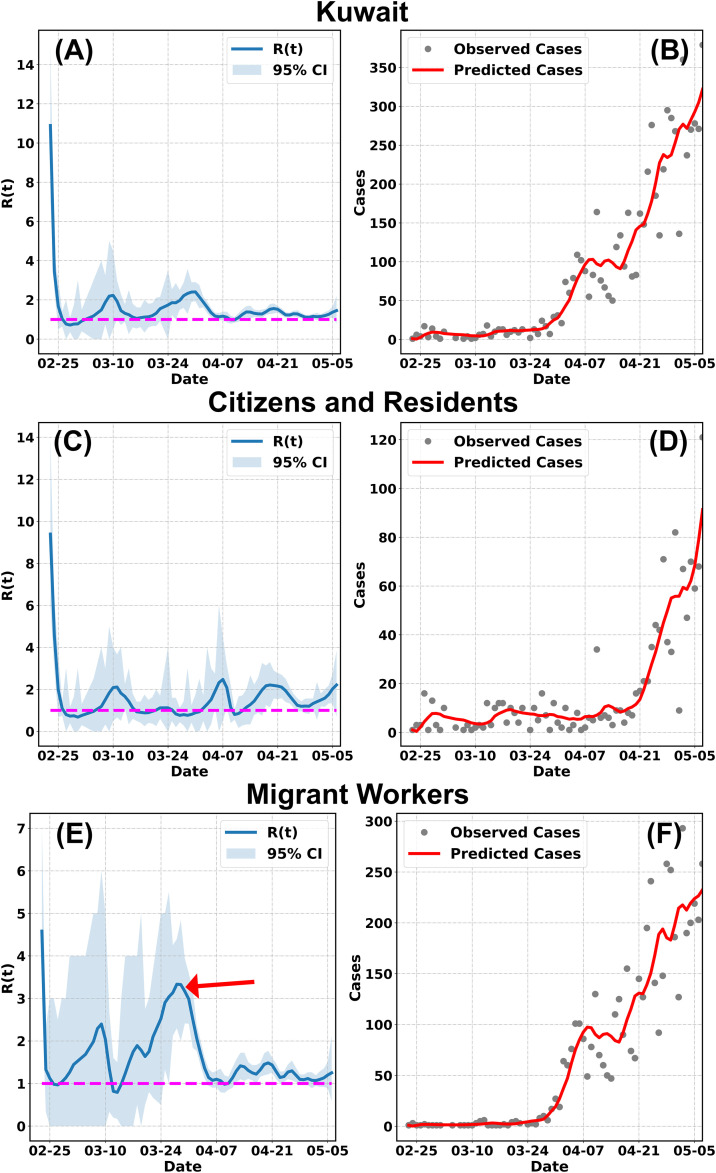
The pandemic progression was quantified using the time-dependent reproductive number (R). The spatiotemporal scan statistic model was used to identify local clustering events. Variability in transmission dynamics was accounted for within and between two socioeconomic classes: citizens-residents and migrant workers.
The pandemic size in Kuwait continues to grow (Rs ≥2), indicating significant ongoing spread. Significant spreading and clustering events were detected among migrant workers, due to their densely populated areas and poor living conditions. However, the government's aggressive intervention measures have substantially lowered pandemic growth in migrant worker areas. However, at a later stage of the study period, active spreading and clustering events among both socioeconomic classes were found.
This study provided deeper insights into the epidemiology of COVID-19 in Kuwait and provided an important platform for rapid guidance of decisions related to intervention activities.
在国家层面迅速了解新冠疫情的时空模式是及时分配监测资源的关键一步。因此,本研究利用2020年2月23日至5月7日期间收集的每日确诊病例数据,探讨了科威特新冠疫情的时间动态和时空动态。
使用随时间变化的繁殖数(R)对疫情进展进行量化。时空扫描统计模型用于识别局部聚集事件。在公民-居民和移民工人这两个社会经济阶层内部和之间考虑传播动态的变异性。
科威特的疫情规模持续增长(R值≥2),表明疫情仍在显著蔓延。由于移民工人居住地区人口密集且生活条件差,在他们当中检测到了显著的传播和聚集事件。然而,政府积极的干预措施已大幅降低了移民工人地区的疫情增长。不过,在研究期的后期,在两个社会经济阶层中均发现了活跃的传播和聚集事件。
本研究为深入了解科威特新冠疫情的流行病学提供了见解,并为快速指导与干预活动相关的决策提供了重要平台。