National & Local Joint Engineering Research Center of Biodiagnosis and Biotherapy, Precision Medicine Institute, The Second Affiliated Hospital of Xi'an Jiaotong University, Xi'an, 710004, China.
State Key Laboratory of Military Stomatology & National Clinical Research Center for Oral Diseases & Shaanxi International Joint Research Center for Oral Diseases, Center for Tissue Engineering, School of Stomatology, The Fourth Military Medical University, No. 145 West Changle Road, Xi'an, 710032, Shaanxi, China.
Stem Cell Res Ther. 2020 Jul 3;11(1):269. doi: 10.1186/s13287-020-01785-6.
Bone mass loss in aging is linked with imbalanced lineage differentiation of bone marrow mesenchymal stem cells (BMMSCs). Recent studies have proved that histone deacetylases (HDACs) are regarded as key regulators of bone remodeling. However, HDACs involve in regulating BMMSC bio-behaviors remain elusive. Here, we investigated the ability of HDAC9 on modulation of autophagy and its significance in lineage differentiation of BMMSCs.
The effects of HDAC9 on lineage differentiation of BMMSCs and autophagic signaling were assessed by various biochemical (western blot and ChIP assay), morphological (TEM and confocal microscopy), and micro-CT assays.
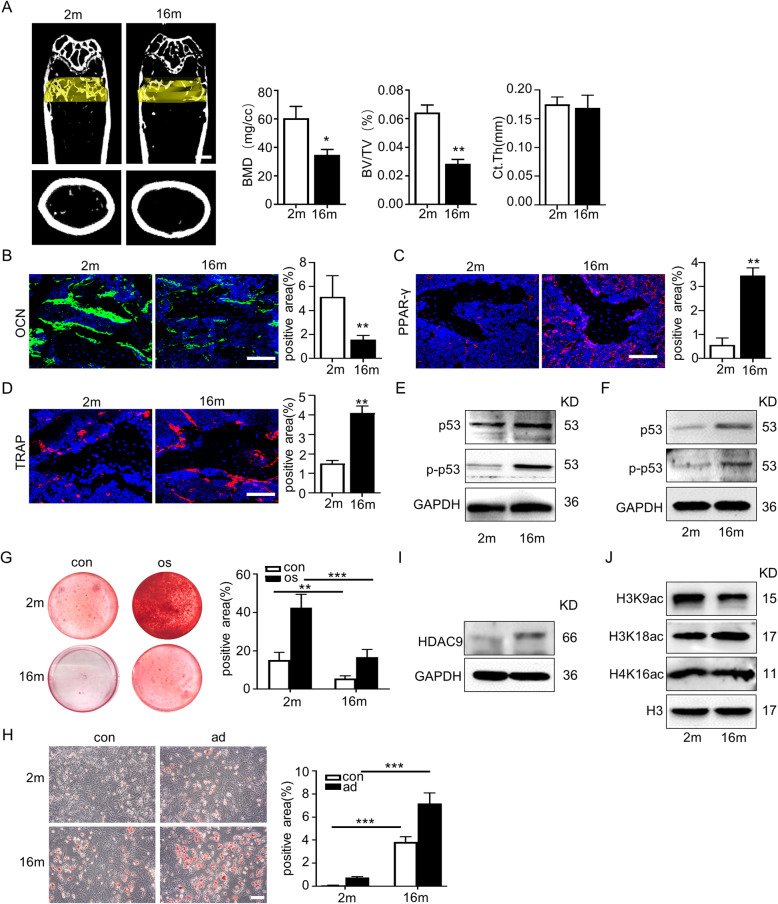
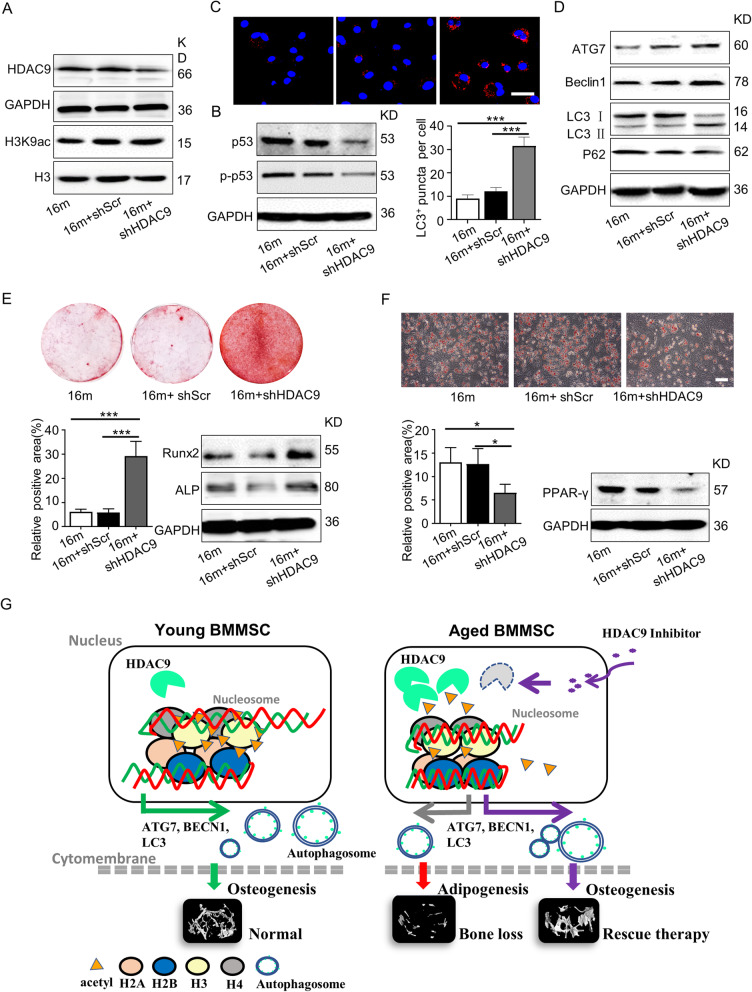
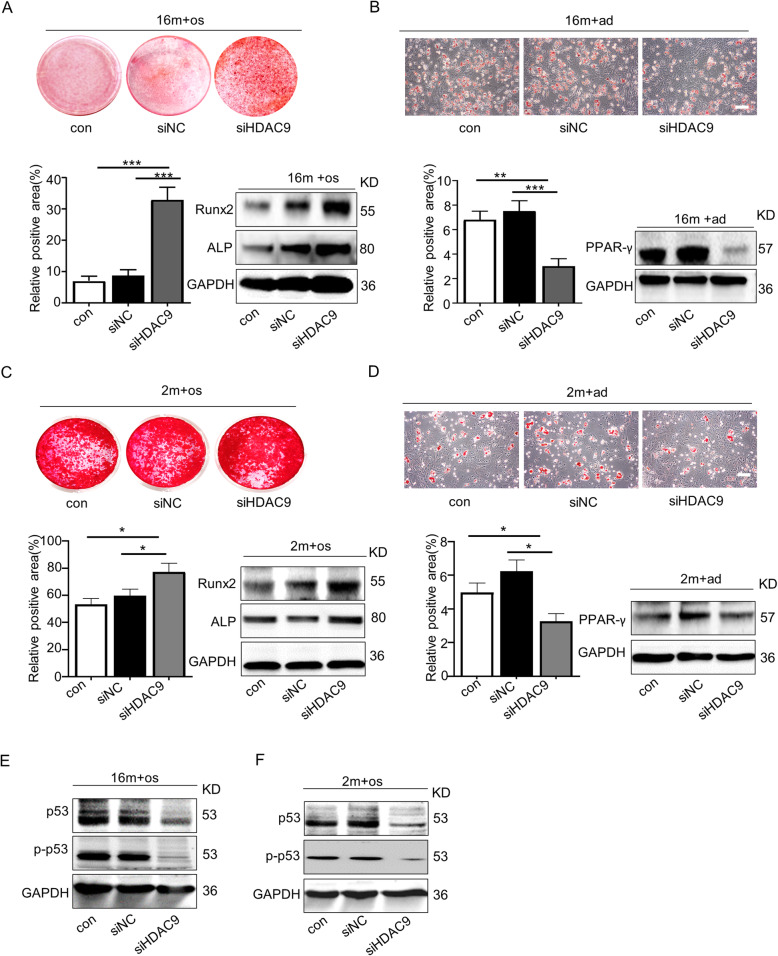
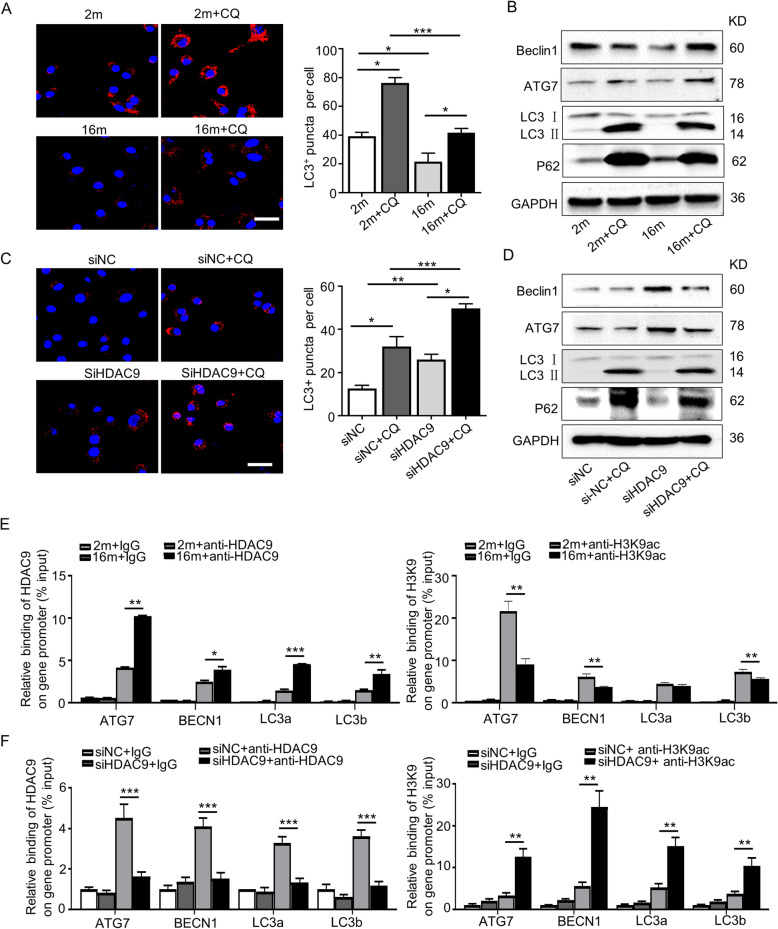
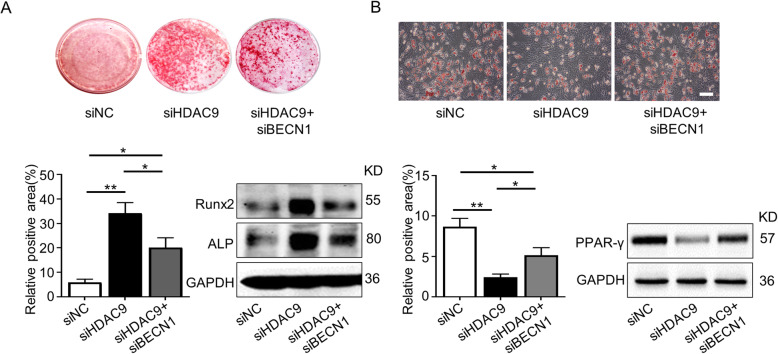
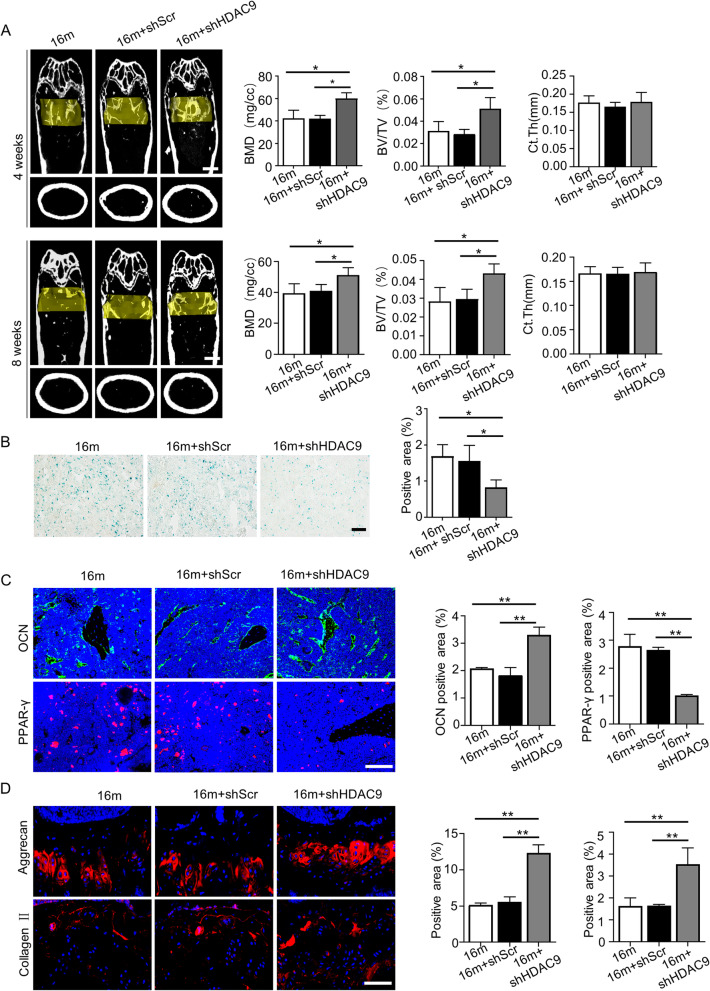
Sixteen-month mice manifested obvious bone mass loss and marrow fat increase, accompanied with decreased osteogenic differentiation and increased adipogenic differentiation of BMMSCs. Further, the expression of HDAC9 elevated in bone and BMMSCs. Importantly, HDAC9 inhibitors recovered the lineage differentiation abnormality of 16-month BMMSCs and reduced p53 expression. Mechanistically, we revealed that HDAC9 regulated the autophagy of BMMSCs by controlling H3K9 acetylation in the promoters of the autophagic genes, ATG7, BECN1, and LC3a/b, which subsequently affected their lineage differentiation. Finally, HDAC9 inhibition improved endogenous BMMSC properties and promoted the bone mass recovery of 16-month mice.
Our data demonstrate that HDAC9 is a key regulator in a variety of bone mass by regulating autophagic activity in BMMSCs and thus a potential target of age-related bone loss treatment.
衰老过程中骨量的丢失与骨髓间充质干细胞(BMMSCs)谱系分化失衡有关。最近的研究已经证明,组蛋白去乙酰化酶(HDACs)被认为是骨重塑的关键调节因子。然而,HDACs 参与调节 BMMSC 生物行为的机制仍不清楚。在这里,我们研究了 HDAC9 对自噬的调节能力及其在 BMMSC 谱系分化中的意义。
通过各种生化(western blot 和 ChIP 分析)、形态学(TEM 和共聚焦显微镜)和 micro-CT 分析评估了 HDAC9 对 BMMSC 谱系分化和自噬信号的影响。
16 个月大的小鼠表现出明显的骨量丢失和骨髓脂肪增加,伴随着成骨分化减少和 BMMSCs 成脂分化增加。此外,骨和 BMMSCs 中的 HDAC9 表达增加。重要的是,HDAC9 抑制剂恢复了 16 个月 BMMSCs 的谱系分化异常,并降低了 p53 的表达。在机制上,我们揭示了 HDAC9 通过控制自噬基因 ATG7、BECN1 和 LC3a/b 启动子上的 H3K9 乙酰化来调节 BMMSCs 的自噬,从而影响它们的谱系分化。最后,HDAC9 抑制作用改善了内源性 BMMSC 的特性,并促进了 16 个月大的小鼠的骨量恢复。
我们的数据表明,HDAC9 通过调节 BMMSCs 中的自噬活性,成为多种骨量的关键调节因子,因此是治疗与年龄相关的骨丢失的潜在靶点。