Wollmann Felix, Dietze Stefan, Ackermann Jörg-Uwe, Bley Thomas, Walther Thomas, Steingroewer Juliane, Krujatz Felix
Institute of Natural Materials Technology TU Dresden Dresden Germany.
Faculty of Agriculture/Environment/Chemistry Dresden University of Applied Sciences Dresden Germany.
Eng Life Sci. 2019 Nov 7;19(12):860-871. doi: 10.1002/elsc.201900071. eCollection 2019 Dec.
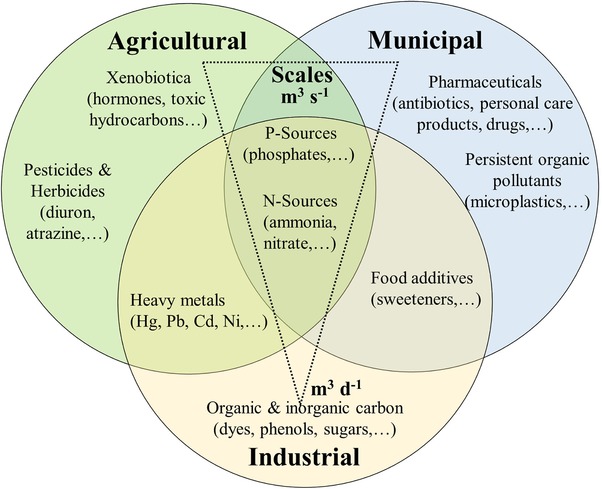
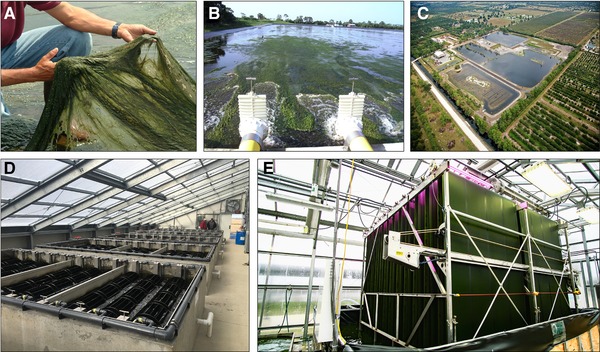
Current global environmental issues raise unavoidable challenges for our use of natural resources. Supplying the human population with clean water is becoming a global problem. Numerous organic and inorganic impurities in municipal, industrial, and agricultural waters, ranging from microplastics to high nutrient loads and heavy metals, endanger our nutrition and health. The development of efficient wastewater treatment technologies and circular economic approaches is thus becoming increasingly important. The biomass production of microalgae using industrial wastewater offers the possibility of recycling industrial residues to create new sources of raw materials for energy and material use. This review discusses algae-based wastewater treatment technologies with a special focus on industrial wastewater sources, the potential of non-conventional extremophilic (thermophilic, acidophilic, and psychrophilic) microalgae, and industrial algae-wastewater treatment concepts that have already been put into practice.
当前的全球环境问题给我们利用自然资源带来了不可避免的挑战。为人类提供清洁用水正成为一个全球性问题。市政、工业和农业用水中存在大量有机和无机杂质,从微塑料到高营养负荷和重金属,都危及我们的营养和健康。因此,开发高效的废水处理技术和循环经济方法变得越来越重要。利用工业废水生产微藻生物质为回收工业废渣创造能源和材料使用的新原料来源提供了可能性。本综述讨论了基于藻类的废水处理技术,特别关注工业废水来源、非常规嗜极(嗜热、嗜酸和嗜冷)微藻的潜力以及已经付诸实践的工业藻类-废水处理概念。