• 文献检索
  • 文档翻译
  • 深度研究
  • 学术资讯
  • Suppr Zotero 插件Zotero 插件
  • 邀请有礼
  • 套餐&价格
  • 历史记录
应用&插件
Suppr Zotero 插件Zotero 插件浏览器插件Mac 客户端Windows 客户端微信小程序
定价
高级版会员购买积分包购买API积分包
服务
文献检索文档翻译深度研究API 文档MCP 服务
关于我们
关于 Suppr公司介绍联系我们用户协议隐私条款
关注我们

Suppr 超能文献

核心技术专利:CN118964589B侵权必究
粤ICP备2023148730 号-1Suppr @ 2026

文献检索

告别复杂PubMed语法,用中文像聊天一样搜索,搜遍4000万医学文献。AI智能推荐,让科研检索更轻松。

立即免费搜索

文件翻译

保留排版,准确专业,支持PDF/Word/PPT等文件格式,支持 12+语言互译。

免费翻译文档

深度研究

AI帮你快速写综述,25分钟生成高质量综述,智能提取关键信息,辅助科研写作。

立即免费体验

波罗的海国家和波兰非洲猪瘟的流行病学分析。

Epidemiological analyses on African swine fever in the Baltic countries and Poland.

作者信息

Cortiñas Abrahantes José, Gogin Andrey, Richardson Jane, Gervelmeyer Andrea

出版信息

EFSA J. 2017 Mar 23;15(3):e04732. doi: 10.2903/j.efsa.2017.4732. eCollection 2017 Mar.

DOI:10.2903/j.efsa.2017.4732
PMID:32625438
原文链接:https://pmc.ncbi.nlm.nih.gov/articles/PMC7010137/
Abstract

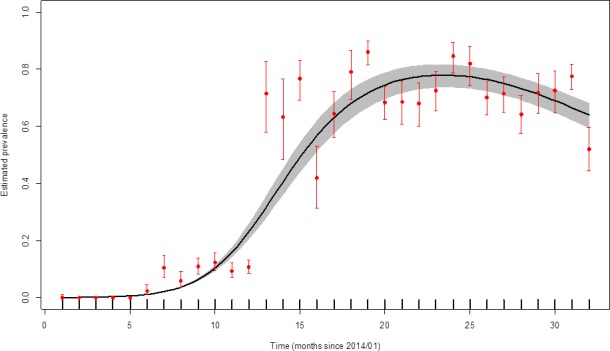
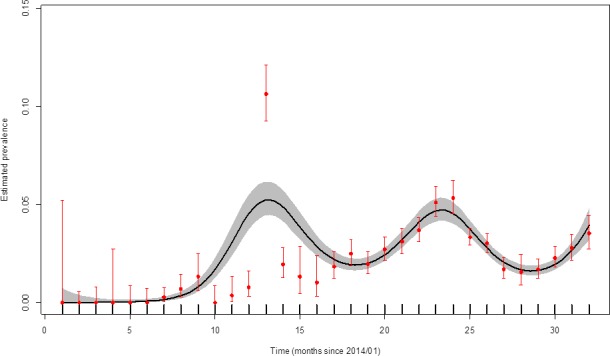
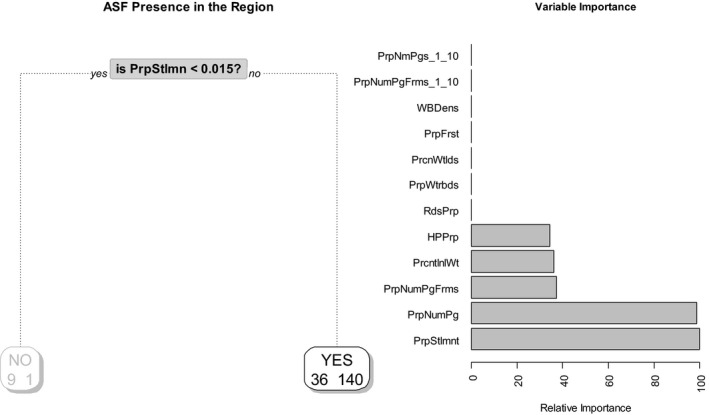
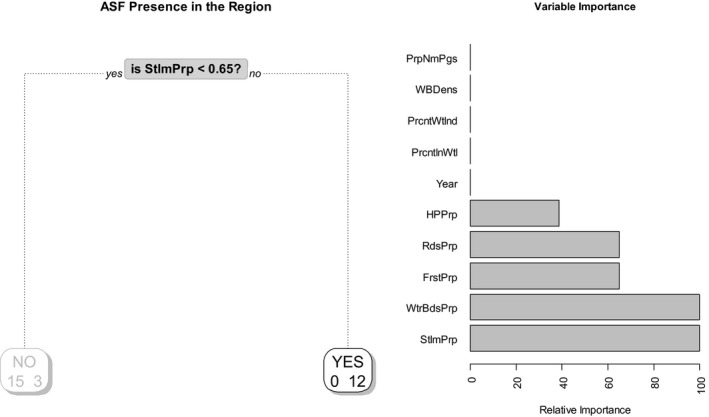
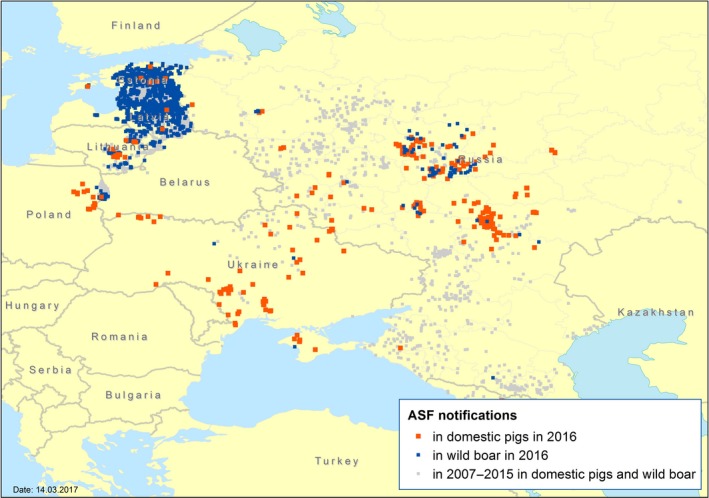
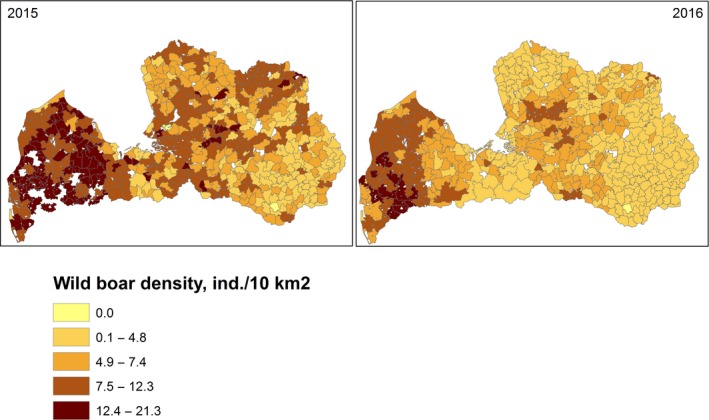
African swine fever virus (ASFV) has been notified in the Baltic countries and the eastern part of Poland from the beginning of 2014 up to now. In collaboration with the ASF-affected Member States (MS), EFSA is updating the epidemiological analysis of ASF in the European Union which was carried out in 2015. For this purpose, the latest epidemiological and laboratory data were analysed in order to identify the spatial-temporal pattern of the epidemic and a risk factors facilitating its spread. Currently, the ASF outbreaks in wild boar in the Baltic countries and Poland can be defined as a small-scale epidemic with a slow average spatial spread in wild boar subpopulations (approximately from 1 in Lithuania and Poland to 2 km/month in Estonia and Latvia). The number of positive samples in hunted wild boar peaks in winter which can be explained by human activity patterns (significant hunting activity over winter). The number of positive samples in wild boar found dead peaks in summer. This could be related to the epidemiology of the disease and/or the biology of wild boar; however, this needs further investigation. Virus prevalence in hunted wild boar is very low (0.04-3%), without any apparent trend over time. Apparent virus prevalence at country level in wild boar found dead in affected countries ranges from 60% to 86%, with the exception of Poland, where values between 0.5% and 1.42%, were observed. Since the beginning of the epidemic, the apparent antibody prevalence in hunted wild boar has always been lower than the apparent virus prevalence, indicating an unchanged epidemiological/immunological situation. The risk factor analysis shows an association between the number of settlements, human and domestic pigs population size or wild boar population density and the presence of ASF in wild boar for Estonia, Latvia and Lithuania.

摘要

自2014年初至今,非洲猪瘟病毒(ASFV)已在波罗的海国家和波兰东部被通报。欧洲食品安全局(EFSA)正与受非洲猪瘟影响的成员国合作,更新2015年对欧盟非洲猪瘟进行的流行病学分析。为此,对最新的流行病学和实验室数据进行了分析,以确定疫情的时空模式以及促进其传播的风险因素。目前,波罗的海国家和波兰野猪身上的非洲猪瘟疫情可被定义为小规模疫情,在野猪亚种群中的平均空间传播速度较慢(立陶宛和波兰约为每月1公里,爱沙尼亚和拉脱维亚约为每月2公里)。冬季,被猎杀野猪的阳性样本数量达到峰值,这可以通过人类活动模式来解释(冬季有大量狩猎活动)。夏季,死亡野猪的阳性样本数量达到峰值。这可能与疾病的流行病学和/或野猪的生物学特性有关;然而,这需要进一步调查。被猎杀野猪的病毒流行率非常低(0.04%-3%),且没有任何明显的时间趋势。在受影响国家,死亡野猪在国家层面的表观病毒流行率在60%至86%之间,但波兰除外,其流行率在0.5%至1.42%之间。自疫情开始以来,被猎杀野猪的表观抗体流行率一直低于表观病毒流行率,这表明流行病学/免疫学情况没有变化。风险因素分析表明,对于爱沙尼亚、拉脱维亚和立陶宛来说,定居点数量、人类和家猪种群规模或野猪种群密度与野猪身上非洲猪瘟的存在之间存在关联。
https://cdn.ncbi.nlm.nih.gov/pmc/blobs/e8ed/7010137/9afd322bde76/EFS2-15-e04732-g038.jpg
https://cdn.ncbi.nlm.nih.gov/pmc/blobs/e8ed/7010137/ffeb35eb6612/EFS2-15-e04732-g001.jpg
https://cdn.ncbi.nlm.nih.gov/pmc/blobs/e8ed/7010137/ef0a3765b679/EFS2-15-e04732-g002.jpg
https://cdn.ncbi.nlm.nih.gov/pmc/blobs/e8ed/7010137/04aaf63ef44a/EFS2-15-e04732-g003.jpg
https://cdn.ncbi.nlm.nih.gov/pmc/blobs/e8ed/7010137/7c03d384031c/EFS2-15-e04732-g004.jpg
https://cdn.ncbi.nlm.nih.gov/pmc/blobs/e8ed/7010137/7ef64919a9b6/EFS2-15-e04732-g005.jpg
https://cdn.ncbi.nlm.nih.gov/pmc/blobs/e8ed/7010137/53cfd398772b/EFS2-15-e04732-g006.jpg
https://cdn.ncbi.nlm.nih.gov/pmc/blobs/e8ed/7010137/bc6085af28a6/EFS2-15-e04732-g007.jpg
https://cdn.ncbi.nlm.nih.gov/pmc/blobs/e8ed/7010137/85f107a2b94f/EFS2-15-e04732-g008.jpg
https://cdn.ncbi.nlm.nih.gov/pmc/blobs/e8ed/7010137/1bca416fd2a7/EFS2-15-e04732-g009.jpg
https://cdn.ncbi.nlm.nih.gov/pmc/blobs/e8ed/7010137/b83a2b0dcd1e/EFS2-15-e04732-g010.jpg
https://cdn.ncbi.nlm.nih.gov/pmc/blobs/e8ed/7010137/48cb1ee50325/EFS2-15-e04732-g011.jpg
https://cdn.ncbi.nlm.nih.gov/pmc/blobs/e8ed/7010137/e3cf4f2374da/EFS2-15-e04732-g012.jpg
https://cdn.ncbi.nlm.nih.gov/pmc/blobs/e8ed/7010137/7812bbe0d232/EFS2-15-e04732-g013.jpg
https://cdn.ncbi.nlm.nih.gov/pmc/blobs/e8ed/7010137/8bf45ca0962f/EFS2-15-e04732-g014.jpg
https://cdn.ncbi.nlm.nih.gov/pmc/blobs/e8ed/7010137/dfe4b33f0aaf/EFS2-15-e04732-g015.jpg
https://cdn.ncbi.nlm.nih.gov/pmc/blobs/e8ed/7010137/9f7f20bec4bc/EFS2-15-e04732-g016.jpg
https://cdn.ncbi.nlm.nih.gov/pmc/blobs/e8ed/7010137/0944f246107b/EFS2-15-e04732-g017.jpg
https://cdn.ncbi.nlm.nih.gov/pmc/blobs/e8ed/7010137/2e63f548f0dc/EFS2-15-e04732-g018.jpg
https://cdn.ncbi.nlm.nih.gov/pmc/blobs/e8ed/7010137/f4b013e518c7/EFS2-15-e04732-g019.jpg
https://cdn.ncbi.nlm.nih.gov/pmc/blobs/e8ed/7010137/7112c06b35d4/EFS2-15-e04732-g020.jpg
https://cdn.ncbi.nlm.nih.gov/pmc/blobs/e8ed/7010137/3abc155ef9fe/EFS2-15-e04732-g021.jpg
https://cdn.ncbi.nlm.nih.gov/pmc/blobs/e8ed/7010137/8ea1aab4d53e/EFS2-15-e04732-g022.jpg
https://cdn.ncbi.nlm.nih.gov/pmc/blobs/e8ed/7010137/c2efd12d44e2/EFS2-15-e04732-g023.jpg
https://cdn.ncbi.nlm.nih.gov/pmc/blobs/e8ed/7010137/ac11014302d4/EFS2-15-e04732-g024.jpg
https://cdn.ncbi.nlm.nih.gov/pmc/blobs/e8ed/7010137/349e0e6ca5e9/EFS2-15-e04732-g025.jpg
https://cdn.ncbi.nlm.nih.gov/pmc/blobs/e8ed/7010137/56e8b83fc4cc/EFS2-15-e04732-g026.jpg
https://cdn.ncbi.nlm.nih.gov/pmc/blobs/e8ed/7010137/a39719b848be/EFS2-15-e04732-g027.jpg
https://cdn.ncbi.nlm.nih.gov/pmc/blobs/e8ed/7010137/381b1ccf6deb/EFS2-15-e04732-g028.jpg
https://cdn.ncbi.nlm.nih.gov/pmc/blobs/e8ed/7010137/f423b7f76710/EFS2-15-e04732-g029.jpg
https://cdn.ncbi.nlm.nih.gov/pmc/blobs/e8ed/7010137/89017c448e00/EFS2-15-e04732-g030.jpg
https://cdn.ncbi.nlm.nih.gov/pmc/blobs/e8ed/7010137/0bd21bcab8de/EFS2-15-e04732-g031.jpg
https://cdn.ncbi.nlm.nih.gov/pmc/blobs/e8ed/7010137/ca26eb2a7f4d/EFS2-15-e04732-g032.jpg
https://cdn.ncbi.nlm.nih.gov/pmc/blobs/e8ed/7010137/3abc95044948/EFS2-15-e04732-g033.jpg
https://cdn.ncbi.nlm.nih.gov/pmc/blobs/e8ed/7010137/46fbd663a5cd/EFS2-15-e04732-g034.jpg
https://cdn.ncbi.nlm.nih.gov/pmc/blobs/e8ed/7010137/ebc539a0b0a6/EFS2-15-e04732-g035.jpg
https://cdn.ncbi.nlm.nih.gov/pmc/blobs/e8ed/7010137/dae60e13e374/EFS2-15-e04732-g036.jpg
https://cdn.ncbi.nlm.nih.gov/pmc/blobs/e8ed/7010137/f812ed649d3b/EFS2-15-e04732-g037.jpg
https://cdn.ncbi.nlm.nih.gov/pmc/blobs/e8ed/7010137/9afd322bde76/EFS2-15-e04732-g038.jpg
https://cdn.ncbi.nlm.nih.gov/pmc/blobs/e8ed/7010137/ffeb35eb6612/EFS2-15-e04732-g001.jpg
https://cdn.ncbi.nlm.nih.gov/pmc/blobs/e8ed/7010137/ef0a3765b679/EFS2-15-e04732-g002.jpg
https://cdn.ncbi.nlm.nih.gov/pmc/blobs/e8ed/7010137/04aaf63ef44a/EFS2-15-e04732-g003.jpg
https://cdn.ncbi.nlm.nih.gov/pmc/blobs/e8ed/7010137/7c03d384031c/EFS2-15-e04732-g004.jpg
https://cdn.ncbi.nlm.nih.gov/pmc/blobs/e8ed/7010137/7ef64919a9b6/EFS2-15-e04732-g005.jpg
https://cdn.ncbi.nlm.nih.gov/pmc/blobs/e8ed/7010137/53cfd398772b/EFS2-15-e04732-g006.jpg
https://cdn.ncbi.nlm.nih.gov/pmc/blobs/e8ed/7010137/bc6085af28a6/EFS2-15-e04732-g007.jpg
https://cdn.ncbi.nlm.nih.gov/pmc/blobs/e8ed/7010137/85f107a2b94f/EFS2-15-e04732-g008.jpg
https://cdn.ncbi.nlm.nih.gov/pmc/blobs/e8ed/7010137/1bca416fd2a7/EFS2-15-e04732-g009.jpg
https://cdn.ncbi.nlm.nih.gov/pmc/blobs/e8ed/7010137/b83a2b0dcd1e/EFS2-15-e04732-g010.jpg
https://cdn.ncbi.nlm.nih.gov/pmc/blobs/e8ed/7010137/48cb1ee50325/EFS2-15-e04732-g011.jpg
https://cdn.ncbi.nlm.nih.gov/pmc/blobs/e8ed/7010137/e3cf4f2374da/EFS2-15-e04732-g012.jpg
https://cdn.ncbi.nlm.nih.gov/pmc/blobs/e8ed/7010137/7812bbe0d232/EFS2-15-e04732-g013.jpg
https://cdn.ncbi.nlm.nih.gov/pmc/blobs/e8ed/7010137/8bf45ca0962f/EFS2-15-e04732-g014.jpg
https://cdn.ncbi.nlm.nih.gov/pmc/blobs/e8ed/7010137/dfe4b33f0aaf/EFS2-15-e04732-g015.jpg
https://cdn.ncbi.nlm.nih.gov/pmc/blobs/e8ed/7010137/9f7f20bec4bc/EFS2-15-e04732-g016.jpg
https://cdn.ncbi.nlm.nih.gov/pmc/blobs/e8ed/7010137/0944f246107b/EFS2-15-e04732-g017.jpg
https://cdn.ncbi.nlm.nih.gov/pmc/blobs/e8ed/7010137/2e63f548f0dc/EFS2-15-e04732-g018.jpg
https://cdn.ncbi.nlm.nih.gov/pmc/blobs/e8ed/7010137/f4b013e518c7/EFS2-15-e04732-g019.jpg
https://cdn.ncbi.nlm.nih.gov/pmc/blobs/e8ed/7010137/7112c06b35d4/EFS2-15-e04732-g020.jpg
https://cdn.ncbi.nlm.nih.gov/pmc/blobs/e8ed/7010137/3abc155ef9fe/EFS2-15-e04732-g021.jpg
https://cdn.ncbi.nlm.nih.gov/pmc/blobs/e8ed/7010137/8ea1aab4d53e/EFS2-15-e04732-g022.jpg
https://cdn.ncbi.nlm.nih.gov/pmc/blobs/e8ed/7010137/c2efd12d44e2/EFS2-15-e04732-g023.jpg
https://cdn.ncbi.nlm.nih.gov/pmc/blobs/e8ed/7010137/ac11014302d4/EFS2-15-e04732-g024.jpg
https://cdn.ncbi.nlm.nih.gov/pmc/blobs/e8ed/7010137/349e0e6ca5e9/EFS2-15-e04732-g025.jpg
https://cdn.ncbi.nlm.nih.gov/pmc/blobs/e8ed/7010137/56e8b83fc4cc/EFS2-15-e04732-g026.jpg
https://cdn.ncbi.nlm.nih.gov/pmc/blobs/e8ed/7010137/a39719b848be/EFS2-15-e04732-g027.jpg
https://cdn.ncbi.nlm.nih.gov/pmc/blobs/e8ed/7010137/381b1ccf6deb/EFS2-15-e04732-g028.jpg
https://cdn.ncbi.nlm.nih.gov/pmc/blobs/e8ed/7010137/f423b7f76710/EFS2-15-e04732-g029.jpg
https://cdn.ncbi.nlm.nih.gov/pmc/blobs/e8ed/7010137/89017c448e00/EFS2-15-e04732-g030.jpg
https://cdn.ncbi.nlm.nih.gov/pmc/blobs/e8ed/7010137/0bd21bcab8de/EFS2-15-e04732-g031.jpg
https://cdn.ncbi.nlm.nih.gov/pmc/blobs/e8ed/7010137/ca26eb2a7f4d/EFS2-15-e04732-g032.jpg
https://cdn.ncbi.nlm.nih.gov/pmc/blobs/e8ed/7010137/3abc95044948/EFS2-15-e04732-g033.jpg
https://cdn.ncbi.nlm.nih.gov/pmc/blobs/e8ed/7010137/46fbd663a5cd/EFS2-15-e04732-g034.jpg
https://cdn.ncbi.nlm.nih.gov/pmc/blobs/e8ed/7010137/ebc539a0b0a6/EFS2-15-e04732-g035.jpg
https://cdn.ncbi.nlm.nih.gov/pmc/blobs/e8ed/7010137/dae60e13e374/EFS2-15-e04732-g036.jpg
https://cdn.ncbi.nlm.nih.gov/pmc/blobs/e8ed/7010137/f812ed649d3b/EFS2-15-e04732-g037.jpg
https://cdn.ncbi.nlm.nih.gov/pmc/blobs/e8ed/7010137/9afd322bde76/EFS2-15-e04732-g038.jpg

相似文献

1
Epidemiological analyses on African swine fever in the Baltic countries and Poland.波罗的海国家和波兰非洲猪瘟的流行病学分析。
EFSA J. 2017 Mar 23;15(3):e04732. doi: 10.2903/j.efsa.2017.4732. eCollection 2017 Mar.
2
African swine fever in the Lithuanian wild boar population in 2018: a snapshot.2018 年立陶宛野猪群中的非洲猪瘟:快照。
Virol J. 2020 Oct 7;17(1):148. doi: 10.1186/s12985-020-01422-x.
3
Evolution of the ASF Infection Stage in Wild Boar Within the EU (2014-2018).欧盟境内野猪非洲猪瘟感染阶段的演变(2014 - 2018年)
Front Vet Sci. 2020 Apr 1;7:155. doi: 10.3389/fvets.2020.00155. eCollection 2020.
4
Epidemiological analyses of African swine fever in the Baltic States and Poland: (Update September 2016-September 2017).波罗的海国家和波兰非洲猪瘟的流行病学分析:(2016年9月 - 2017年9月更新)
EFSA J. 2017 Nov 7;15(11):e05068. doi: 10.2903/j.efsa.2017.5068. eCollection 2017 Nov.
5
Epidemiological analysis of African swine fever in the European Union during 2023.2023年欧盟非洲猪瘟流行病学分析
EFSA J. 2024 May 16;22(5):e8809. doi: 10.2903/j.efsa.2024.8809. eCollection 2024 May.
6
The African Swine Fever Epidemic in Wild Boar ( in Lithuania (2014-2018).立陶宛野猪中的非洲猪瘟疫情(2014 - 2018年)
Vet Sci. 2020 Jan 30;7(1):15. doi: 10.3390/vetsci7010015.
7
Epidemiological analysis of African swine fever in the European Union (September 2019 to August 2020).欧盟非洲猪瘟流行病学分析(2019年9月至2020年8月)
EFSA J. 2021 May 6;19(5):e06572. doi: 10.2903/j.efsa.2021.6572. eCollection 2021 May.
8
Eight Years of African Swine Fever in the Baltic States: Epidemiological Reflections.波罗的海国家八年非洲猪瘟:流行病学思考
Pathogens. 2022 Jun 20;11(6):711. doi: 10.3390/pathogens11060711.
9
Epidemiological analysis of African swine fever in the European Union during 2022.2022年欧盟非洲猪瘟流行病学分析
EFSA J. 2023 May 22;21(5):e08016. doi: 10.2903/j.efsa.2023.8016. eCollection 2023 May.
10
African Swine Fever Epidemic, Poland, 2014-2015.2014 - 2015年,波兰非洲猪瘟疫情
Emerg Infect Dis. 2016 Jul;22(7):1201-7. doi: 10.3201/eid2207.151708.

引用本文的文献

1
Is African Swine Fever Driven by Flying Hematophagous Insects?非洲猪瘟是由吸血飞行昆虫传播的吗?
Pathogens. 2025 Jun 5;14(6):563. doi: 10.3390/pathogens14060563.
2
Investigation of Risk Factors Associated with the African Swine Fever Outbreaks in the Nizhny Novgorod Region of Russia, 2011-2022.2011 - 2022年俄罗斯下诺夫哥罗德地区非洲猪瘟疫情相关风险因素调查
Transbound Emerg Dis. 2023 Sep 21;2023:6334935. doi: 10.1155/2023/6334935. eCollection 2023.
3
Assessing Virus Survival in African Swine Fever Virus-Contaminated Materials-Implications for Indirect Virus Transmission.

本文引用的文献

1
An intuitive Bayesian spatial model for disease mapping that accounts for scaling.一种考虑尺度效应的用于疾病制图的直观贝叶斯空间模型。
Stat Methods Med Res. 2016 Aug;25(4):1145-65. doi: 10.1177/0962280216660421.
2
African Swine Fever Epidemic, Poland, 2014-2015.2014 - 2015年,波兰非洲猪瘟疫情
Emerg Infect Dis. 2016 Jul;22(7):1201-7. doi: 10.3201/eid2207.151708.
3
African swine fever virus introduction into the EU in 2014: Experience of Latvia.2014年非洲猪瘟病毒传入欧盟:拉脱维亚的经验
评估非洲猪瘟病毒污染材料中的病毒存活情况——对间接病毒传播的影响
Viruses. 2025 Jan 3;17(1):63. doi: 10.3390/v17010063.
4
Risk and protective factors for ASF in domestic pigs and wild boar in the EU, and mitigation measures for managing the disease in wild boar.欧盟家猪和野猪感染非洲猪瘟的风险及保护因素,以及野猪疾病管理的缓解措施。
EFSA J. 2024 Dec 4;22(12):e9095. doi: 10.2903/j.efsa.2024.9095. eCollection 2024 Dec.
5
Geospatial analysis for strategic wildlife disease surveillance: African swine fever in South Korea (2019-2021).地理空间分析在战略性野生动物疾病监测中的应用:韩国的非洲猪瘟(2019-2021 年)。
PLoS One. 2024 Jun 21;19(6):e0305702. doi: 10.1371/journal.pone.0305702. eCollection 2024.
6
The Effectiveness of Protection and Surveillance Zones in Detecting Further African Swine Fever Outbreaks in Domestic Pigs-Experience of the Baltic States.保护和监测区在检测国内猪群中进一步发生非洲猪瘟疫情的有效性——波罗的海国家的经验。
Viruses. 2024 Feb 22;16(3):334. doi: 10.3390/v16030334.
7
Passive Surveillance as a Key Tool for African Swine Fever Eradication in Wild Boar: A Protocol to Find Carcasses Tested and Validated in the Mediterranean Island of Sardinia.被动监测作为野猪非洲猪瘟根除的重要工具:在地中海撒丁岛发现经测试和验证的尸体的方案。
Viruses. 2024 Jan 18;16(1):136. doi: 10.3390/v16010136.
8
Nine Years of African Swine Fever in Poland.波兰的非洲猪瘟九年。
Viruses. 2023 Nov 27;15(12):2325. doi: 10.3390/v15122325.
9
African Swine Fever: Transmission, Spread, and Control through Biosecurity and Disinfection, Including Polish Trends.非洲猪瘟:通过生物安全和消毒进行传播、扩散和控制,包括波兰趋势。
Viruses. 2023 Nov 19;15(11):2275. doi: 10.3390/v15112275.
10
Advanced Strategies for Developing Vaccines and Diagnostic Tools for African Swine Fever.非洲猪瘟疫苗和诊断工具的开发策略
Viruses. 2023 Oct 28;15(11):2169. doi: 10.3390/v15112169.
Res Vet Sci. 2016 Apr;105:28-30. doi: 10.1016/j.rvsc.2016.01.006. Epub 2016 Jan 14.
4
Long-lasting, kin-directed female interactions in a spatially structured wild boar social network.空间结构野猪社交网络中持久的、亲属导向的雌性互动。
PLoS One. 2014 Jun 11;9(6):e99875. doi: 10.1371/journal.pone.0099875. eCollection 2014.