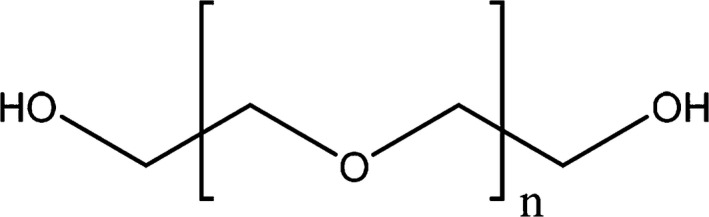
Younes Maged, Aggett Peter, Aguilar Fernando, Crebelli Riccardo, Dusemund Birgit, Filipič Metka, Frutos Maria Jose, Galtier Pierre, Gott David, Gundert-Remy Ursula, Kuhnle Gunter Georg, Lambré Claude, Lillegaard Inger Therese, Moldeus Peter, Mortensen Alicja, Oskarsson Agneta, Stankovic Ivan, Waalkens-Berendsen Ine, Woutersen Rudolf Antonius, Wright Matthew, Boon Polly, Lindtner Oliver, Tlustos Christina, Tard Alexandra, Leblanc Jean-Charles
EFSA J. 2018 Jun 22;16(6):e05293. doi: 10.2903/j.efsa.2018.5293. eCollection 2018 Jun.
The EFSA Panel on Food Additives and Nutrient Sources added to Food (ANS) provides a scientific opinion on the refined exposure assessment of polyethylene glycol (E 1521) when used as a food additive. Polyethylene glycols were evaluated by several international bodies and the AFC Panel previously adopted scientific opinions on the safety polyethylene glycol (E 1521). In 2006, the Panel concluded that based on all the data, consumption of PEG through use as plasticisers in film-coating formulations for food supplement tablets and/or capsules at the intended use level are not of safety concern. In 2007, in another opinion of the AFC Panel related to d-alpha-tocopheryl polyethylene glycol 1000 succinate (TPGS) in use for food for particular nutritional purposes, the Panel noted that TPGS intakes would correspond to intake to PEG 1000 at levels equivalent to 3.3-8.5 mg/kg body wieght (bw) per day which are within the range of group acceptable daily intakes (ADIs) of the SCF (1997) and JECFA (1980). This assessment could only take into account the use of polyethylene glycol (E 1521) in food supplements and thus the food supplements consumers only scenario was performed. It resulted in exposure estimates of polyethylene glycol (E 1521) up to 3.5 mg/kg bw per day at the mean and up to 6.1 mg/kg bw per day at the high level. The current exposure assessment is based on the methodology used in the re-evaluation of food additives together with reported use levels received following a call for data in 2017. Considering the uncertainties of the exposure assessment, these estimates very likely overestimated the real exposure to polyethylene glycol (E 1521). The Panel also noted that the highest calculated exposure estimate falls within the range of the group ADI previously established by SCF (5 mg/kg bw per day for PEG 300-4000) and of the one set by JECFA (10 mg/kg bw per day for PEG 200-10000).
欧洲食品安全局食品添加剂和添加到食品中的营养源专家委员会(ANS)就聚乙二醇(E 1521)用作食品添加剂时的精细暴露评估提供了科学意见。聚乙二醇已由多个国际机构进行评估,食品添加剂和营养源添加物专家委员会(AFC)此前也通过了关于聚乙二醇(E 1521)安全性的科学意见。2006年,该专家委员会得出结论,基于所有数据,在预期使用水平下,通过在食品补充剂片剂和/或胶囊的薄膜包衣配方中用作增塑剂而摄入的聚乙二醇对安全性无影响。2007年,在AFC专家委员会关于用于特殊营养用途食品的d-α-生育酚聚乙二醇1000琥珀酸酯(TPGS)的另一项意见中,专家委员会指出,TPGS的摄入量相当于每天摄入聚乙二醇1000的量为3.3 - 8.5毫克/千克体重(bw),这在食品添加剂联合专家委员会(SCF,1997年)和食品添加剂联合专家委员会(JECFA,1980年)的每日允许摄入量(ADI)范围内。该评估仅考虑了聚乙二醇(E 1521)在食品补充剂中的使用情况,因此仅进行了食品补充剂消费者的情景分析,并得出聚乙二醇(E 1521)的暴露估计值,平均每天高达3.5毫克/千克体重,高水平时每天高达6.1毫克/千克体重。当前的暴露评估基于食品添加剂再评估中使用的方法以及2017年数据征集后收到的报告使用水平。考虑到暴露评估的不确定性,这些估计值很可能高估了实际的聚乙二醇(E 1521)暴露量。专家委员会还指出,计算出的最高暴露估计值落在SCF先前确定的每日允许摄入量范围内(聚乙二醇300 - 4000为每天5毫克/千克体重)以及JECFA设定的范围内(聚乙二醇200 - 10000为每天10毫克/千克体重)。