Esposito Alessandra, Wang Lai, Li Tieshi, Miranda Mariana, Spagnoli Anna
Department of Orthopaedic Surgery, Section of Molecular Medicine, Rush University Medical Center, Chicago, IL, USA.
Department of Internal Medicine, Division of Rheumatology, Rush University Medical Center, Chicago, IL, USA.
Bone. 2020 Oct;139:115521. doi: 10.1016/j.bone.2020.115521. Epub 2020 Jul 3.
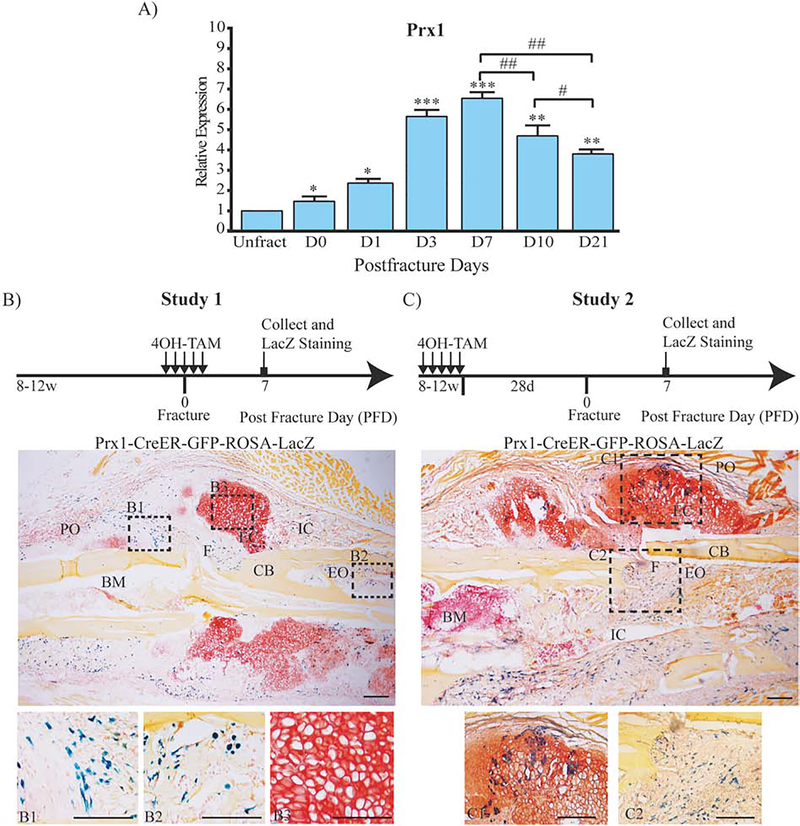
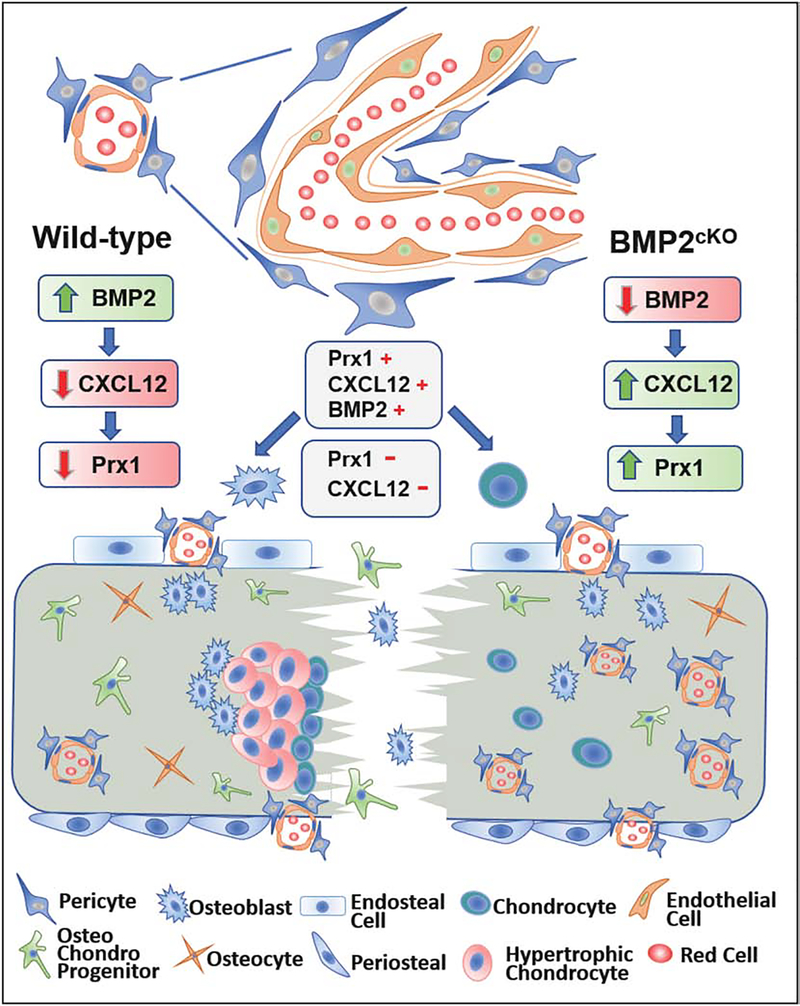
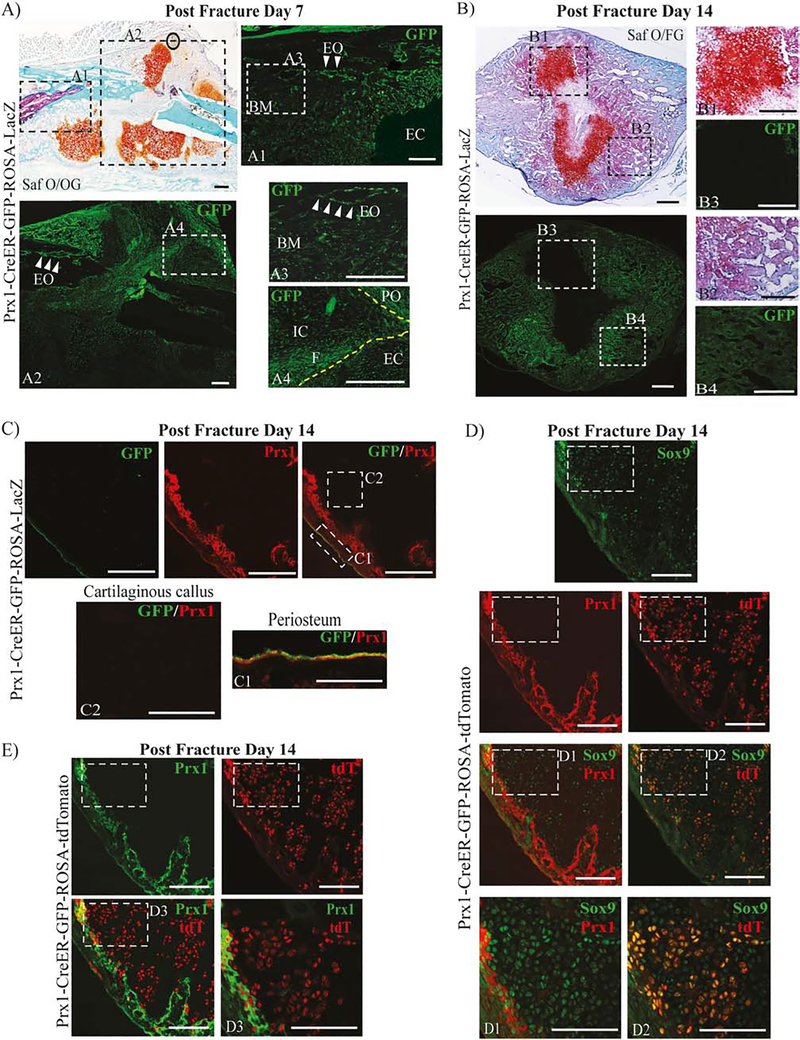
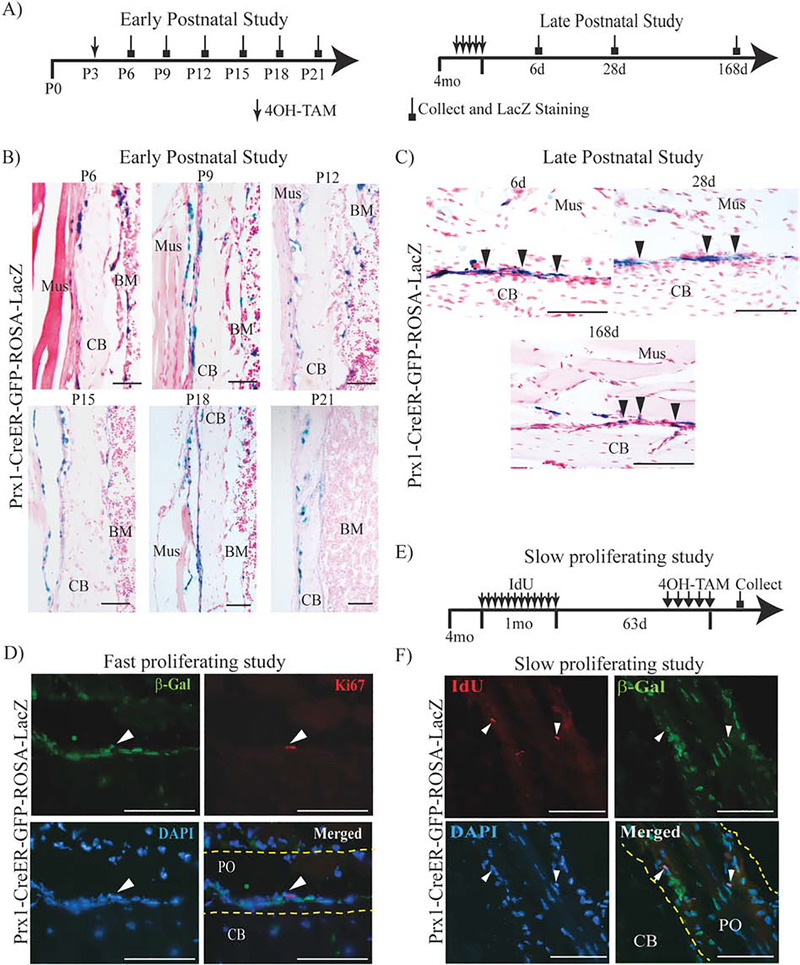
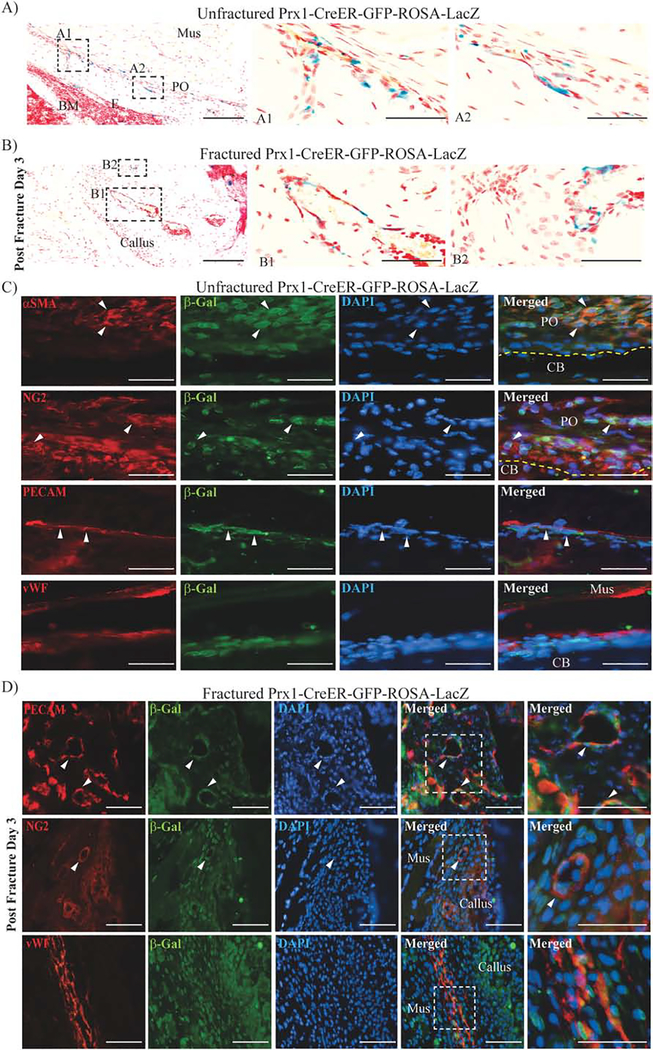
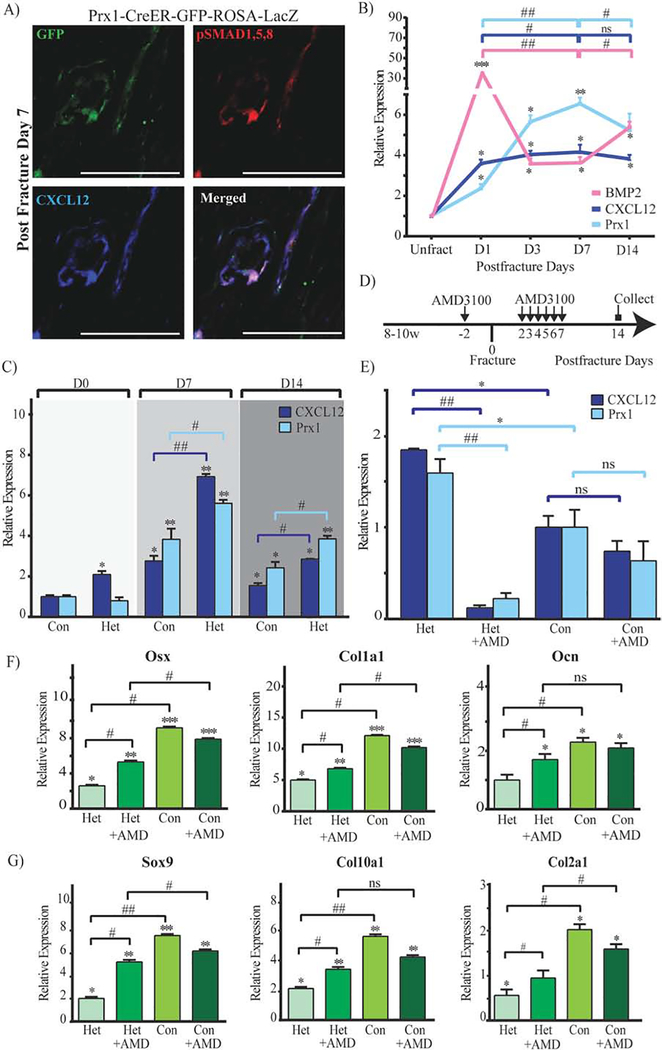
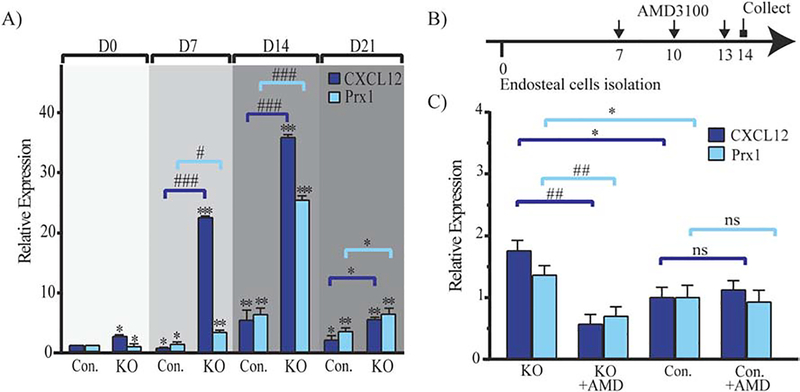
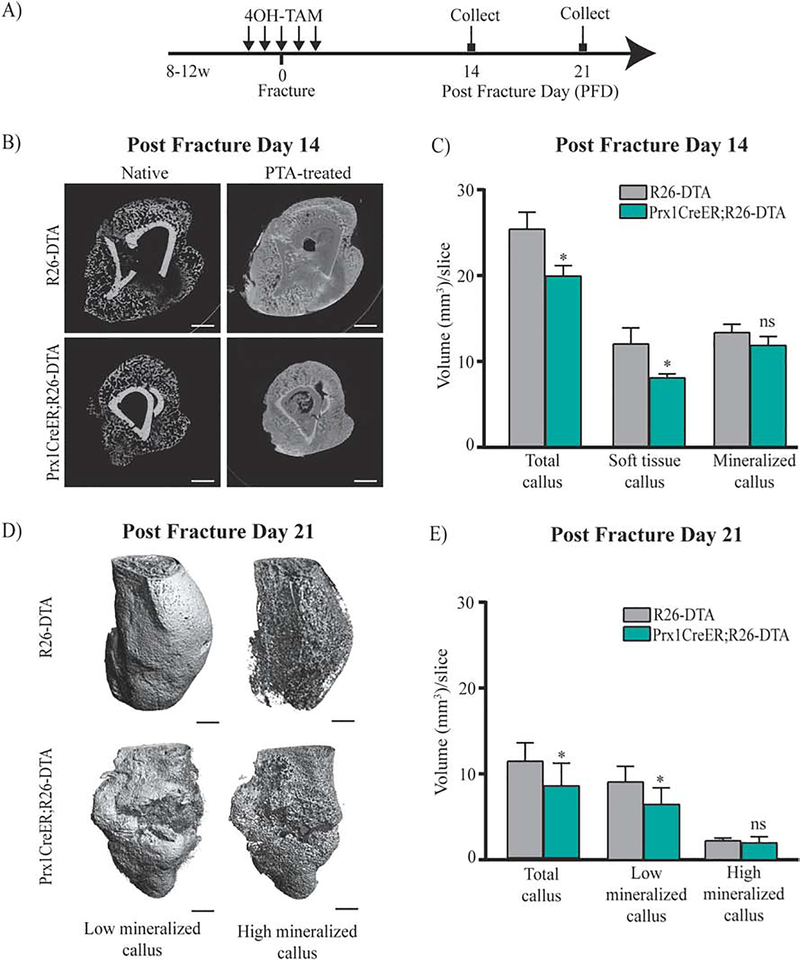
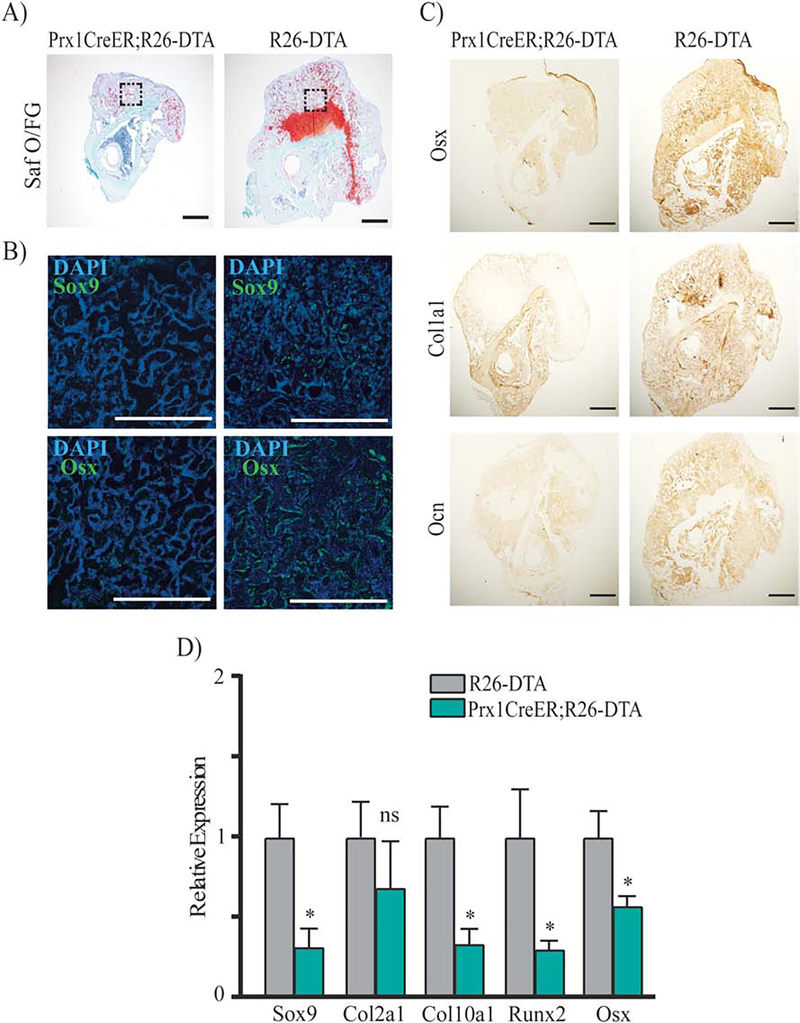
The healing capacity of bones after fracture implies the existence of adult regenerative cells. However, information on identification and functional role of fracture-induced progenitors is still lacking. Paired-related homeobox 1 (Prx1) is expressed during skeletogenesis. We hypothesize that fracture recapitulates Prx1's expression, and Prx1 expressing cells are critical to induce repair. To address our hypothesis, we used a combination of in vivo and in vitro approaches, short and long-term cell tracking analyses of progenies and actively expressing cells, cell ablation studies, and rodent animal models for normal and defective fracture healing. We found that fracture elicits a periosteal and endosteal response of perivascular Prx1+ cells that participate in fracture healing and showed that Prx1-expressing cells have a functional role in the repair process. While Prx1-derived cells contribute to the callus, Prx1's expression decreases concurrently with differentiation into cartilaginous and bone cells, similarly to when Prx1+ cells are cultured in differentiating conditions. We determined that bone morphogenic protein 2 (BMP2), through C-X-C motif-ligand-12 (CXCL12) signaling, modulates the downregulation of Prx1. We demonstrated that fracture elicits an early increase in BMP2 expression, followed by a decrease in CXCL12 that in turn down-regulates Prx1, allowing cells to commit to osteochondrogenesis. In vivo and in vitro treatment with CXCR4 antagonist AMD3100 restored Prx1 expression by modulating the BMP2-CXCL12 axis. Our studies represent a shift in the current research that has primarily focused on the identification of markers for postnatal skeletal progenitors, and instead we characterized the function of a specific population (Prx1+ cells) and their expression marker (Prx1) as a crossroad in fracture repair. The identification of fracture-induced perivascular Prx1+ cells and regulation of Prx1's expression by BMP2 and in turn by CXCL12 in the orchestration of fracture repair, highlights a pathway in which to investigate defective mechanisms and therapeutic targets for fracture non-union.
骨折后骨骼的愈合能力意味着成体再生细胞的存在。然而,关于骨折诱导祖细胞的鉴定及其功能作用的信息仍然缺乏。成对相关同源盒1(Prx1)在骨骼发生过程中表达。我们假设骨折会重现Prx1的表达,并且表达Prx1的细胞对诱导修复至关重要。为了验证我们的假设,我们结合了体内和体外方法、对后代和活跃表达细胞的短期和长期细胞追踪分析、细胞消融研究以及用于正常和缺陷性骨折愈合的啮齿动物模型。我们发现骨折会引发血管周围Prx1+细胞的骨膜和骨内膜反应,这些细胞参与骨折愈合,并表明表达Prx1的细胞在修复过程中具有功能作用。虽然源自Prx1的细胞有助于形成骨痂,但Prx1的表达会随着分化为软骨细胞和骨细胞而同时降低,这与在分化条件下培养Prx1+细胞时的情况类似。我们确定骨形态发生蛋白2(BMP2)通过C-X-C基序配体12(CXCL12)信号通路调节Prx1的下调。我们证明骨折会引发BMP2表达的早期增加,随后CXCL12减少,进而下调Prx1,使细胞能够进行骨软骨生成。用CXCR4拮抗剂AMD3100进行体内和体外治疗可通过调节BMP2-CXCL12轴恢复Prx1表达。我们的研究代表了当前研究的一个转变,目前的研究主要集中在鉴定出生后骨骼祖细胞的标志物,而我们则将特定群体(Prx1+细胞)及其表达标志物(Prx1)的功能表征为骨折修复的一个交叉点。骨折诱导的血管周围Prx1+细胞的鉴定以及BMP2进而通过CXCL12对Prx1表达的调节在骨折修复的协调中,突出了一条研究骨折不愈合缺陷机制和治疗靶点的途径。