Department of Urology, University of Louisville, Louisville, KY 40202, USA.
Department of Pharmacology, Penn State Cancer Institute, Penn State College of Medicine, Hershey, PA 17033, USA.
Cells. 2020 Jun 25;9(6):1549. doi: 10.3390/cells9061549.
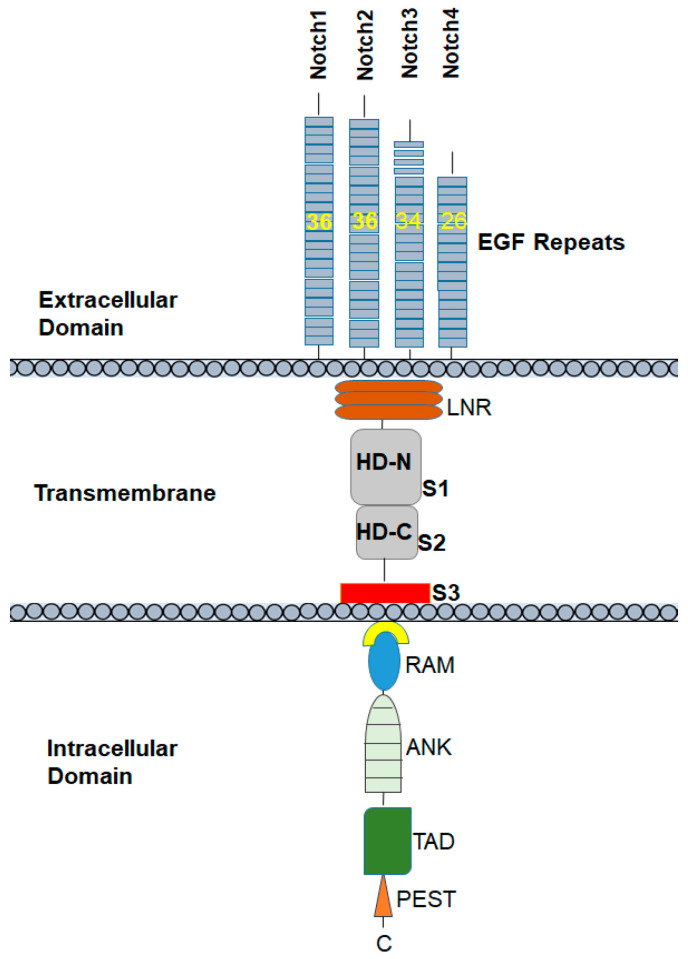
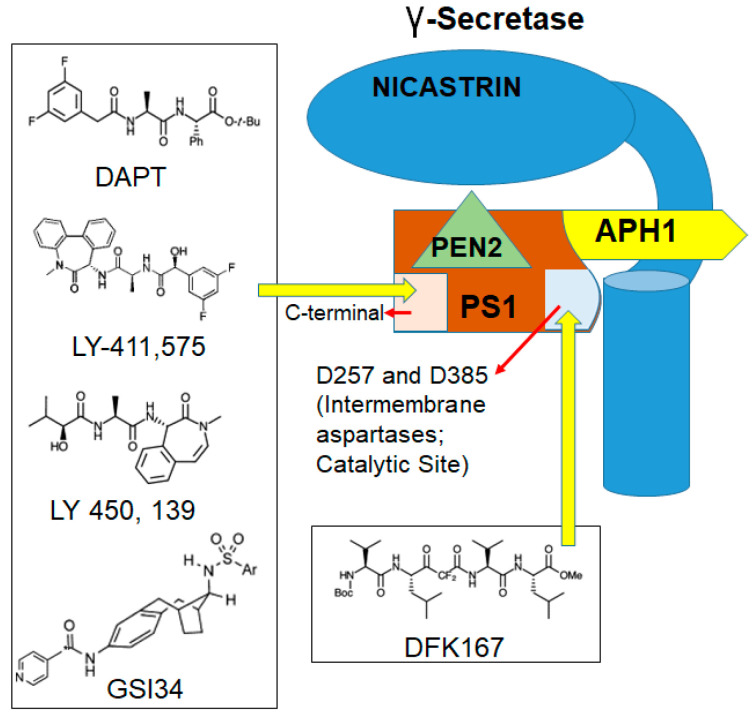
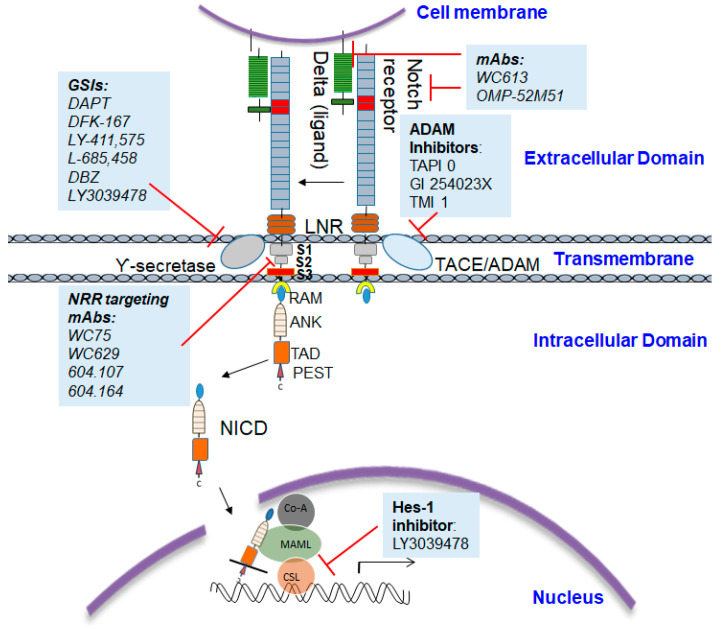
Colorectal cancer (CRC) has one of the highest mortality rates despite the advancement of treatment options. Aggressive CRC remains difficult to treat owing to the activation of oncogenic signaling pathways such as the Notch signaling pathway. The role of Notch receptors varies according to the difference in their structures; in particular, aberrant activation of Notch1 has been attributed to the severity of CRC. Notch1 activation in CRC is inhibited by small molecule inhibitors that target γ-secretase, an enzyme responsible for the third and last cleavage step of Notch receptors. γ-Secretase also produces the intracellular domain that finally carries out cellular functions by activating downstream effectors. However, most inhibitors block γ-secretase non-selectively and cause severe toxicity. Plant-source-derived small molecules, monoclonal antibodies, biological molecules (such as SiRNAs), and compounds targeting the Notch1 receptor itself or the downstream molecules such as are some of the options that are in advanced stages of clinical trials. The Negative Regulatory Region (NRR), which plays a central role in the transduction of Notch1 signaling in the event of ligand-dependent and ligand-independent Notch1 processing is also being targeted specifically by monoclonal antibodies (mAbs) to prevent aberrant Notch1 activation. In this review, we discuss the role of Notch1 in CRC, particularly its metastatic phenotype, and how mutations in Notch1, specifically in its NRR region, contribute to the aberrant activation of Notch1 signaling, which, in turn, contributes to CRC pathogenesis. We also discuss prevailing and emerging therapies that target the Notch1 receptor and the NRR region, and we highlight the potential of these therapies in abrogating Notch signaling and, thus, CRC development and progression.
结直肠癌(CRC)尽管治疗选择有所进步,但死亡率仍位居前列。由于致癌信号通路(如 Notch 信号通路)的激活,侵袭性 CRC 仍然难以治疗。Notch 受体的作用因结构差异而有所不同;特别是 Notch1 的异常激活与 CRC 的严重程度有关。CRC 中 Notch1 的激活受靶向 γ-分泌酶的小分子抑制剂抑制,γ-分泌酶是负责 Notch 受体的第三和最后裂解步骤的酶。γ-分泌酶还产生细胞内结构域,通过激活下游效应物最终发挥细胞功能。然而,大多数抑制剂非选择性地阻断 γ-分泌酶并导致严重的毒性。植物来源的小分子、单克隆抗体、生物分子(如 siRNA)以及靶向 Notch1 受体本身或下游分子(如 )的化合物是一些处于临床试验后期的选择。负调控区(NRR)在配体依赖性和配体非依赖性 Notch1 加工过程中 Notch1 信号转导中发挥核心作用,也被单克隆抗体(mAbs)特异性靶向,以防止异常 Notch1 激活。在这篇综述中,我们讨论了 Notch1 在 CRC 中的作用,特别是其转移表型,以及 Notch1 中的突变,特别是其 NRR 区域,如何导致 Notch1 信号的异常激活,进而导致 CRC 发病机制。我们还讨论了针对 Notch1 受体和 NRR 区域的现有和新兴疗法,并强调了这些疗法在阻断 Notch 信号传导从而阻断 CRC 发生和进展方面的潜力。