Wei Jinfen, Huang Kaitang, Chen Zixi, Hu Meiling, Bai Yunmeng, Lin Shudai, Du Hongli
School of Biology and Biological Engineering, South China University of Technology, Guangzhou 510006, China.
Cancers (Basel). 2020 Jul 4;12(7):1788. doi: 10.3390/cancers12071788.
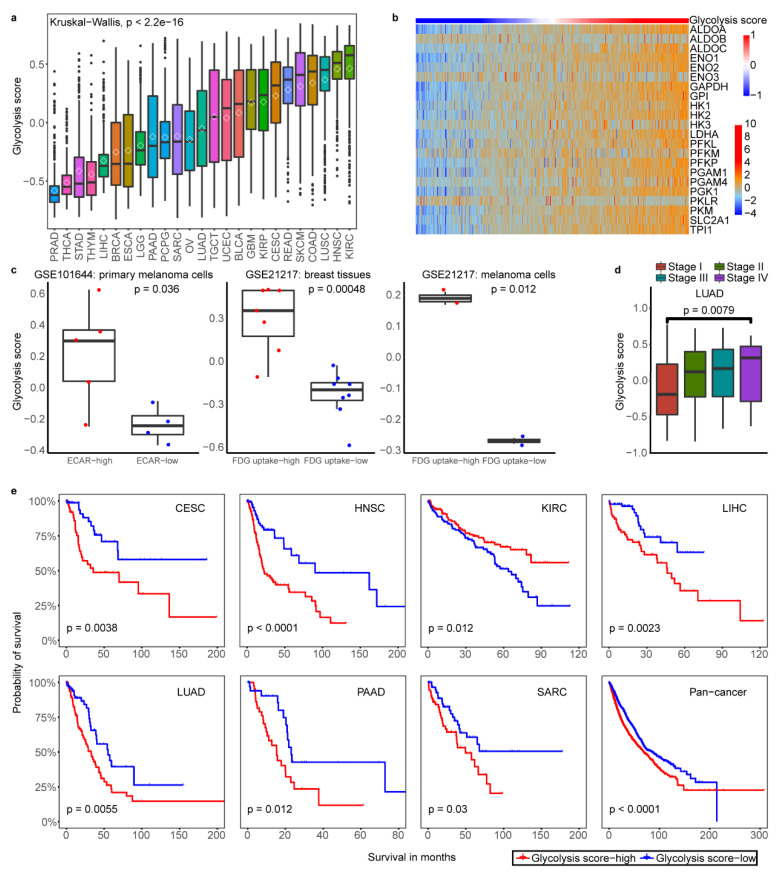
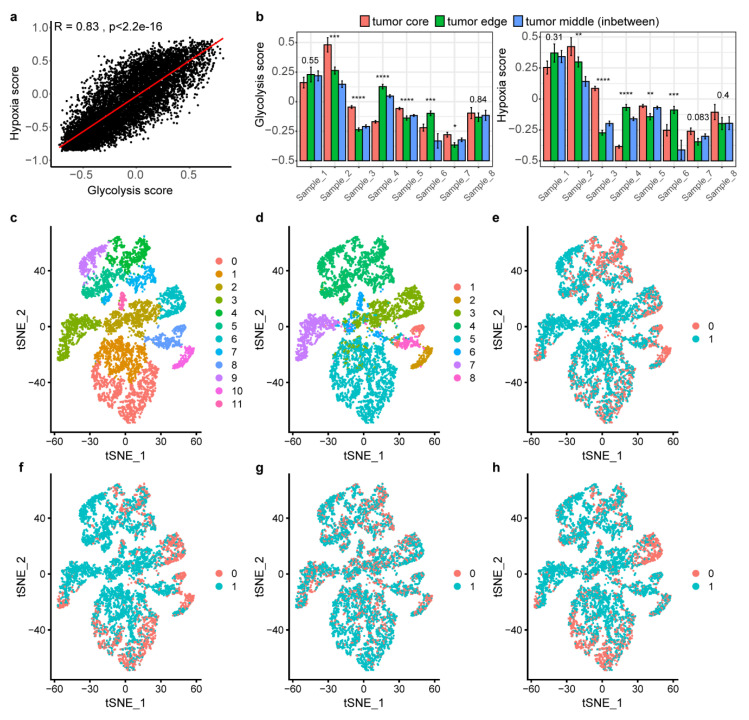
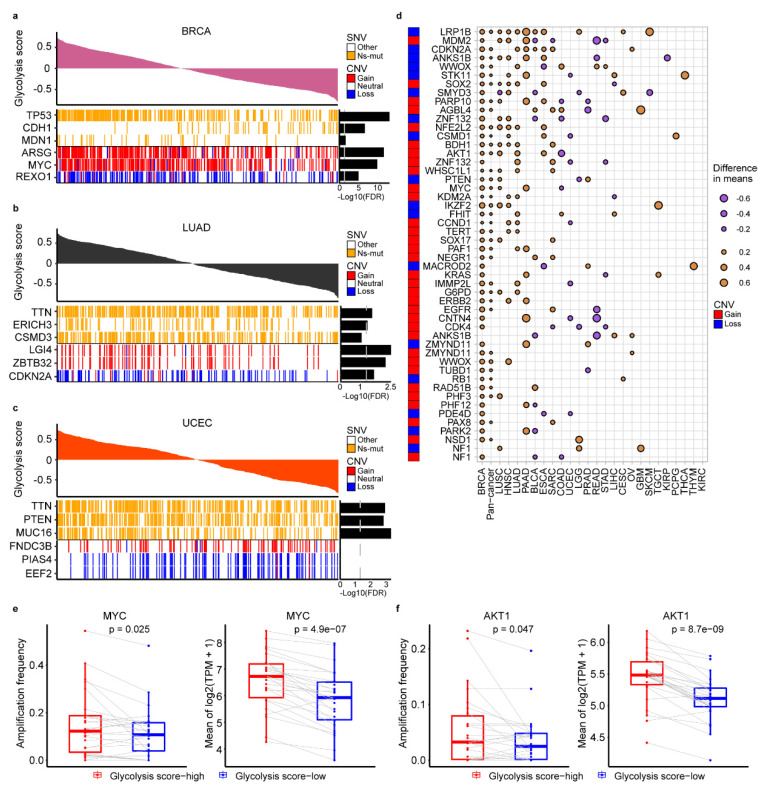
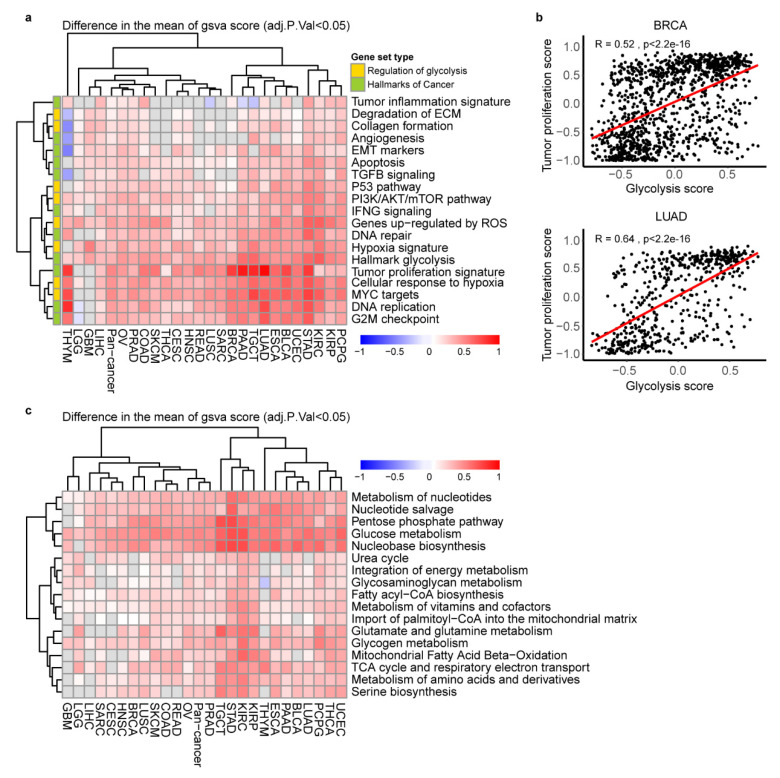
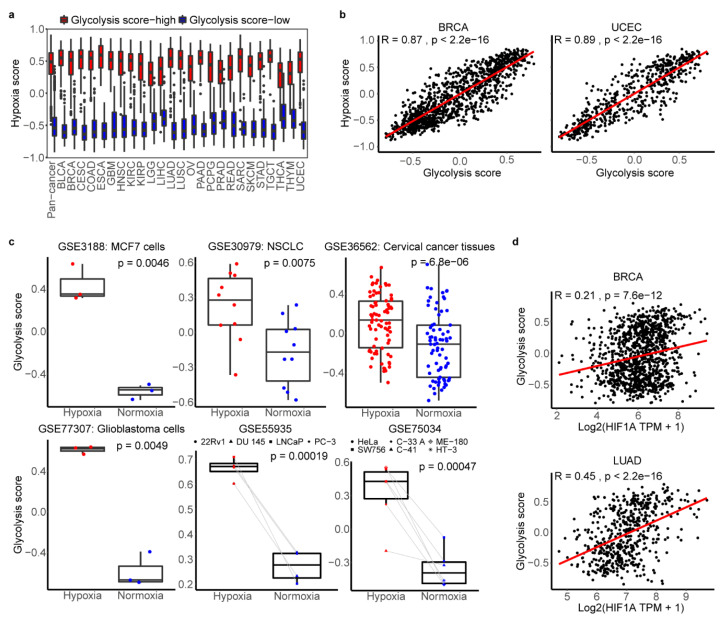
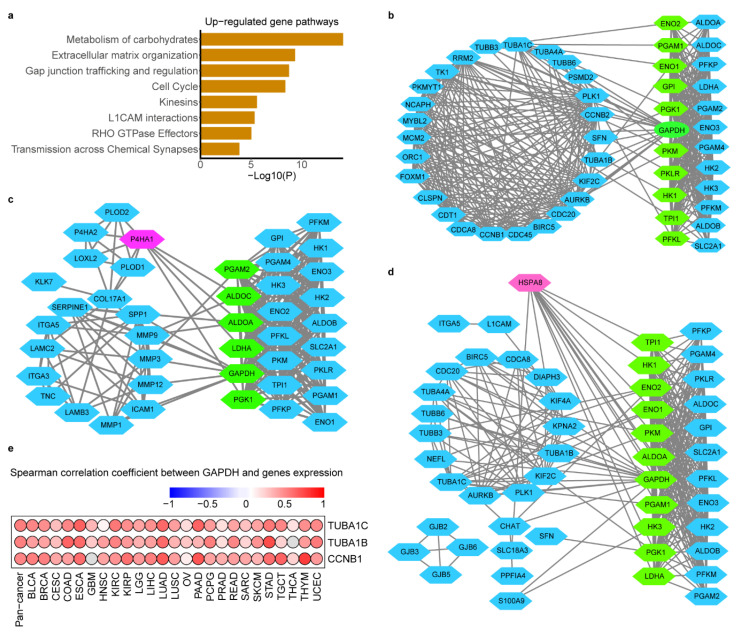
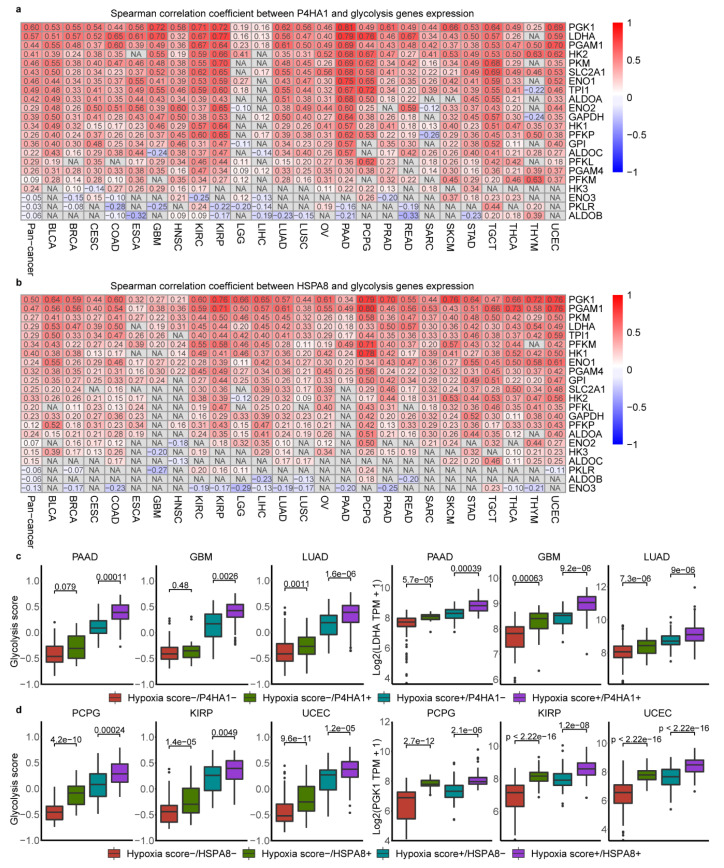
Altered metabolism is a hallmark of cancer and glycolysis is one of the important factors promoting tumor development. There is however still a lack of molecular characterization glycolysis and comprehensive studies related to tumor glycolysis in the pan-cancer landscape. Here, we applied a gene expression signature to quantify glycolysis in 9229 tumors across 25 cancer types and 7875 human lung cancer single cells and verified the robustness of signature using defined glycolysis samples from previous studies. We classified tumors and cells into glycolysis score-high and -low groups, demonstrated their prognostic associations, and identified genome and transcriptome molecular features associated with glycolysis activity. We observed that glycolysis score-high tumors were associated with worse prognosis across cancer types. High glycolysis tumors exhibited specific driver genes altered by copy number aberrations (CNAs) in most cancer types. Tricarboxylic acid (TCA) cycle, DNA replication, tumor proliferation and other cancer hallmarks were more active in glycolysis-high tumors. Glycolysis signature was strongly correlated with hypoxia signature in all 25 cancer tissues (r > 0.7) and cancer single cells (r > 0.8). In addition, and were screened out as the potential modulating factors to glycolysis as their expression were highly correlated with glycolysis score and glycolysis genes, which enables future efforts for therapeutic options to block the glycolysis and control tumor progression. Our study provides a comprehensive molecular-level understanding of glycolysis with a large sample data and demonstrates the hypoxia pressure, growth signals, oncogene mutation and other potential signals could activate glycolysis, thereby to regulate cell cycle, energy material synthesis, cell proliferation and cancer progression.
代谢改变是癌症的一个标志,糖酵解是促进肿瘤发展的重要因素之一。然而,在泛癌领域,糖酵解的分子特征以及与肿瘤糖酵解相关的全面研究仍然缺乏。在此,我们应用一种基因表达特征来量化25种癌症类型的9229个肿瘤以及7875个人类肺癌单细胞中的糖酵解,并使用先前研究中定义的糖酵解样本验证了该特征的稳健性。我们将肿瘤和细胞分为糖酵解评分高和低的组,证明了它们的预后关联,并确定了与糖酵解活性相关的基因组和转录组分子特征。我们观察到,糖酵解评分高的肿瘤在所有癌症类型中都与较差的预后相关。在大多数癌症类型中,高糖酵解肿瘤表现出因拷贝数变异(CNA)而改变的特定驱动基因。三羧酸(TCA)循环、DNA复制、肿瘤增殖和其他癌症标志在高糖酵解肿瘤中更为活跃。糖酵解特征在所有25种癌症组织(r>0.7)和癌症单细胞(r>0.8)中与缺氧特征高度相关。此外,[此处原文缺失两个具体内容]被筛选为糖酵解的潜在调节因子,因为它们的表达与糖酵解评分和糖酵解基因高度相关,这为未来阻断糖酵解和控制肿瘤进展的治疗选择提供了努力方向。我们的研究通过大量样本数据提供了对糖酵解的全面分子水平理解,并证明缺氧压力、生长信号、癌基因突变和其他潜在信号可激活糖酵解,从而调节细胞周期、能量物质合成、细胞增殖和癌症进展。