Pham Son H, Choi Yonghyun, Choi Jonghoon
School of Integrative Engineering, Chung-Ang University, Seoul 06974, Korea.
Pharmaceutics. 2020 Jul 4;12(7):630. doi: 10.3390/pharmaceutics12070630.
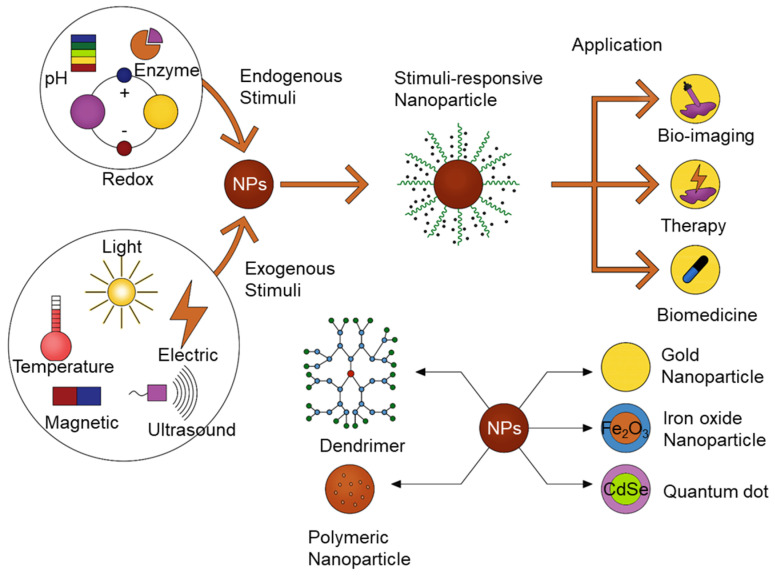
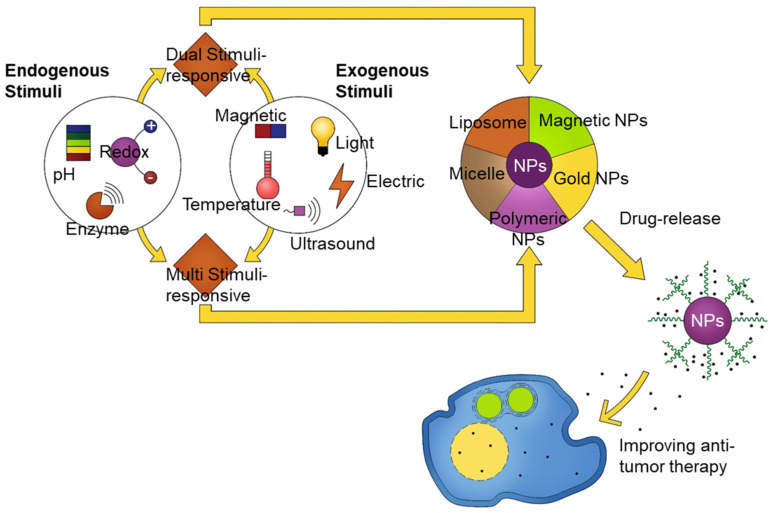
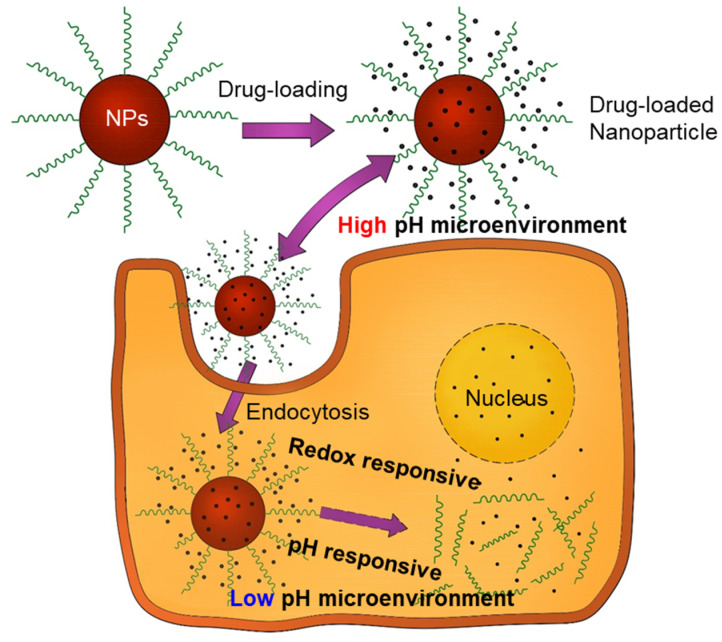
The new era of nanotechnology has produced advanced nanomaterials applicable to various fields of medicine, including diagnostic bio-imaging, chemotherapy, targeted drug delivery, and biosensors. Various materials are formed into nanoparticles, such as gold nanomaterials, carbon quantum dots, and liposomes. The nanomaterials have been functionalized and widely used because they are biocompatible and easy to design and prepare. This review mainly focuses on nanomaterials responsive to the external stimuli used in drug-delivery systems. To overcome the drawbacks of conventional therapeutics to a tumor, the dual- and multi-responsive behaviors of nanoparticles have been harnessed to improve efficiency from a drug delivery point of view. Issues and future research related to these nanomaterial-based stimuli sensitivities and the scope of stimuli-responsive systems for nanomedicine applications are discussed.
纳米技术的新时代催生了适用于医学各个领域的先进纳米材料,包括诊断生物成像、化疗、靶向药物递送和生物传感器。各种材料被制成纳米颗粒,如金纳米材料、碳量子点和脂质体。这些纳米材料具有生物相容性,易于设计和制备,因此已被功能化并广泛应用。本综述主要关注药物递送系统中对外部刺激有响应的纳米材料。为了克服传统肿瘤治疗方法的缺点,人们利用纳米颗粒的双重和多重响应行为,从药物递送的角度提高治疗效率。本文还讨论了与这些基于纳米材料的刺激敏感性相关的问题和未来研究,以及纳米医学应用中刺激响应系统的范围。