Palaus Marc, Viejo-Sobera Raquel, Redolar-Ripoll Diego, Marrón Elena M
Cognitive NeuroLab, Faculty of Health Sciences, Universitat Oberta de Catalunya (UOC), Barcelona, Spain.
Front Hum Neurosci. 2020 Jun 19;14:235. doi: 10.3389/fnhum.2020.00235. eCollection 2020.
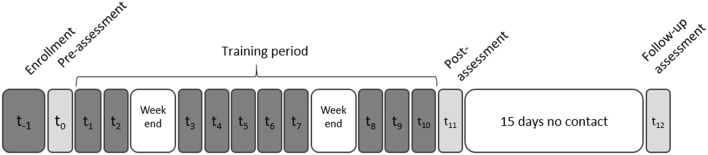
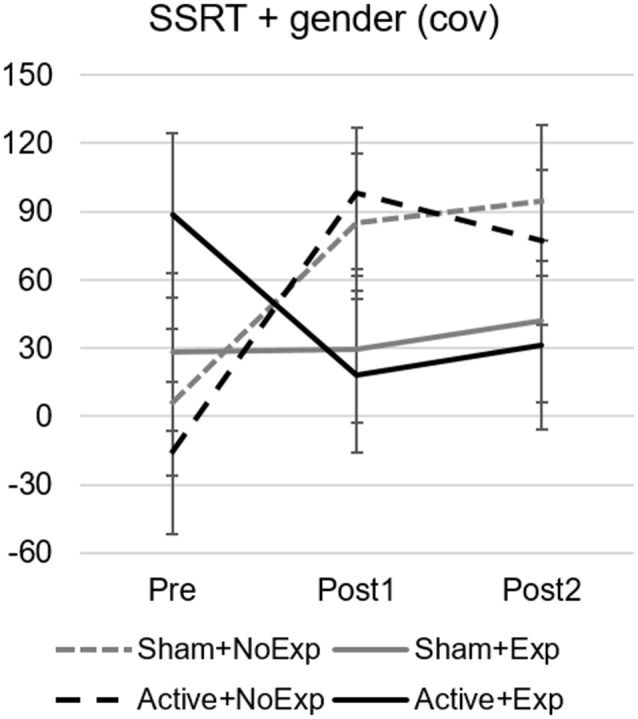
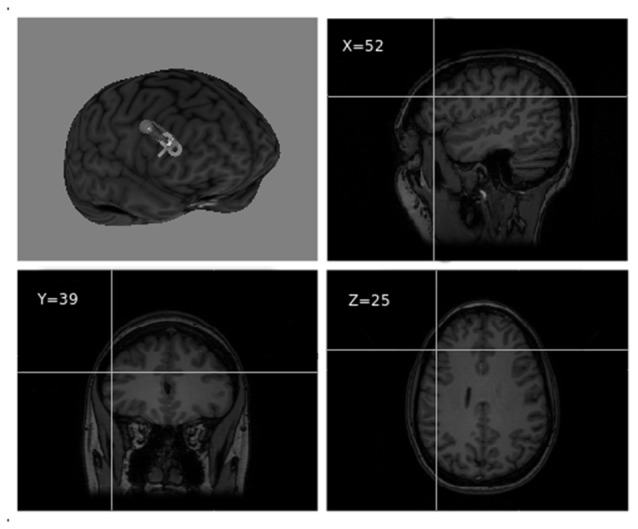
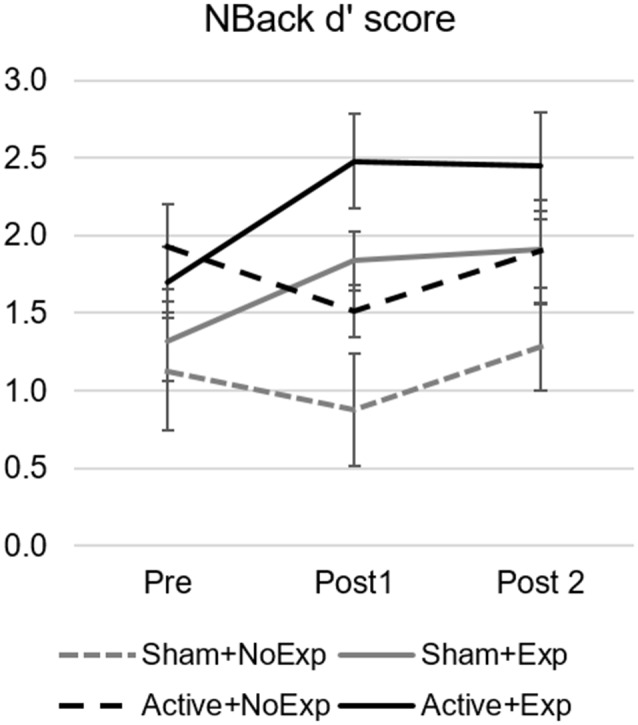
Transcranial magnetic stimulation (TMS) is a non-invasive brain stimulation technique able to modulate cortical excitability. This modulation may influence areas and networks responsible for specific cognitive processes, and the repetition of the induced temporary changes can produce long-lasting effects. TMS effectiveness may be enhanced when used in conjunction with cognitive training focused on specific cognitive functions. Playing video games can be an optimal cognitive training since it involves different cognitive components and high levels of engagement and motivation. The goal of this study is to assess the synergistic effects of TMS and video game training to enhance cognition, specifically, working memory and executive functions. We conducted a randomized 2 × 3 repeated measures (stimulation × time) study, randomly assigning 27 healthy volunteers to an active intermittent theta-burst stimulation or a sham stimulation group. Participants were assessed using a comprehensive neuropsychological battery before, immediately after, and 15 days after finishing the video game+TMS training. The training consisted of 10 sessions where participants played a 3D platform video game for 1.5 h. After each gaming session, TMS was applied over the right dorsolateral prefrontal cortex (DLPFC). All participants improved their video gaming performance, but we did not find a synergistic effect of stimulation and video game training. Neither had we found cognitive improvements related to the stimulation. We explored possible confounding variables such as age, gender, and early video gaming experience through linear regression. The early video gaming experience was related to improvements in working memory and inhibitory control. This result, although exploratory, highlights the influence of individual variables and previous experiences on brain plasticity.
经颅磁刺激(TMS)是一种能够调节皮层兴奋性的非侵入性脑刺激技术。这种调节可能会影响负责特定认知过程的区域和网络,并且所诱导的暂时变化的重复可以产生持久的效果。当与专注于特定认知功能的认知训练结合使用时,TMS的效果可能会增强。玩电子游戏可以是一种最佳的认知训练,因为它涉及不同的认知成分以及高水平的参与度和动机。本研究的目的是评估TMS和电子游戏训练对增强认知,特别是工作记忆和执行功能的协同作用。我们进行了一项随机的2×3重复测量(刺激×时间)研究,将27名健康志愿者随机分配到主动间歇性θ波爆发刺激组或假刺激组。在完成电子游戏+TMS训练之前、之后立即以及之后15天,使用一套全面的神经心理学测试对参与者进行评估。训练包括10节课程,参与者玩一款3D平台电子游戏,时长为1.5小时。在每次游戏课程之后,对右侧背外侧前额叶皮层(DLPFC)施加TMS。所有参与者的电子游戏表现都有所提高,但我们没有发现刺激和电子游戏训练的协同作用。我们也没有发现与刺激相关的认知改善。我们通过线性回归探索了可能的混杂变量,如年龄、性别和早期电子游戏体验。早期电子游戏体验与工作记忆和抑制控制的改善有关。这一结果虽然是探索性的,但突出了个体变量和既往经历对脑可塑性的影响。