Chae Hee-Don, Dutta Ritika, Tiu Bruce, Hoff Fieke W, Accordi Benedetta, Serafin Valentina, Youn Minyoung, Huang Min, Sumarsono Nathan, Davis Kara L, Lacayo Norman J, Pigazzi Martina, Horton Terzah M, Kornblau Steven M, Sakamoto Kathleen M
Department of Pediatrics, Stanford University School of Medicine, Stanford, CA, USA.
Department of Pediatric Oncology/Hematology, Beatrix Children's Hospital, University Medical Center Groningen, University of Groningen, Groningen, The Netherlands.
Oncotarget. 2020 Jun 23;11(25):2387-2403. doi: 10.18632/oncotarget.27630.
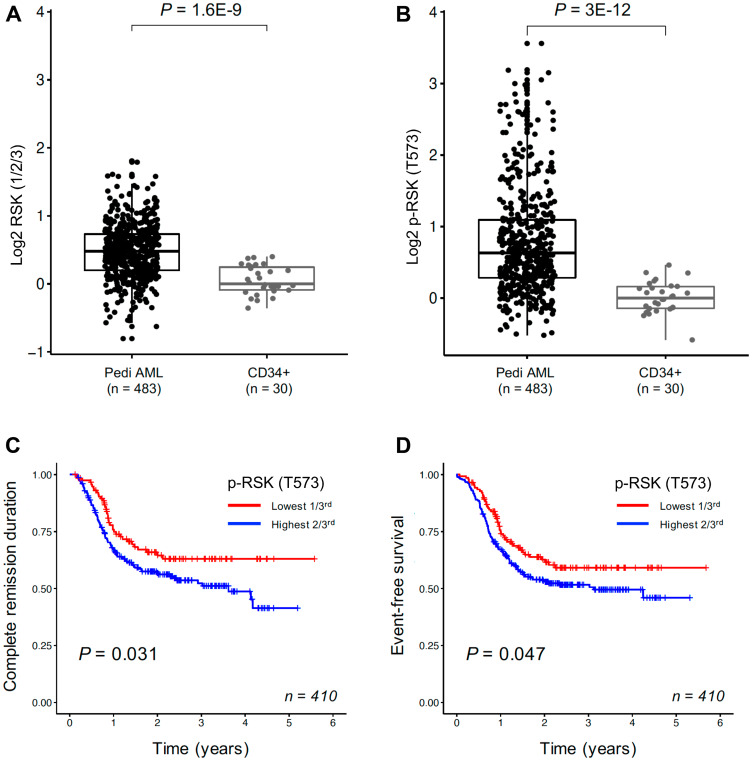
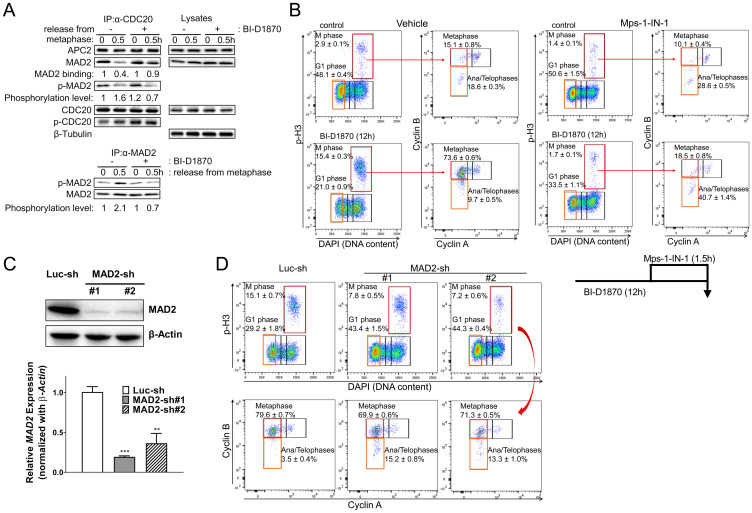
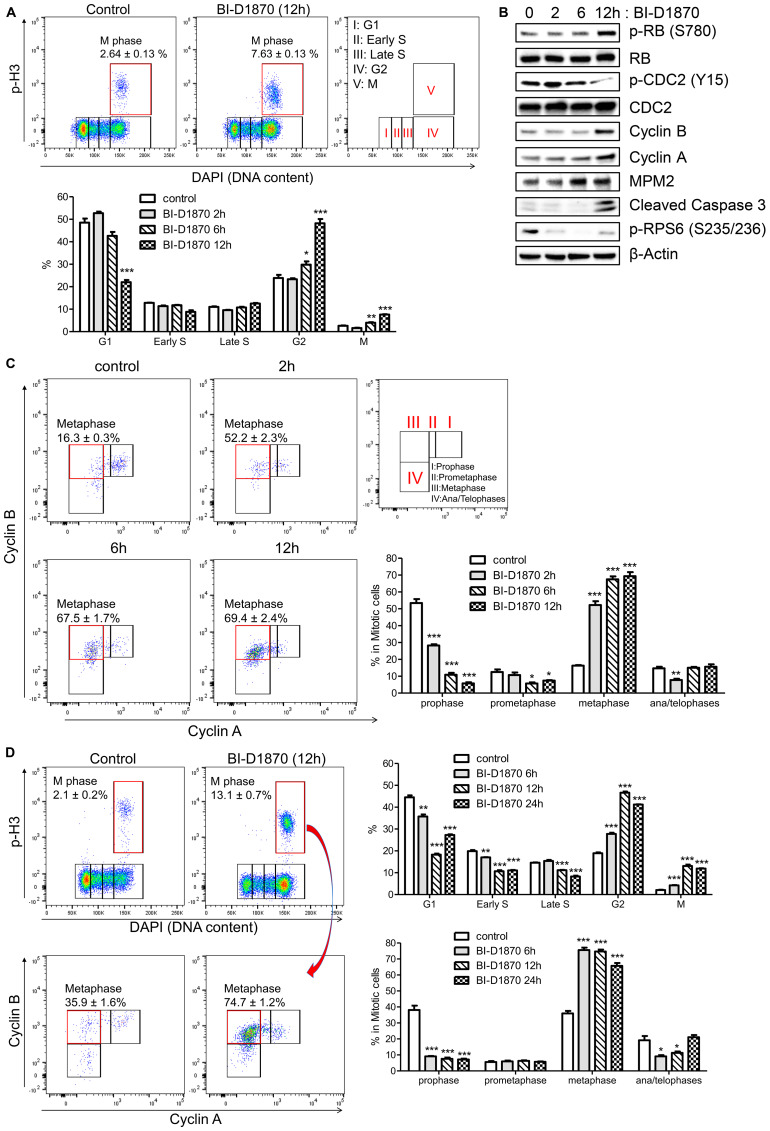
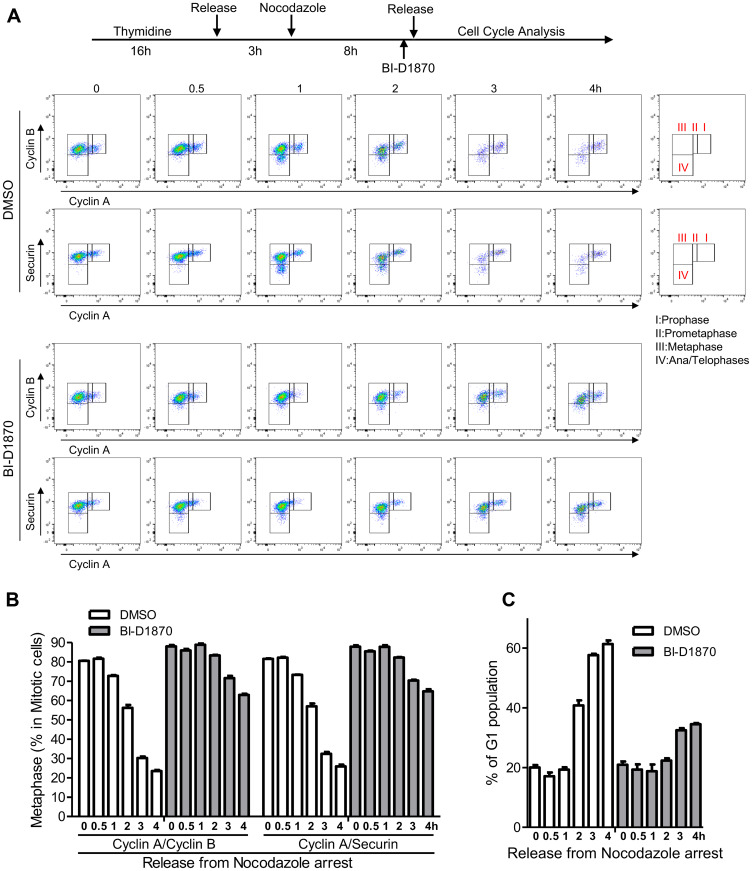
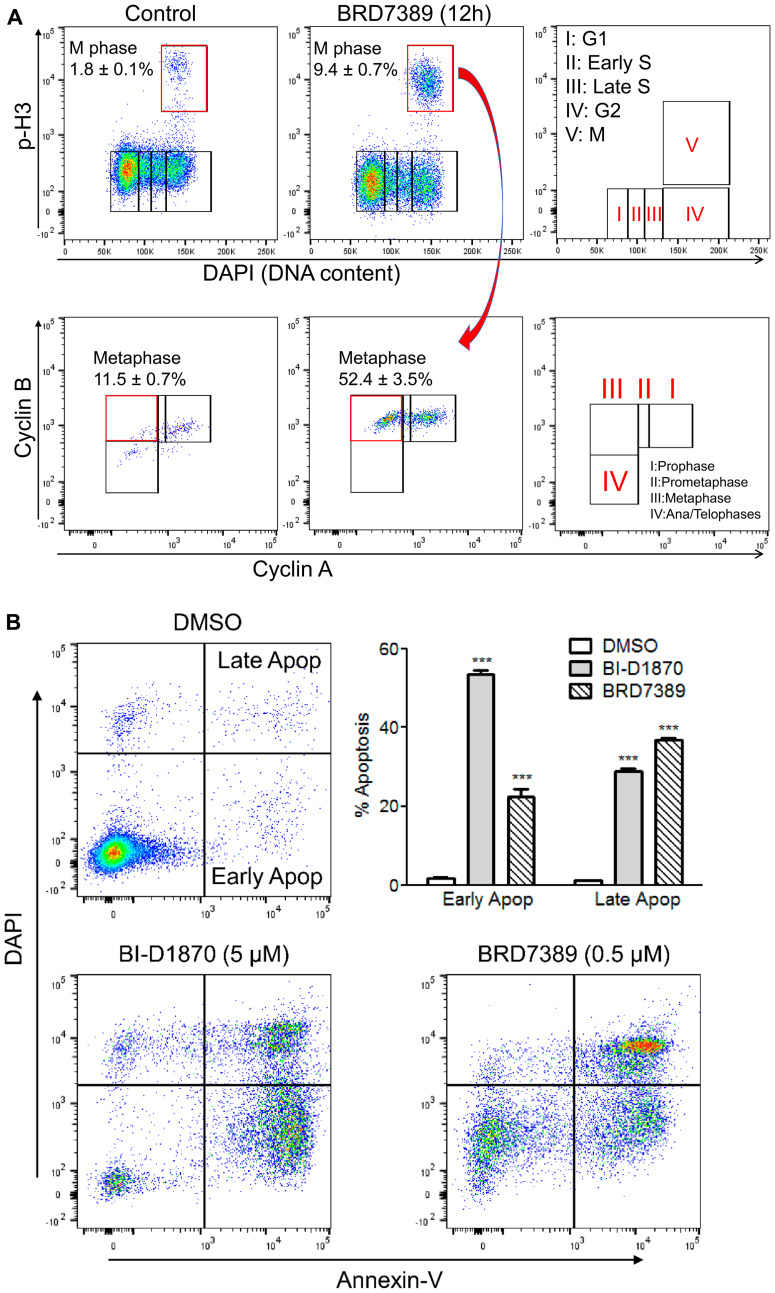
The 90 kDa Ribosomal S6 Kinase (RSK) drives cell proliferation and survival in cancers, although its oncogenic mechanism has not been well characterized. Phosphorylated level of RSK (T573) was increased in acute myeloid leukemia (AML) patients and associated with poor survival. To examine the role of RSK in AML, we analyzed apoptosis and the cell cycle profile following treatment with BI-D1870, a potent inhibitor of RSK. BI-D1870 treatment increased the G2/M population and induced apoptosis in AML cell lines and patient AML cells. Characterization of mitotic phases showed that the metaphase/anaphase transition was significantly inhibited by BI-D1870. BI-D1870 treatment impeded the association of activator CDC20 with APC/C, but increased binding of inhibitor MAD2 to CDC20, preventing mitotic exit. Moreover, the inactivation of spindle assembly checkpoint or MAD2 knockdown released cells from BI-D1870-induced metaphase arrest. Therefore, we investigated whether BI-D1870 potentiates the anti-leukemic activity of vincristine by targeting mitotic exit. Combination treatment of BI-D1870 and vincristine synergistically increased mitotic arrest and apoptosis in acute leukemia cells. These data show that BI-D1870 induces apoptosis of AML cells alone and in combination with vincristine through blocking mitotic exit, providing a novel approach to overcoming vincristine resistance in AML cells.
90 kDa核糖体S6激酶(RSK)在癌症中驱动细胞增殖和存活,尽管其致癌机制尚未完全明确。急性髓系白血病(AML)患者中RSK(T573)的磷酸化水平升高,且与较差的生存率相关。为了研究RSK在AML中的作用,我们分析了用RSK的强效抑制剂BI-D1870处理后的细胞凋亡和细胞周期分布。BI-D1870处理增加了AML细胞系和患者AML细胞中的G2/M期细胞比例并诱导细胞凋亡。对有丝分裂期的特征分析表明,BI-D1870显著抑制了中期/后期转换。BI-D1870处理阻碍了激活因子CDC20与后期促进复合物/细胞周期体(APC/C)的结合,但增加了抑制剂MAD2与CDC20的结合,从而阻止有丝分裂退出。此外,纺锤体组装检查点的失活或MAD2基因敲低使细胞从BI-D1870诱导的中期阻滞中释放出来。因此,我们研究了BI-D1870是否通过靶向有丝分裂退出增强长春新碱的抗白血病活性。BI-D1870和长春新碱联合处理协同增加了急性白血病细胞的有丝分裂阻滞和细胞凋亡。这些数据表明,BI-D1870单独或与长春新碱联合使用时,通过阻断有丝分裂退出诱导AML细胞凋亡,为克服AML细胞对长春新碱的耐药性提供了一种新方法。