Depla Josse A, Sogorb-Gonzalez Marina, Mulder Lance A, Heine Vivi M, Konstantinova Pavlina, van Deventer Sander J, Wolthers Katja C, Pajkrt Dasja, Sridhar Adithya, Evers Melvin M
Department of Research & Development, uniQure Biopharma B.V., Amsterdam, the Netherlands.
Department of Medical Microbiology, Laboratory of Clinical Virology, Amsterdam UMC, Amsterdam, the Netherlands.
Mol Ther Methods Clin Dev. 2020 Jun 1;18:167-175. doi: 10.1016/j.omtm.2020.05.028. eCollection 2020 Sep 11.
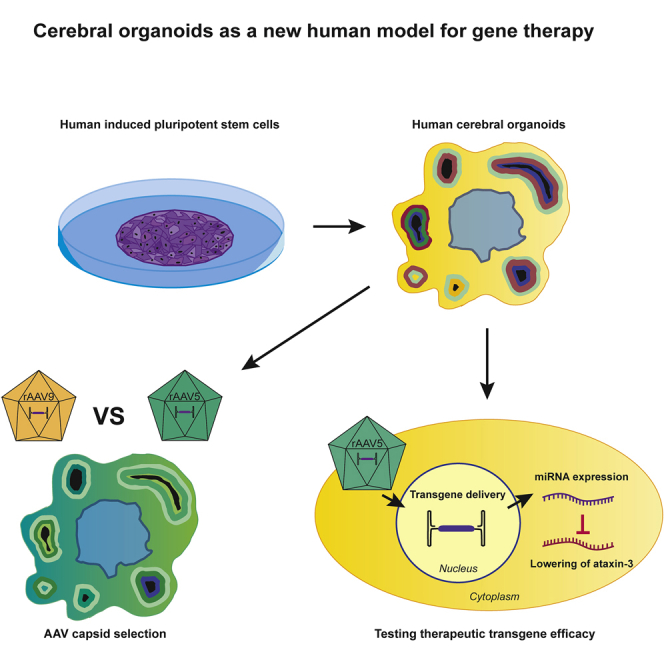
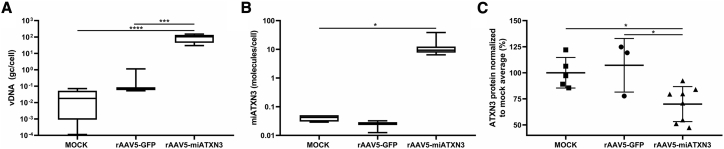
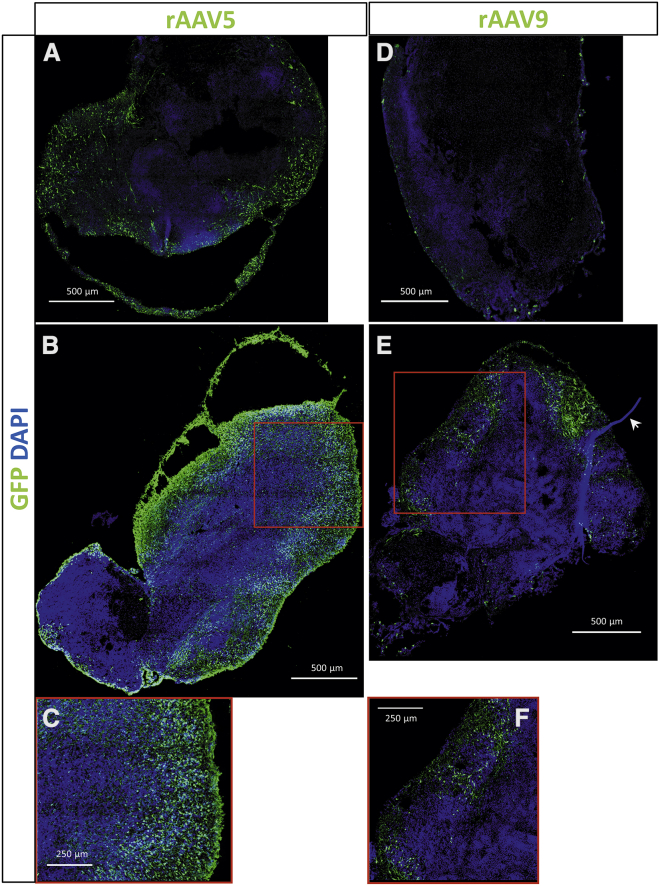
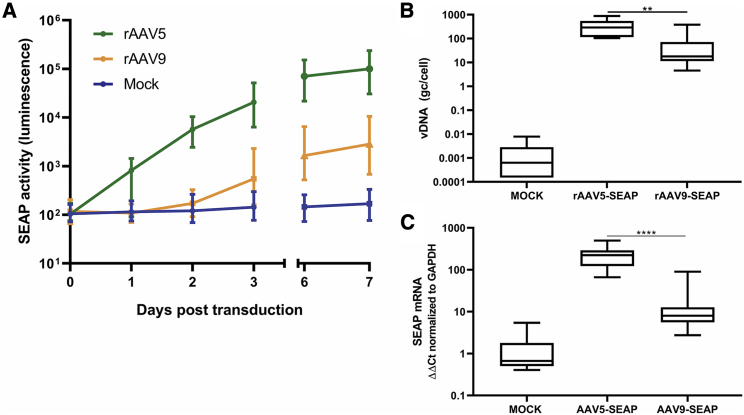
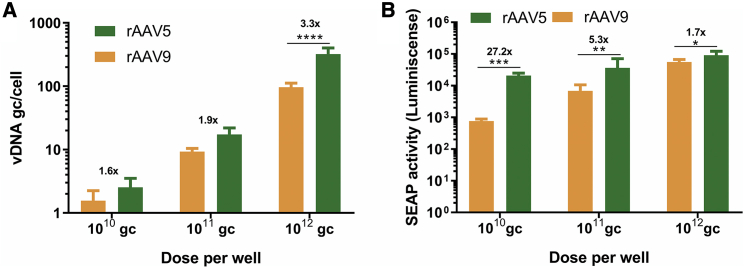
The development of gene therapies for central nervous system disorders is challenging because it is difficult to translate preclinical data from current and models to the clinic. Therefore, we developed induced pluripotent stem cell (iPSC)-derived cerebral organoids as a model for recombinant adeno-associated virus (rAAV) capsid selection and for testing efficacy of AAV-based gene therapy in a human context. Cerebral organoids are physiological 3D structures that better recapitulate the human brain compared with 2D cell lines. To validate the model, we compared the transduction efficiency and distribution of two commonly used AAV serotypes (rAAV5 and rAAV9). In cerebral organoids, transduction with rAAV5 led to higher levels of vector DNA, transgenic mRNA, and protein expression as compared with rAAV9. The superior transduction of rAAV5 was replicated in iPSC-derived neuronal cells. Furthermore, rAAV5-mediated delivery of a human sequence-specific engineered microRNA to cerebral organoids led to a lower expression of its target ataxin-3. Our studies provide a new tool for selecting and deselecting AAV serotypes, and for demonstrating therapeutic efficacy of transgenes in a human context. Implementing cerebral organoids during gene therapy development could reduce the usage of animal models and improve translation to the clinic.
中枢神经系统疾病基因治疗的发展具有挑战性,因为难以将当前临床前数据从现有模型转化至临床应用。因此,我们开发了诱导多能干细胞(iPSC)衍生的类脑器官,作为重组腺相关病毒(rAAV)衣壳选择以及在人体环境中测试基于AAV的基因治疗疗效的模型。类脑器官是生理性三维结构,与二维细胞系相比,能更好地模拟人类大脑。为验证该模型,我们比较了两种常用AAV血清型(rAAV5和rAAV9)的转导效率和分布。在类脑器官中,与rAAV9相比,rAAV5转导导致更高水平的载体DNA、转基因mRNA和蛋白质表达。rAAV5的卓越转导在iPSC衍生的神经元细胞中得到重现。此外,rAAV5介导的将人类序列特异性工程化微小RNA递送至类脑器官导致其靶标ataxin-3表达降低。我们的研究为筛选和排除AAV血清型以及在人体环境中证明转基因的治疗效果提供了新工具。在基因治疗开发过程中采用类脑器官可减少动物模型的使用,并改善向临床的转化。