Stanley Center for Psychiatric Research, Broad Institute of MIT and Harvard, Cambridge, Massachusetts, United States of America.
Biological and Biomedical Sciences, Harvard University, Cambridge, Massachusetts, United States of America.
PLoS Biol. 2023 Jul 19;21(7):e3002112. doi: 10.1371/journal.pbio.3002112. eCollection 2023 Jul.
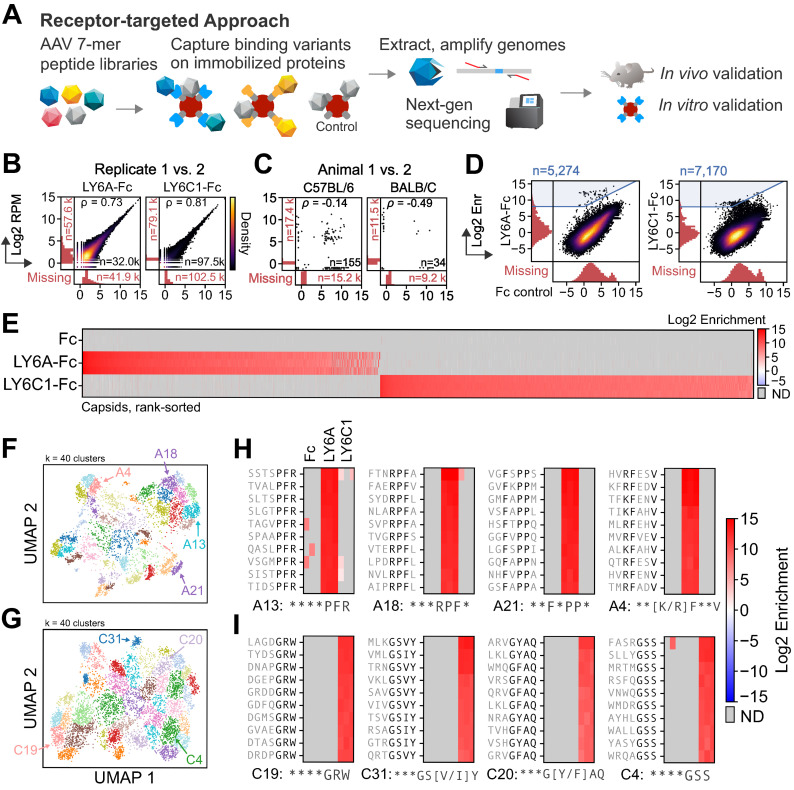
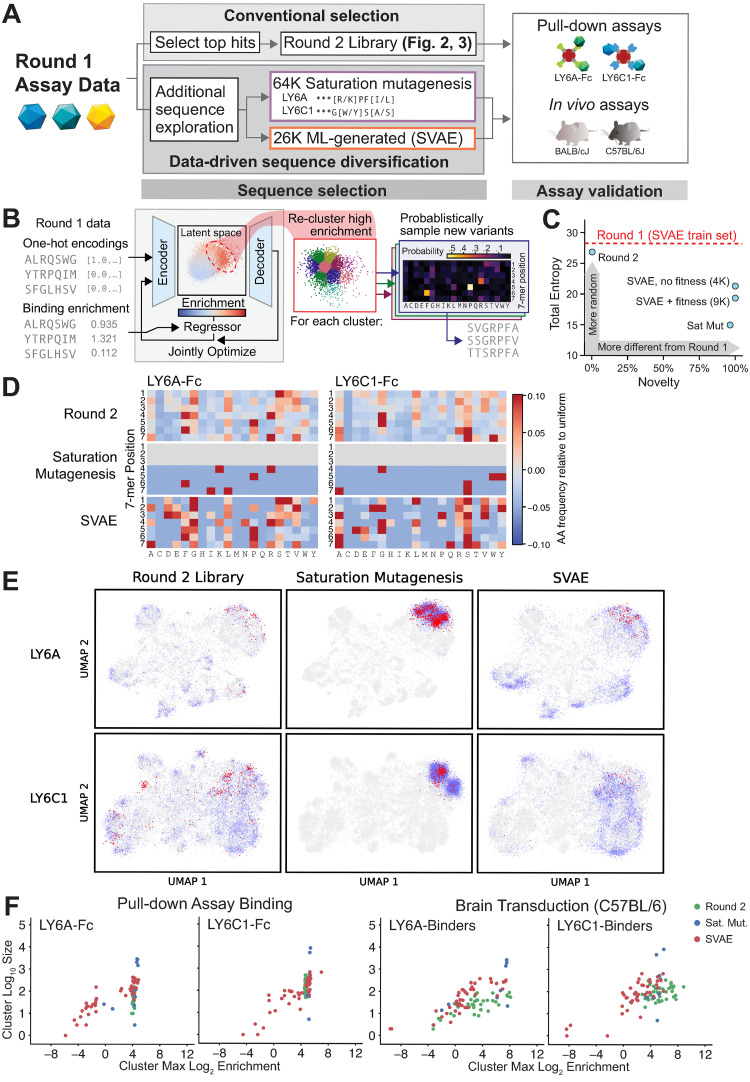
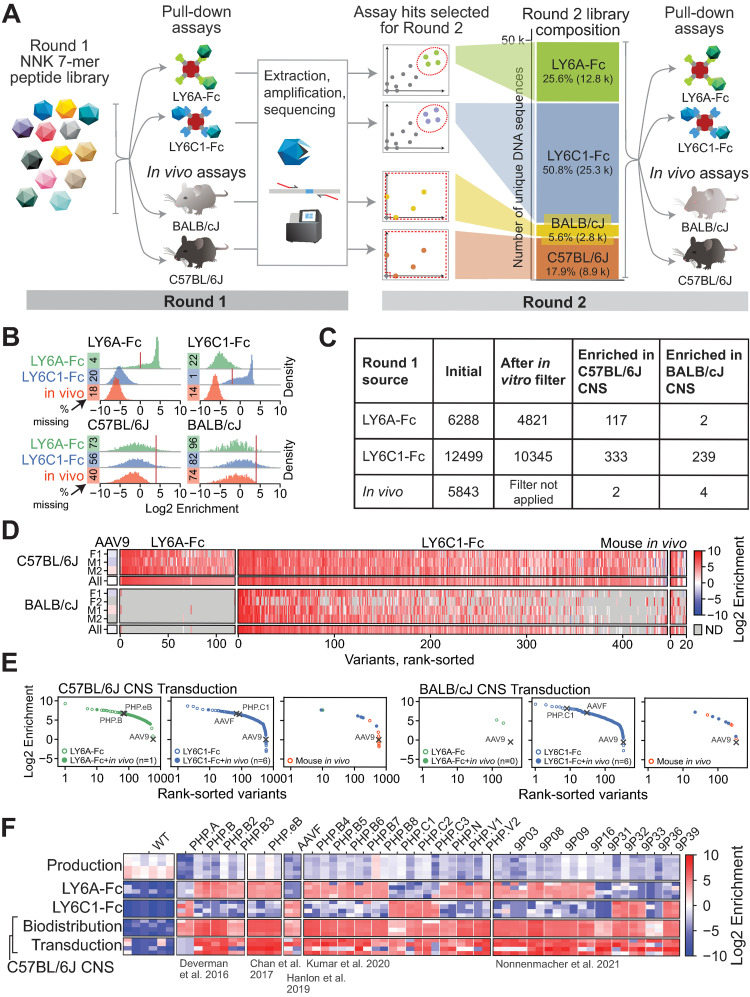
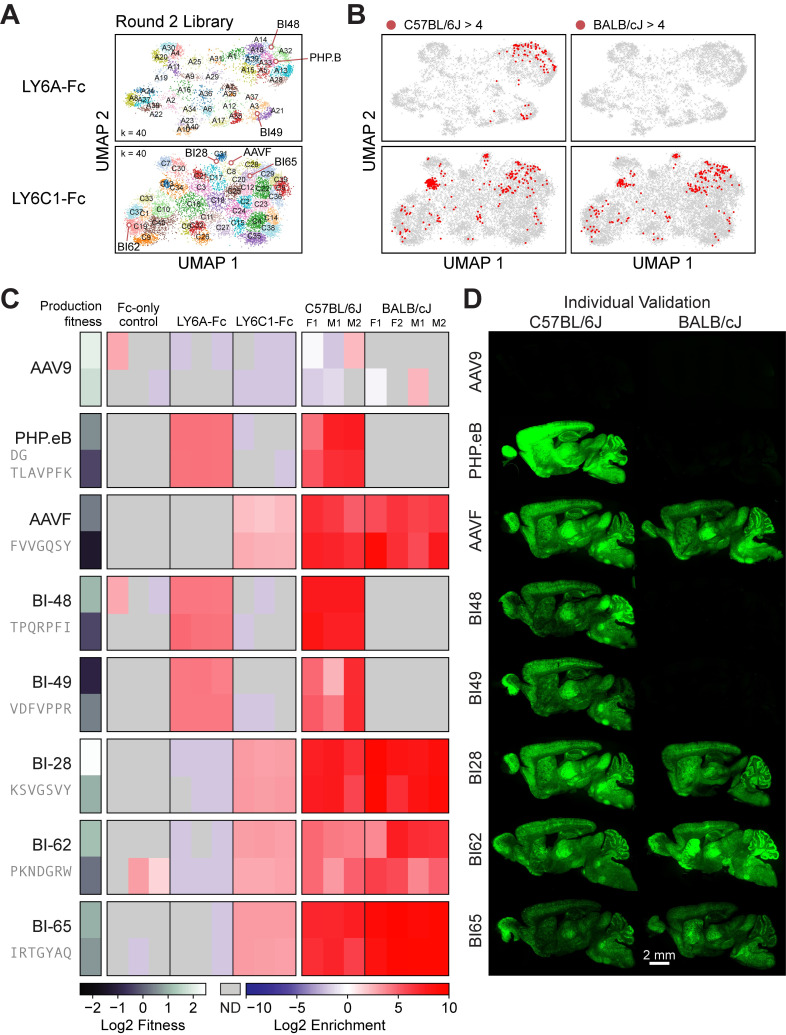
Viruses have evolved the ability to bind and enter cells through interactions with a wide variety of cell macromolecules. We engineered peptide-modified adeno-associated virus (AAV) capsids that transduce the brain through the introduction of de novo interactions with 2 proteins expressed on the mouse blood-brain barrier (BBB), LY6A or LY6C1. The in vivo tropisms of these capsids are predictable as they are dependent on the cell- and strain-specific expression of their target protein. This approach generated hundreds of capsids with dramatically enhanced central nervous system (CNS) tropisms within a single round of screening in vitro and secondary validation in vivo thereby reducing the use of animals in comparison to conventional multi-round in vivo selections. The reproducible and quantitative data derived via this method enabled both saturation mutagenesis and machine learning (ML)-guided exploration of the capsid sequence space. Notably, during our validation process, we determined that nearly all published AAV capsids that were selected for their ability to cross the BBB in mice leverage either the LY6A or LY6C1 protein, which are not present in primates. This work demonstrates that AAV capsids can be directly targeted to specific proteins to generate potent gene delivery vectors with known mechanisms of action and predictable tropisms.
病毒已经进化出通过与多种细胞大分子相互作用结合并进入细胞的能力。我们通过引入与在小鼠血脑屏障 (BBB) 上表达的 2 种蛋白(LY6A 或 LY6C1)的新相互作用,设计了经过肽修饰的腺相关病毒 (AAV) 衣壳,从而将其转导到大脑中。这些衣壳的体内趋向性是可预测的,因为它们依赖于其靶蛋白在细胞和株间的特异性表达。这种方法在体外进行了一轮筛选和体内进行了二次验证,在单次筛选中就产生了数百种具有显著增强的中枢神经系统 (CNS) 趋向性的衣壳,与传统的多轮体内选择相比,减少了动物的使用。通过这种方法获得的可重复和定量数据既支持了饱和诱变,也支持了基于机器学习 (ML) 的衣壳序列空间探索。值得注意的是,在我们的验证过程中,我们确定了几乎所有在小鼠体内被选为能够穿过 BBB 的已发表的 AAV 衣壳都利用了 LY6A 或 LY6C1 蛋白,而这些蛋白在灵长类动物中并不存在。这项工作表明,AAV 衣壳可以直接靶向特定蛋白,从而生成具有已知作用机制和可预测趋向性的有效基因传递载体。