Department of Biological, Chemical and Pharmaceutical Sciences and Technologies (STEBICEF), University of Palermo, 90128 Palermo, Italy.
Int J Mol Sci. 2020 Jul 6;21(13):4781. doi: 10.3390/ijms21134781.
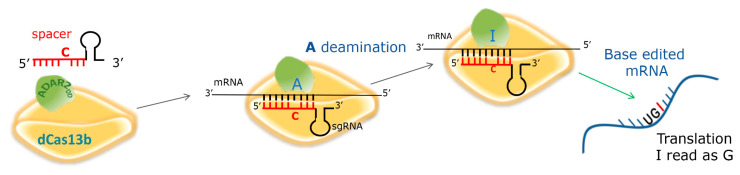
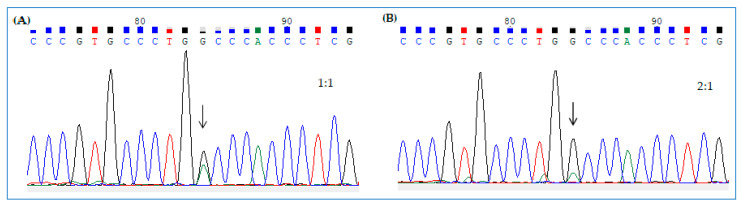
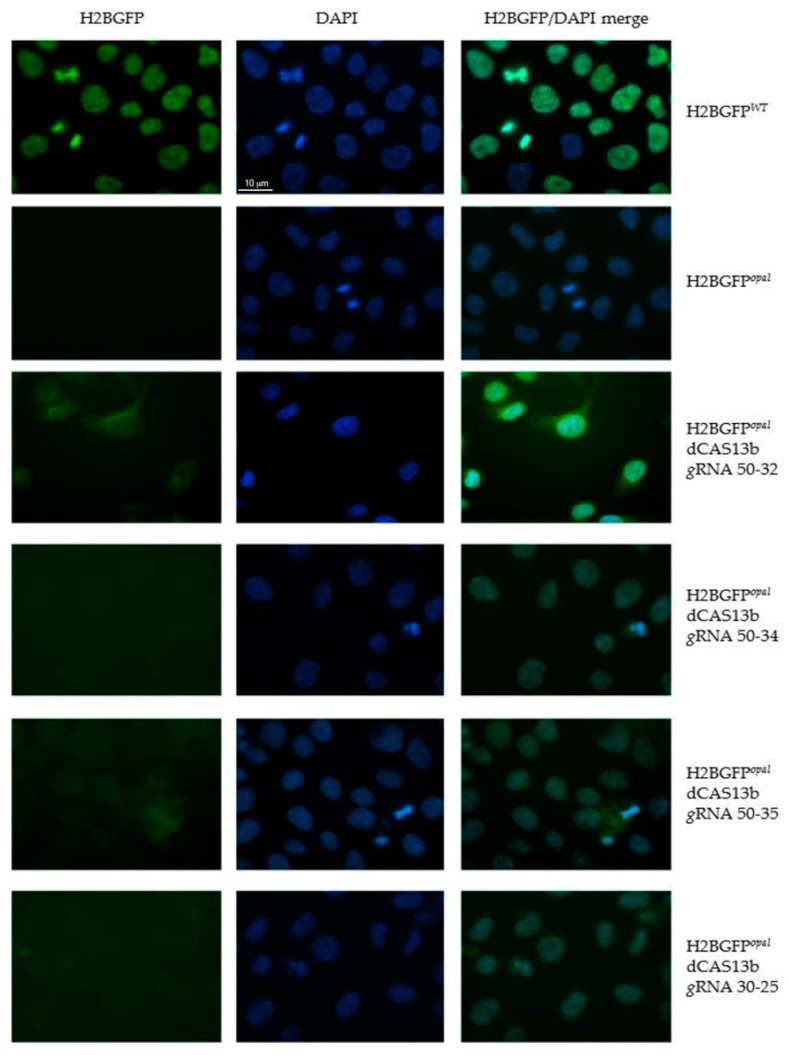
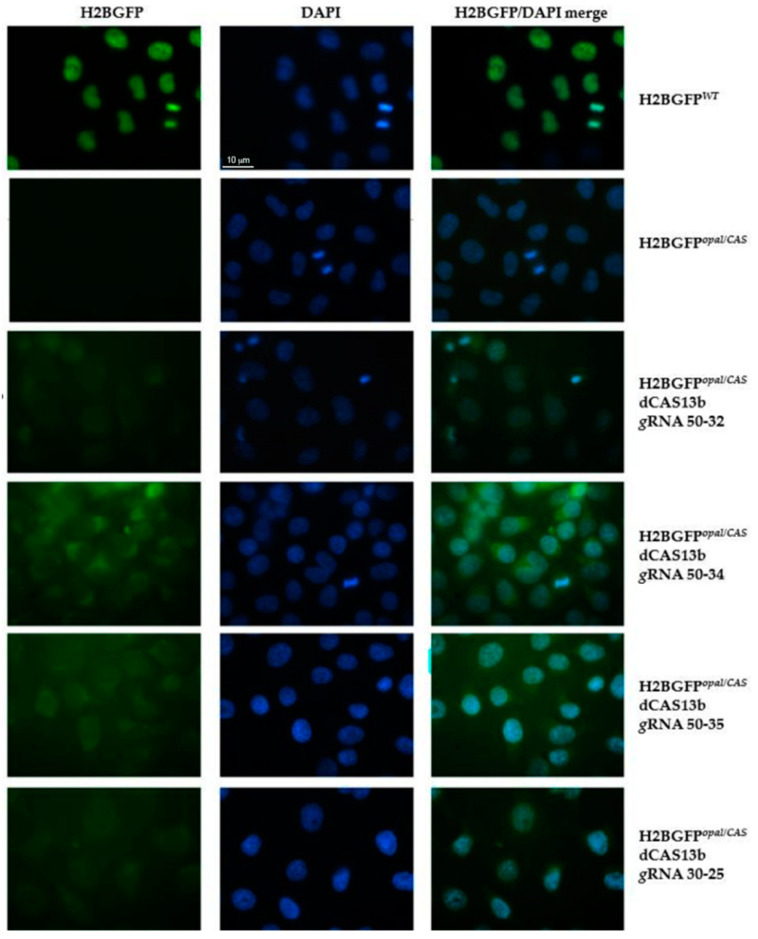
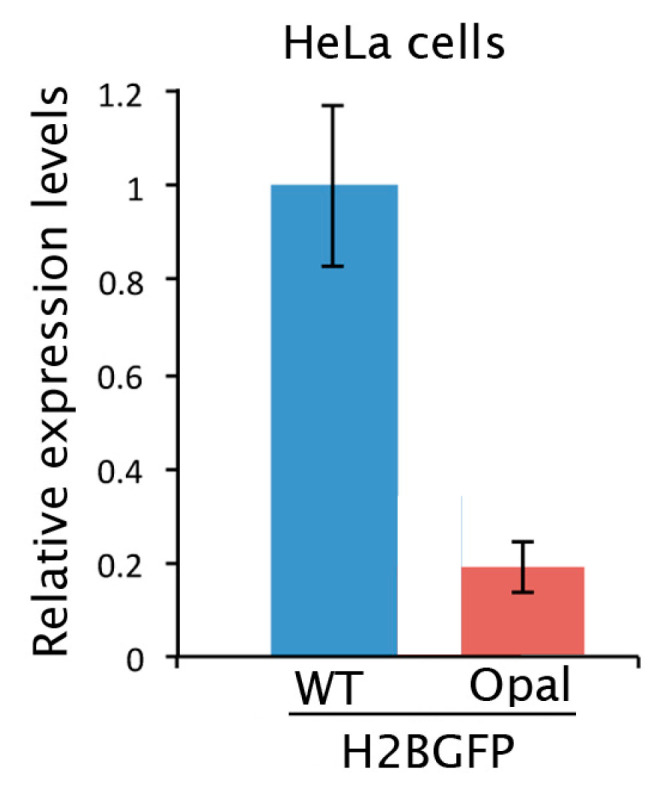
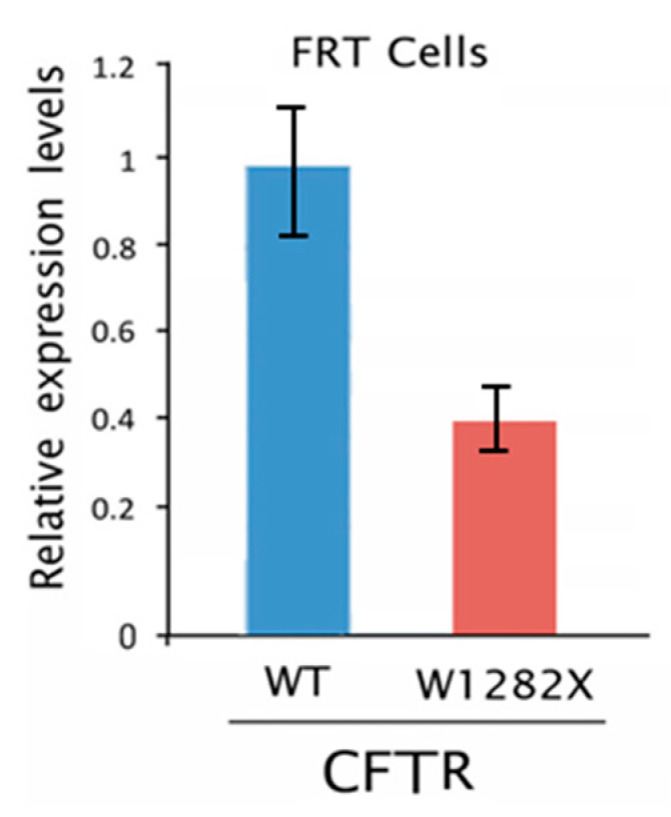
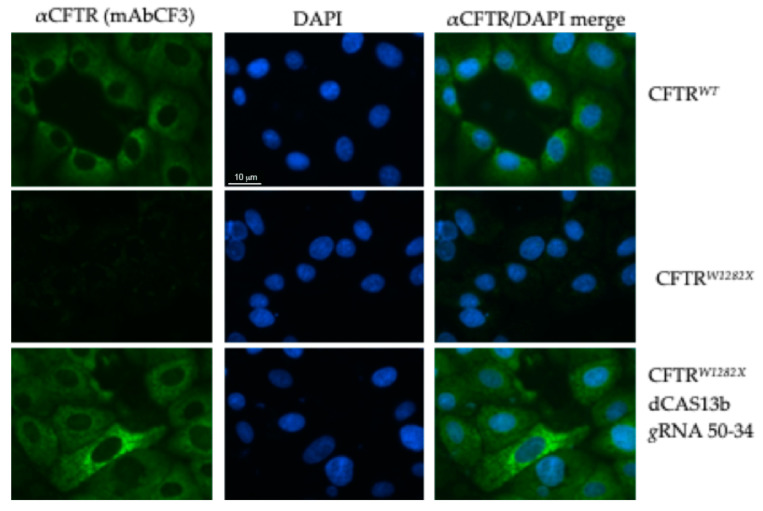
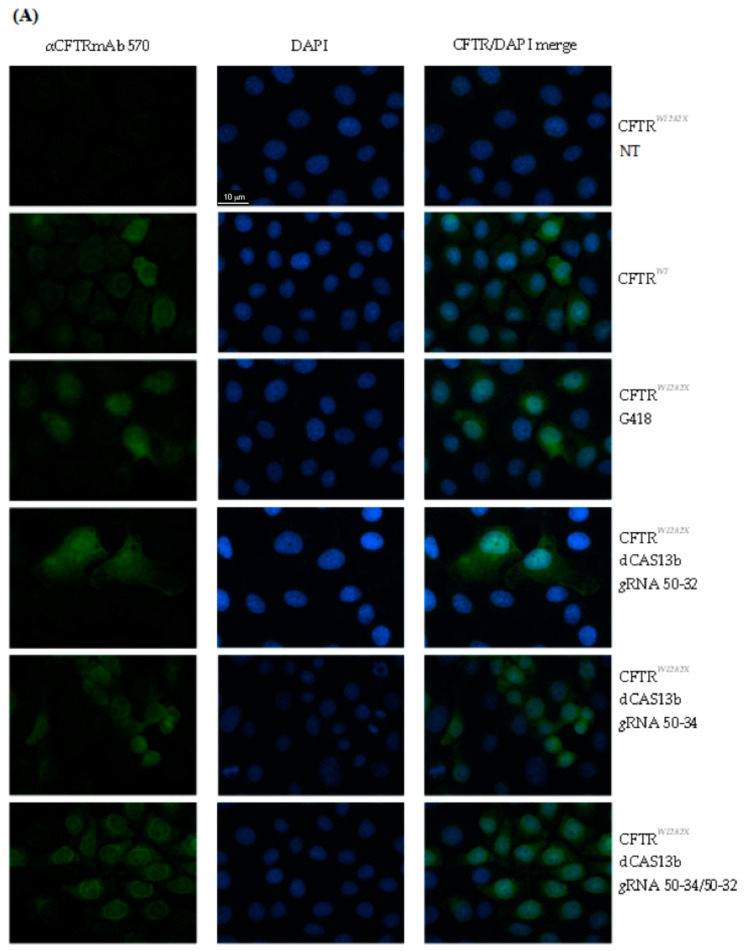
Cystic fibrosis (CF) is caused by mutations in the gene encoding the transmembrane conductance regulator (CFTR) protein. Some CF patients are compound heterozygous or homozygous for nonsense mutations in the gene. This implies the presence in the transcript of premature termination codons (PTCs) responsible for a truncated CFTR protein and a more severe form of the disease. Aminoglycoside and PTC124 derivatives have been used for the read-through of PTCs to restore the full-length CFTR protein. However, in a precision medicine framework, the CRISPR/dCas13b-based molecular tool ) could be a good alternative to restore the full-length CFTR protein. This RNA editing approach is based on the targeting of the deaminase domain of the hADAR2 enzyme fused to the dCas13b protein to a specific adenosine to be edited to inosine in the mutant mRNA. Targeting specificity is allowed by a guide RNA (RNA) complementarily to the target region and recognized by the dCas13b protein. Here, we used the REPAIRv2 platform to edit the UGA PTC to UGG in different cell types, namely IB3-1 cells, HeLa, and FRT cells engineered to express H2BGFP and CFTR, respectively.
囊性纤维化(CF)是由编码跨膜电导调节剂(CFTR)蛋白的基因突变引起的。一些 CF 患者在该基因中存在无义突变的复合杂合子或纯合子。这意味着转录本中存在导致 CFTR 蛋白截短的提前终止密码子(PTC)和更严重的疾病形式。氨基糖苷类和 PTC124 衍生物已被用于 PTC 的通读,以恢复全长 CFTR 蛋白。然而,在精准医学框架内,基于 CRISPR/dCas13b 的分子工具)可能是恢复全长 CFTR 蛋白的一种很好的替代方法。这种 RNA 编辑方法基于将与 dCas13b 蛋白融合的 hADAR2 酶的脱氨酶结构域靶向到要编辑的特定腺苷,使其在突变 mRNA 中变为肌苷。通过互补于靶区域的向导 RNA(RNA)和 dCas13b 蛋白的识别来允许靶向特异性。在这里,我们使用 REPAIRv2 平台编辑不同细胞类型中的 UGA PTC 为 UGG,这些细胞类型分别为 IB3-1 细胞、HeLa 和 FRT 细胞,它们分别被工程化表达 H2BGFP 和 CFTR。