Department of Biological, Chemical and Pharmaceutical Sciences and Technologies, University of Palermo, 90128 Palermo, Italy.
Centro di Oncobiologia Sperimentale (C.O.B.S.), Viale Delle Scienze, 90128 Palermo, Italy.
Int J Mol Sci. 2023 Jun 30;24(13):10940. doi: 10.3390/ijms241310940.
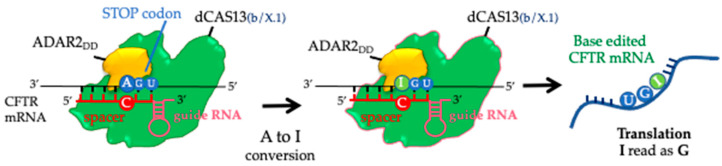
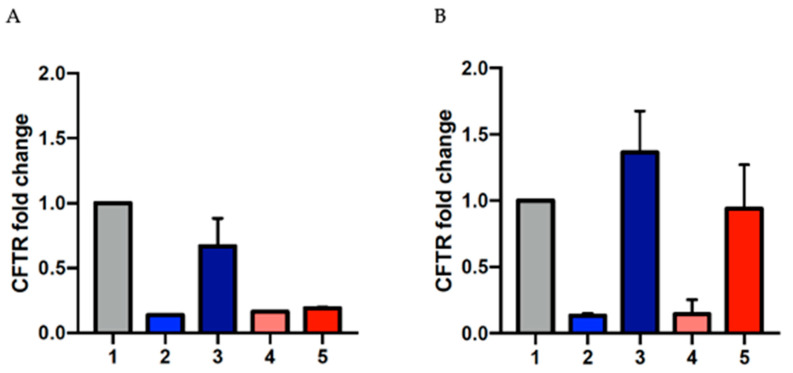
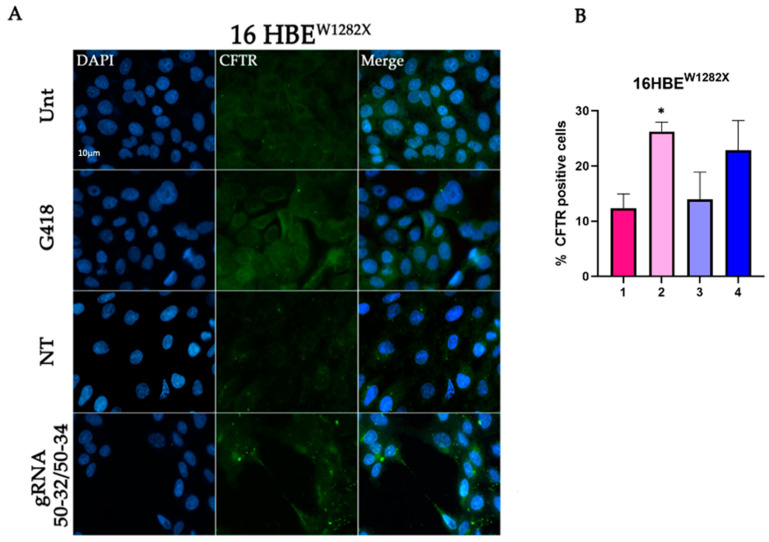
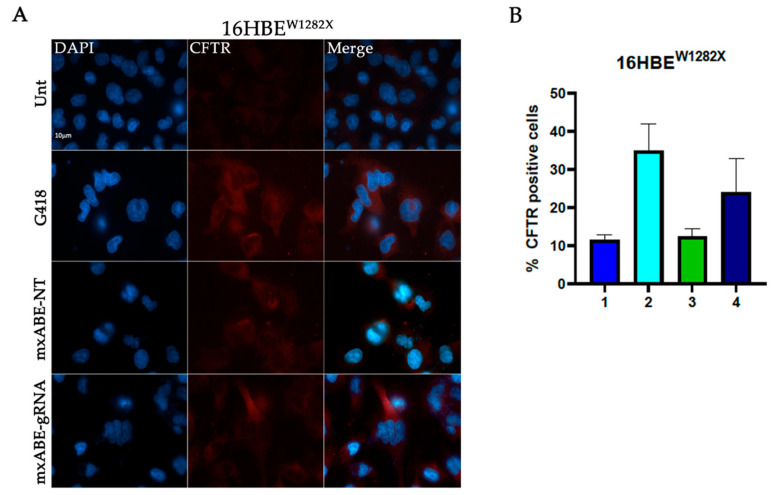
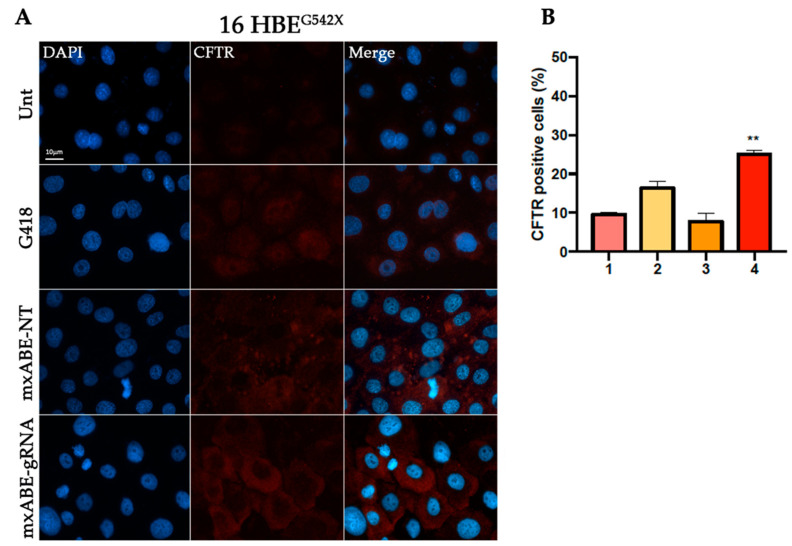
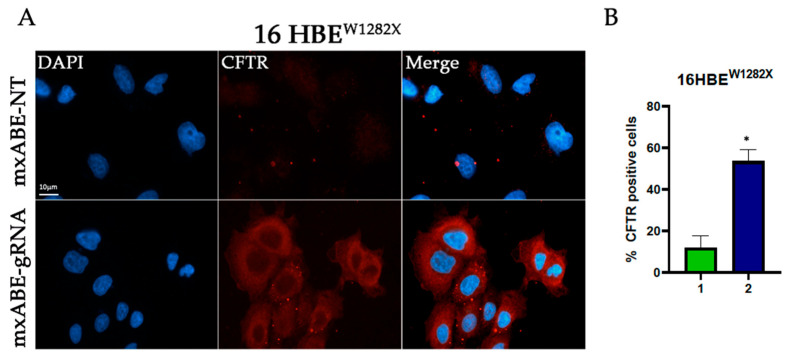
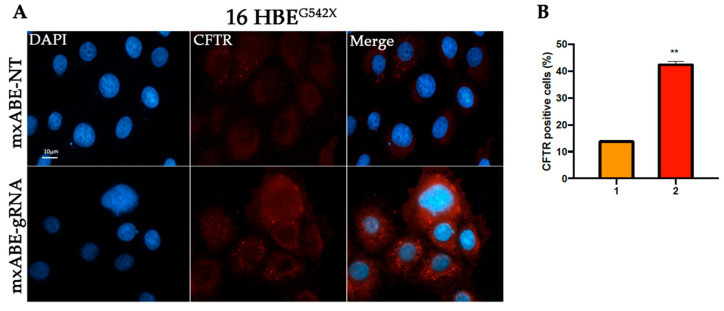
It is reported that about 10% of cystic fibrosis (CF) patients worldwide have nonsense (stop) mutations in the CFTR gene, which cause the premature termination of CFTR protein synthesis, leading to a truncated and non-functional protein. To address this issue, we investigated the possibility of rescuing the nonsense mutation (UGA) by sequence-specific RNA editing in CFTR mutant CFF-16HBEge, W1282X, and G542X human bronchial cells. We used two different base editor tools that take advantage of ADAR enzymes () to edit adenosine to inosine (A-to-I) within the mRNA: the REPAIRv2 () and the minixABE (). Immunofluorescence experiments show that both approaches were able to recover the CFTR protein in the CFTR mutant cells. In addition, RT-qPCR confirmed the rescue of the CFTR full transcript. These findings suggest that site-specific RNA editing may efficiently correct the UGA premature stop codon in the CFTR transcript in CFF-16HBEge, W1282X, and G542X cells. Thus, this approach, which is safer than acting directly on the mutated DNA, opens up new therapeutic possibilities for CF patients with nonsense mutations.
据报道,全球约有 10%的囊性纤维化 (CF) 患者的 CFTR 基因中存在无义(终止)突变,这导致 CFTR 蛋白合成的过早终止,从而产生截短的、无功能的蛋白。为了解决这个问题,我们研究了在 CFTR 突变型 CFF-16HBEge、W1282X 和 G542X 人支气管细胞中通过 CFTR 突变序列特异性 RNA 编辑来拯救无义突变 (UGA) 的可能性。我们使用了两种不同的碱基编辑工具,利用 ADAR 酶()将 mRNA 中的腺苷编辑为肌苷(A-to-I):REPAIRv2()和 minixABE()。免疫荧光实验表明,这两种方法都能够在 CFTR 突变细胞中恢复 CFTR 蛋白。此外,RT-qPCR 证实了 CFTR 全长转录本的恢复。这些发现表明,定点 RNA 编辑可能有效地纠正 CFF-16HBEge、W1282X 和 G542X 细胞中 CFTR 转录物中的 UGA 过早终止密码子。因此,这种方法比直接作用于突变 DNA 更安全,为携带无义突变的 CF 患者开辟了新的治疗可能性。