Molina-Montes Esther, Salamanca-Fernández Elena, Garcia-Villanova Belén, Sánchez Maria José
Department of Nutrition and Food Science, University of Granada, 18014 Granada, Spain.
Institute of Nutrition and Food Technology (INYTA) 'José Mataix', Biomedical Research Centre, University of Granada, Avenida del Conocimiento s/n, E-18071 Granada, Spain.
Nutrients. 2020 Jul 6;12(7):2010. doi: 10.3390/nu12072010.
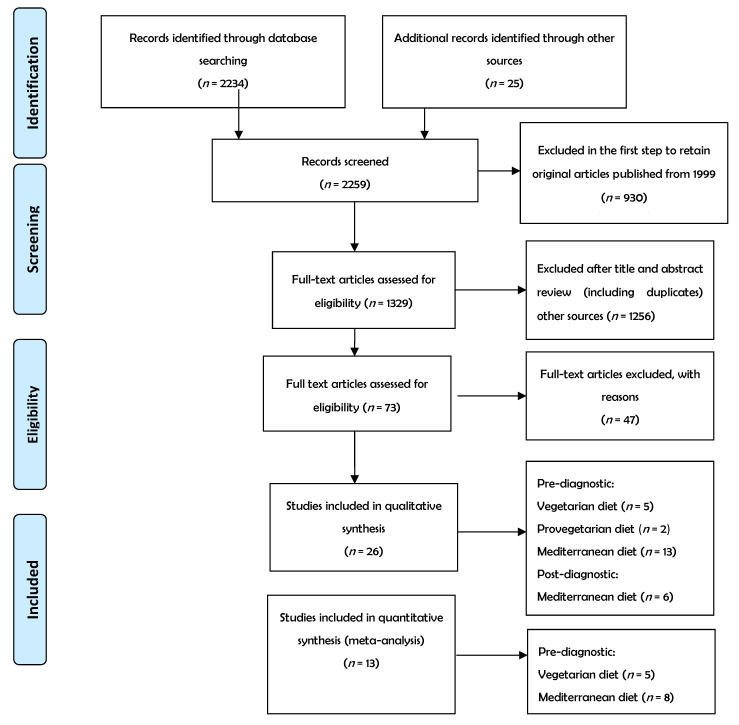
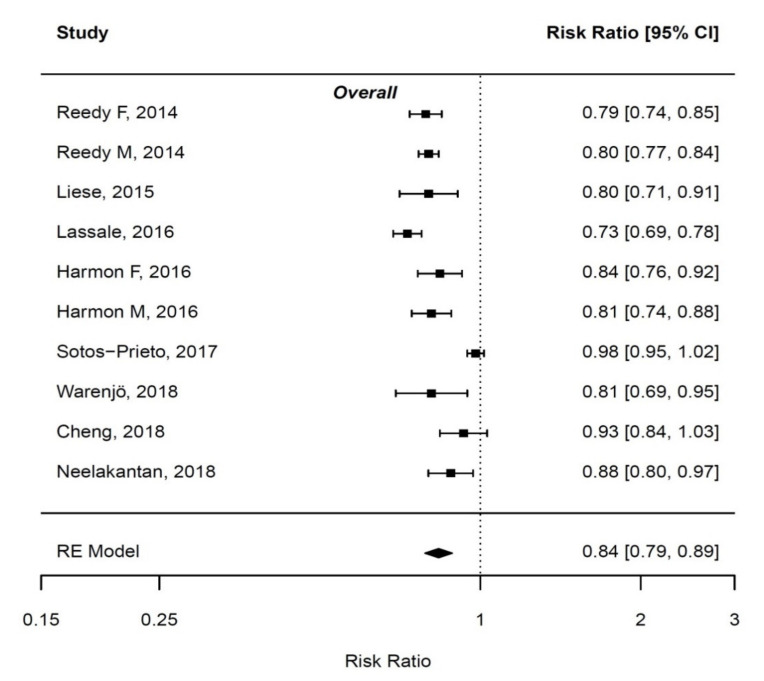
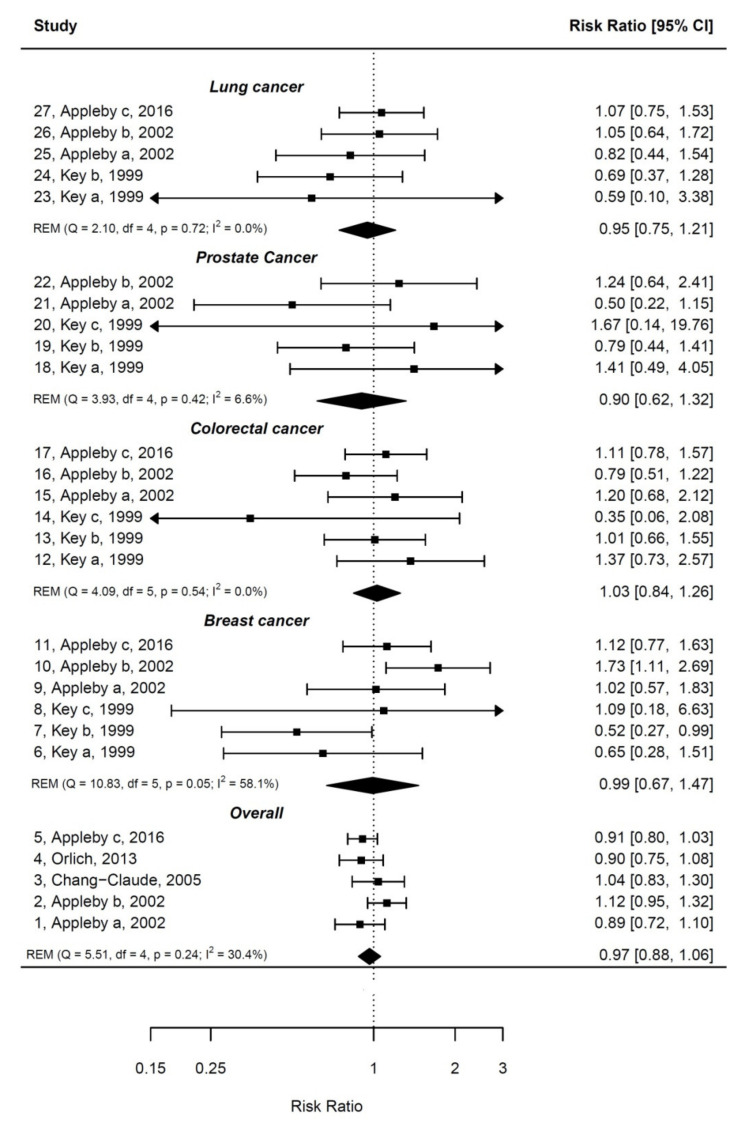
Long-term cancer survivors represent a sizeable portion of the population. Plant-based foods may enhance the prevention of cancer-related outcomes in these patients. We aimed to synthesize the current evidence regarding the impact of plant-based dietary patterns (PBDPs) on cancer-related outcomes in the general population and in cancer survivors. Considered outcomes included overall cancer mortality, cancer-specific mortality, and cancer recurrence. A rapid review was conducted, whereby 2234 original articles related to the topic were identified via Pubmed/Medline. We selected 26 articles, which were classified into studies on PBDPs and cancer outcomes at pre-diagnosis: vegan/vegetarian diet ( = 5), provegetarian diet ( = 2), Mediterranean diet ( = 13), and studies considering the same at post-diagnosis ( = 6). Pooled estimates of the associations between the aforementioned PBDPs and the different cancer outcomes were obtained by applying random effects meta-analysis. The few studies available on the vegetarian diet failed to support its prevention potential against overall cancer mortality when compared with a non-vegetarian diet (e.g., pooled hazard ratio (HR) = 0.97; 95% confidence interval (CI): 0.88-1.06). The insufficient number of studies evaluating provegetarian index scores in relation to cancer mortality did not permit a comprehensive assessment of this association. The association between adherence to the Mediterranean diet and cancer mortality reached statistical significance (e.g., pooled HR = 0.84; 95% CI: 0.79-0.89). However, no study considered the influence of prognostic factors on the associations. In contrast, post-diagnostic studies accounted for prognostic factors when assessing the chemoprevention potential of PBDPs, but also were inconclusive due to the limited number of studies on well-defined plant-based diets. Thus, whether plant-based diets before or after a cancer diagnosis prevent negative cancer-related outcomes needs to be researched further, in order to define dietary guidelines for cancer survivors.
长期癌症幸存者在人群中占相当大的比例。植物性食物可能有助于预防这些患者的癌症相关结局。我们旨在综合当前关于植物性饮食模式(PBDPs)对普通人群和癌症幸存者癌症相关结局影响的证据。所考虑的结局包括总体癌症死亡率、癌症特异性死亡率和癌症复发。我们进行了一项快速综述,通过Pubmed/Medline识别出2234篇与该主题相关的原始文章。我们选择了26篇文章,这些文章分为诊断前关于PBDPs与癌症结局的研究:纯素食/素食饮食(n = 5)、亲素食饮食(n = 2)、地中海饮食(n = 13),以及诊断后考虑相同情况的研究(n = 6)。通过应用随机效应荟萃分析获得上述PBDPs与不同癌症结局之间关联的合并估计值。与非素食饮食相比,关于素食饮食的少数现有研究未能支持其对总体癌症死亡率的预防潜力(例如,合并风险比(HR)= 0.97;95%置信区间(CI):0.88 - 1.06)。评估亲素食指数得分与癌症死亡率关系的研究数量不足,无法对这种关联进行全面评估。坚持地中海饮食与癌症死亡率之间的关联具有统计学意义(例如,合并HR = 0.84;95% CI:0.79 - 0.89)。然而,没有研究考虑预后因素对这些关联的影响。相比之下,诊断后研究在评估PBDPs的化学预防潜力时考虑了预后因素,但由于关于明确的植物性饮食的研究数量有限,结果也尚无定论。因此,癌症诊断前后的植物性饮食是否能预防负面的癌症相关结局需要进一步研究,以便为癌症幸存者制定饮食指南。