General Surgery Clinic, Department of Medical, Surgical and Health Sciences, University of Trieste, University Hospital of Trieste, Trieste, Italy.
General Surgery, Azienda Ospedaliera Dei Colli, Monaldi Hospital, Naples, Italy.
Updates Surg. 2021 Apr;73(2):569-580. doi: 10.1007/s13304-020-00845-z. Epub 2020 Jul 9.
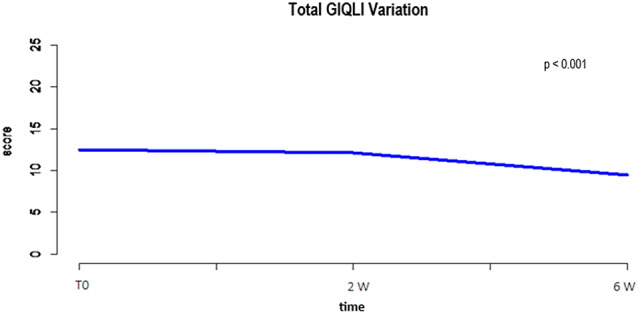
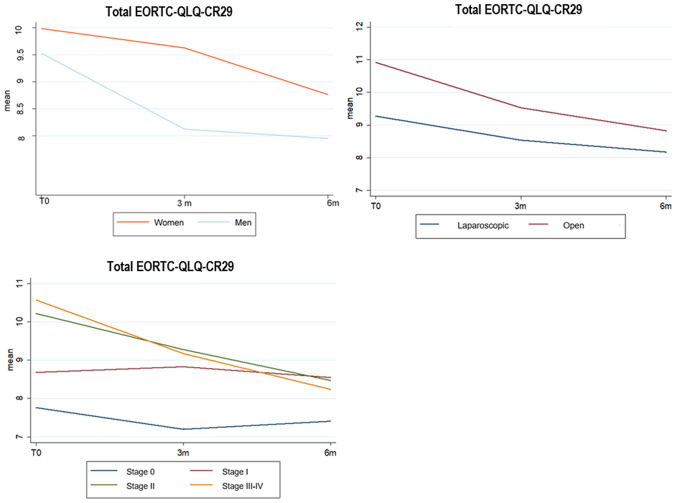
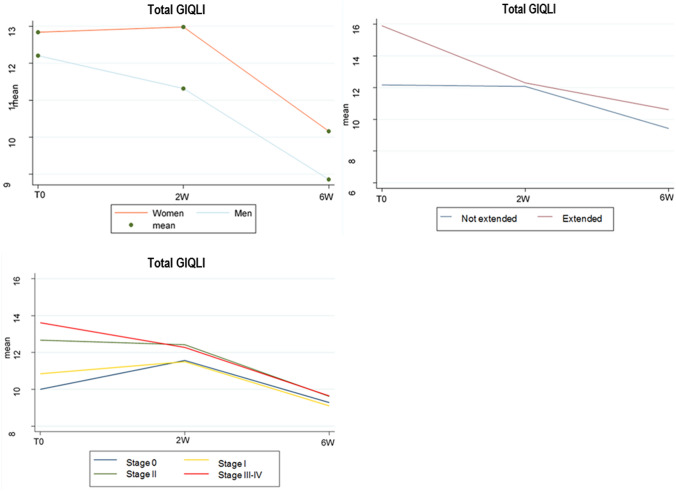
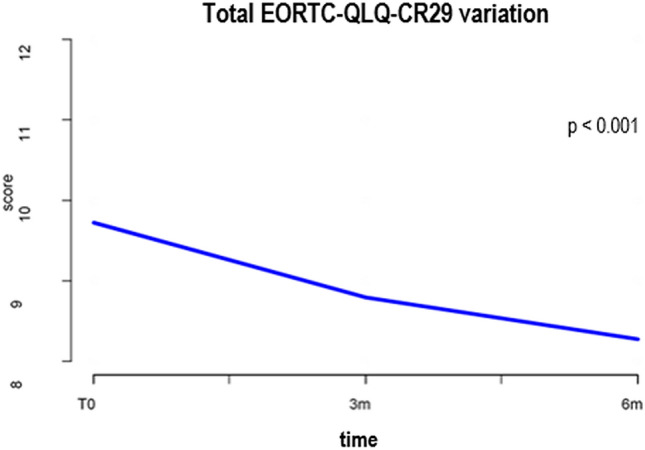
Patients undergoing colon resection are often concerned about their functional outcomes after surgery. The primary aim of this prospective, multicentric study was to assess the intestinal activity and health-related quality-of-life (HRQL) after ileocecal valve removal. The secondary aim was to evaluate any vitamin B12 deficiency. The study included patients undergoing right colectomy, extended right colectomy and ileocecal resection for either neoplastic or benign disease. Selected items of GIQLI and EORTC QLQ-CR29 questionnaires were used to investigate intestinal activity and HRQL before and after surgery. Blood samples for vitamin B12 level were collected before and during the follow-up period. The empirical rule effect size (ERES) method was used to explain the clinical effect of statistical results. Linear mixed effect (LME) model for longitudinal data was applied to detect the most important parameters affecting the total score. A total of 158 patients were considered. Applying the ERES method, the analysis of both questionnaires showed clinically and statistically significant improvement of HRQL at the end of the follow-up period. Applying the LME model, worsening of HRQL was correlated with female gender and ileum length when using GIQLI questionnaire, and with female gender, open approach, and advanced cancer stage when using the EORTC QLQ-CR29 questionnaire. No significant deficiency in vitamin B12 levels was observed regardless of the length of surgical specimen. In our series, no deterioration of HRQL and no vitamin B12 deficiency were found during the follow-up period. Nevertheless, warning patients about potential changes in bowel habits is mandatory. In our series, no deterioration of HRQL and no vitamin B12 deficiency were found during the follow-up period. Nevertheless, warning patients about potential changes in bowel habits is mandatory.
接受结肠切除术的患者通常会担心手术后的功能恢复。本前瞻性、多中心研究的主要目的是评估回盲瓣切除术后的肠道活动和健康相关生活质量(HRQL)。次要目的是评估任何维生素 B12 缺乏症。该研究纳入了因肿瘤或良性疾病而接受右结肠切除术、扩大右结肠切除术和回盲部切除术的患者。使用 GIQLI 和 EORTC QLQ-CR29 问卷的选定项目来调查手术前后的肠道活动和 HRQL。在术前和随访期间采集血样以检测维生素 B12 水平。使用经验法则效应量(ERES)方法来解释统计结果的临床效果。应用线性混合效应(LME)模型对纵向数据进行分析,以检测影响总分的最重要参数。共纳入 158 例患者。应用 ERES 方法,对两份问卷的分析均显示 HRQL 在随访期末具有临床和统计学意义的改善。应用 LME 模型,GIQLI 问卷中与 HRQL 恶化相关的参数为女性性别和回肠长度,EORTC QLQ-CR29 问卷中与 HRQL 恶化相关的参数为女性性别、开放式入路和晚期癌症分期。无论手术标本的长度如何,均未观察到维生素 B12 水平的显著缺乏。在我们的系列中,在随访期间未发现 HRQL 恶化和维生素 B12 缺乏。然而,警告患者潜在的肠道习惯改变是强制性的。在我们的系列中,在随访期间未发现 HRQL 恶化和维生素 B12 缺乏。然而,警告患者潜在的肠道习惯改变是强制性的。