University of Zielona Góra, Department of Medicine and Medical Sciences, ul. Licealna 9, 65-417 Zielona Góra, Poland.
Nowa Sól Multidisciplinary Hospital, Clinical Department of Cardiology,, ul. Chałubińskiego 7, 67-100 Nowa Sól, Poland.
Cardiol J. 2021;28(3):460-472. doi: 10.5603/CJ.a2020.0093. Epub 2020 Jul 10.
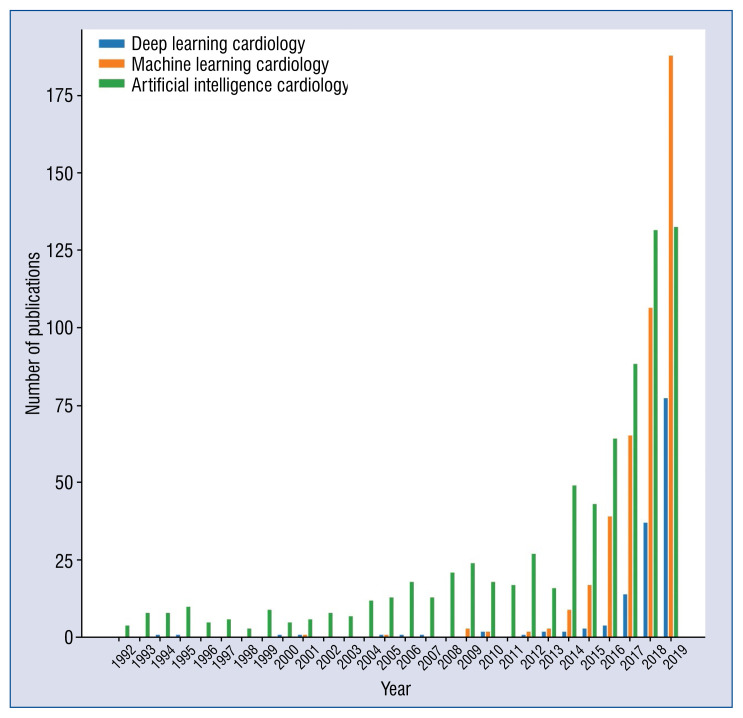
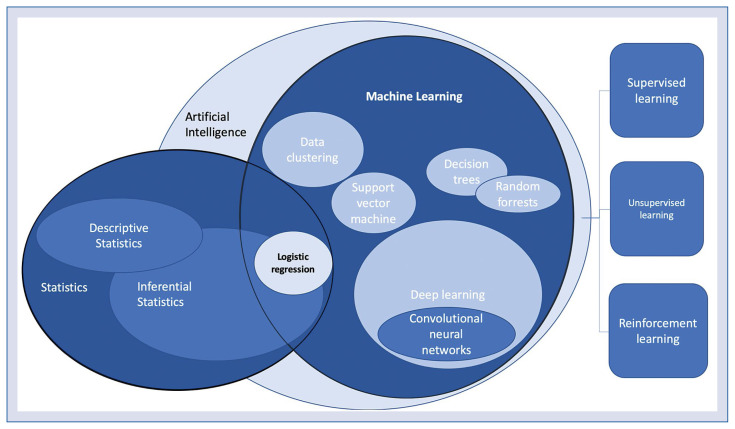
Artificial intelligence (AI) has been hailed as the fourth industrial revolution and its influence on people's lives is increasing. The research on AI applications in medicine is progressing rapidly. This revolution shows promise for more precise diagnoses, streamlined workflows, increased accessibility to healthcare services and new insights into ever-growing population-wide datasets. While some applications have already found their way into contemporary patient care, we are still in the early days of the AI-era in medicine. Despite the popularity of these new technologies, many practitioners lack an understanding of AI methods, their benefits, and pitfalls. This review aims to provide information about the general concepts of machine learning (ML) with special focus on the applications of such techniques in cardiovascular medicine. It also sets out the current trends in research related to medical applications of AI. Along with new possibilities, new threats arise - acknowledging and understanding them is as important as understanding the ML methodology itself. Therefore, attention is also paid to the current opinions and guidelines regarding the validation and safety of AI-powered tools.
人工智能(AI)被誉为第四次工业革命,其对人们生活的影响日益增加。医学领域中 AI 应用的研究正在迅速推进。这场革命有望带来更精确的诊断、更流畅的工作流程、更多人能够获得医疗保健服务,并为不断增长的人群数据集提供新的见解。虽然一些应用已经在当代患者护理中找到了应用,但我们仍处于医学 AI 时代的早期阶段。尽管这些新技术广受欢迎,但许多从业者对 AI 方法、其益处和陷阱缺乏了解。本篇综述旨在提供有关机器学习(ML)的一般概念信息,特别关注这些技术在心血管医学中的应用。它还阐述了与 AI 在医学中的应用相关的研究现状。除了新的可能性,还出现了新的威胁——承认和理解它们与理解 ML 方法本身一样重要。因此,还关注了关于 AI 工具验证和安全性的当前观点和指南。