FMTS, Department of Physiology, EA3072 Mitochondria, Oxidative Stress and Muscular Protection, University of Strasbourg, Strasbourg, France.
Department of Physiology and Functional Explorations, University Hospital of Strasbourg, Strasbourg, France.
J Cachexia Sarcopenia Muscle. 2020 Aug;11(4):866-886. doi: 10.1002/jcsm.12587. Epub 2020 Jul 10.
Patients with lower extremity peripheral arterial disease (PAD) and sarcopenia are a population at risk requiring specific and targeted care. The aim of this review is to gather all relevant studies associating sarcopenia and PAD and to identify the underlying pathophysiological mechanisms as well as potential therapeutic strategies to improve skeletal muscle function.
A systematic review was carried out following the recommendations of the Preferred Reporting Items for Systematic Reviews and Meta-Analyses (PRISMA).
Data extraction allowed the evaluation of 140 publications; 87 met the inclusion criteria; of which 79 were included in the final review, reporting sufficient data for epidemiological and diagnostic criteria, mechanical analysis, and therapeutic approaches. Epidemiological analysis and diagnostic criteria were based on 18 studies following 2362 PAD patients [31.39% (SD 7.61) women], aged 72.42 (SD 2.84); sarcopenia was present in 34.63% (SD 12.86) of the patients. Mechanical and pathway analysis were based on five animal studies and 29 clinical reports, showing significantly altered muscle strength and function in 1352 PAD patients [26.49% (SD 17.32) women], aged 67.67 (SD 5.14) years; impaired muscle histology in 192 PAD patients (9.2% (SD 11.22) women), aged 64.3 (SD 0.99) years; +58.63% (SD 25.48) of oxidative stress in 69 PAD patients [16.96% (SD 8.10) women], aged 63.17 (SD 1.43) years; mitochondriopathy in 153 PAD patients [29.39% (SD 28.27) women], aged 63.50 (SD 1.83) years; +15.58% (SD 7.41) of inflammation in 900 PAD patients [40.77% (SD 3.71) women], aged 74.88 (SD 2.76) years; and altered signalling pathways in 51 PAD patients [34.45% (SD 32.23) women], aged 72.25 (SD 5.25) years. Therapeutic approaches analysis was based on seven animal studies and 21 clinical reports. In total, 884 patients followed an exercise therapy, and 18 received an angiogenesis treatment; 30.84% (SD 17.74) were women. Mean ages of patients studied were 66.85 (SD 3.96).
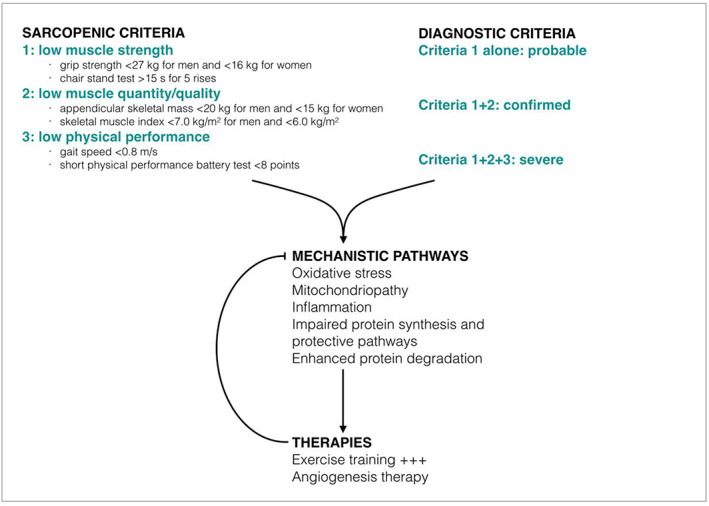
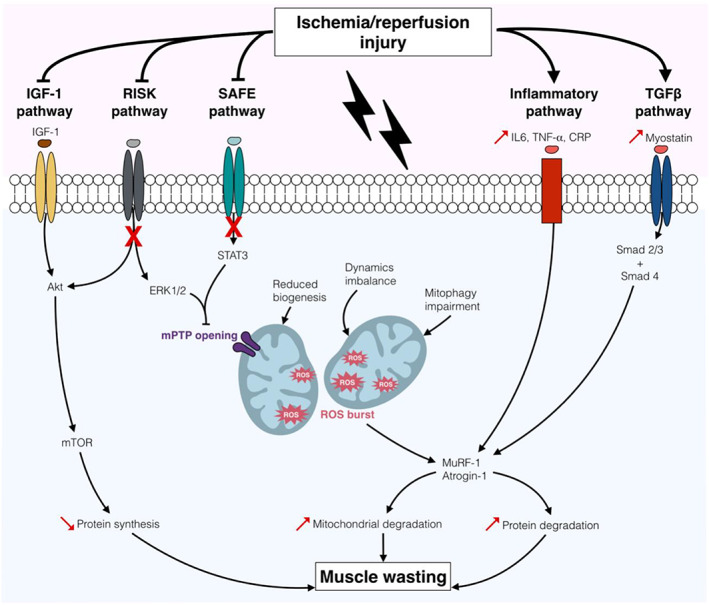
Sarcopenia and lower extremity PAD have musculoskeletal consequences that directly impair patients' quality of life and prognosis. Although PAD is primarily a vascular disease, all etiological factors of sarcopenia identified so far are present in PAD. Indeed, both sarcopenia and PAD are accompanied by oxidative stress, skeletal muscle mitochondrial impairments, inflammation, inhibition of specific pathways regulating muscle synthesis or protection (i.e. IGF-1, RISK, and SAFE), and activation of molecules associated with muscle degradation. To date, besides revascularization, the best therapeutic strategy includes exercise, but approaches targeting the underlying mechanisms still deserve further studies.
下肢外周动脉疾病(PAD)和肌肉减少症的患者是需要特定和针对性治疗的高危人群。本综述的目的是收集所有与肌肉减少症和 PAD 相关的研究,并确定潜在的病理生理机制以及改善骨骼肌功能的潜在治疗策略。
根据系统评价和荟萃分析的首选报告项目(PRISMA)的建议进行了系统评价。
数据提取评估了 140 篇出版物;87 篇符合纳入标准;其中 79 篇纳入最终综述,报告了足够的流行病学和诊断标准、机械分析和治疗方法的数据。流行病学分析和诊断标准基于 18 项研究,涉及 2362 名 PAD 患者[31.39%(SD 7.61)女性],年龄为 72.42(SD 2.84);34.63%(SD 12.86)的患者存在肌肉减少症。机械和途径分析基于 5 项动物研究和 29 项临床报告,显示 1352 名 PAD 患者[26.49%(SD 17.32)女性]的肌肉力量和功能明显受损,年龄为 67.67(SD 5.14);192 名 PAD 患者(9.2%(SD 11.22)女性)的肌肉组织学受损,年龄为 64.3(SD 0.99);69 名 PAD 患者(16.96%(SD 8.10)女性)的氧化应激增加了 58.63%(SD 25.48),年龄为 63.17(SD 1.43);153 名 PAD 患者(29.39%(SD 28.27)女性)的线粒体病,年龄为 63.50(SD 1.83);900 名 PAD 患者(40.77%(SD 3.71)女性)的炎症增加了 15.58%(SD 7.41),年龄为 74.88(SD 2.76);51 名 PAD 患者(34.45%(SD 32.23)女性)的信号通路改变,年龄为 72.25(SD 5.25)。治疗方法分析基于 7 项动物研究和 21 项临床报告。总共 884 名患者接受了运动疗法,18 名患者接受了血管生成治疗;30.84%(SD 17.74)为女性。研究患者的平均年龄为 66.85(SD 3.96)。
肌肉减少症和下肢 PAD 对骨骼肌肉有影响,直接损害患者的生活质量和预后。尽管 PAD 主要是一种血管疾病,但迄今为止确定的所有肌肉减少症的病因因素都存在于 PAD 中。事实上,肌肉减少症和 PAD 都伴有氧化应激、骨骼肌线粒体损伤、炎症、抑制调节肌肉合成或保护的特定途径(即 IGF-1、RISK 和 SAFE)以及与肌肉降解相关的分子的激活。迄今为止,除了再血管化之外,最好的治疗策略包括运动,但针对潜在机制的治疗方法仍有待进一步研究。